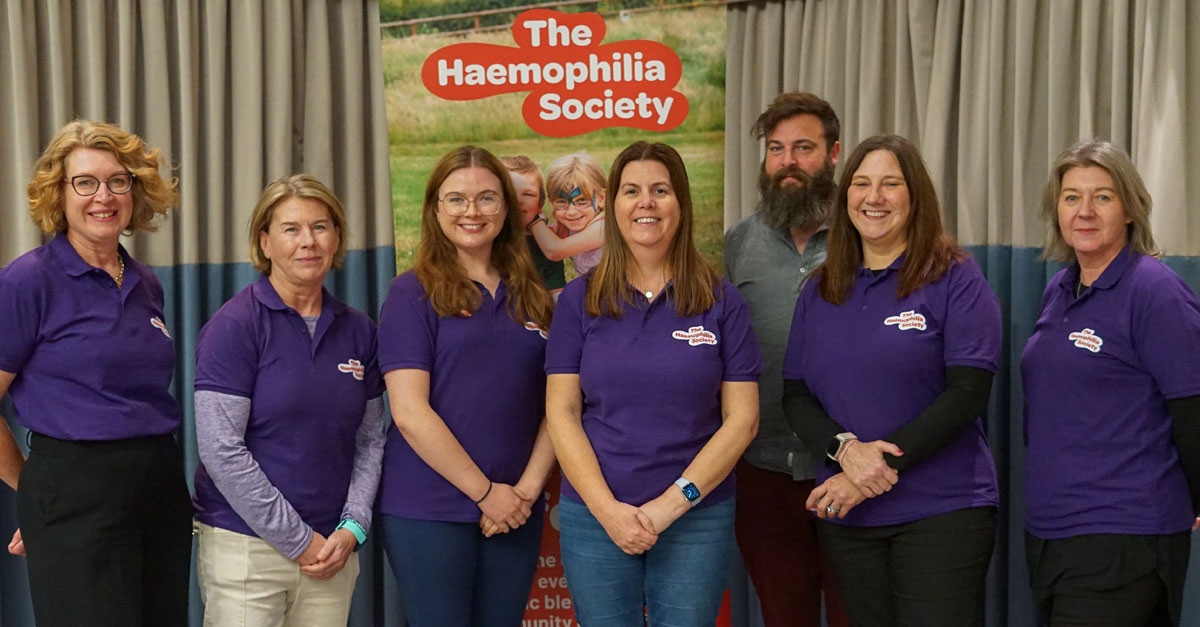
About the NMO
NMO name | The Haemophilia Society (THS) |
Location | London, U.K. |
Founding date | 1950 |
PWBDs served | 5,700 |
Website |
Background
The Haemophilia Society was founded in 1950 and was one the six founding members of the WFH, joining the federation during the very first meeting in Copenhagen in 1963. Since then, THS has been very active with the WFH. In 2018, the U.K. hosted the WFH 2018 World Congress in Glasgow, Scotland. THS has also been part of many WFH programs over the last 70 years. Currently, there is a WFH Hemophilia Organization Twinning (HOT) with the Malta Bleeding Disorders Society which began in 2023.
Q&A with the NMO
What is the mission of your NMO?
The Haemophilia Society’s mission is to empower everyone affected by a bleeding disorder to live life to the fullest. We are doing this through compassion, advocacy, support, and shared knowledge.
What services do you offer to your community?
THS offers a wide range of services designed to meet the diverse needs of our community. These include educational events, peer-support activities, and informational resources. One flagship initiative is our “Newly Diagnosed Weekend”, created for parents of children recently diagnosed with a bleeding disorder. These weekends provide practical education, emotional support, and opportunities to connect with other families, helping to reduce isolation and build confidence early on.
What are the challenges your NMO faces?
Like many charities, we face growing challenges in securing sustainable funding, particularly as public engagement habits have shifted since the pandemic. We are responding to this by diversifying income streams through grants, trusts, and corporate partnerships, and strengthening collaboration with hemophilia centres to co-host events and share resources. Our advice for other NMOs is to make full use of the skills, experience, and contacts within your membership and approach fundraising with flexibility and creativity.
Why did your NMO join the WFH, and how has your experience been?
THS joined the WFH in 1963, motivated by a desire to be part of a global community dedicated to improving quality of life for people with bleeding disorders. Our experience collaborating with the WFH has been consistently positive. We are grateful for the support we receive from the WFH—and we’re pleased to be part of such a supportive and informed worldwide community.
Which WFH program has been the most impactful for your community?
Over the years, we have participated in many programs with the WFH. Recently, a particularly impactful initiative has been the ongoing WFH Hemophilia Organization Twinning (HOT) twinning with the Malta Bleeding Disorder Association. Last year some members of our team took on the Gozo-Malta open water swim challenge which we turned into an inspiring video project (click here to watch the video).
Have you been successful advocating with the government?
Advocacy has been central to the Haemophilia Society’s work since it was founded. We continue to bring the patient voice into decision-making around new treatments, including the introduction of gene therapy for hemophilia B in England in 2024. THS has also long advocated for justice and support for those affected by the infected blood scandal—those whose suffering is finally being recognized.
What was your main highlight/achievement of the last year?
A major achievement was the publication of a groundbreaking report on women and girls with bleeding disorders, outlining 19 recommendations to improve care. The two-year research process revealed significant gaps in data and highlighted the urgent need for more focused research in this area.
Would you like to highlight any of your team members?
We would like to highlight Helen, a dedicated member of our community whose experience has helped strengthen the work and advocacy of the THS. Living with factor V deficiency, Helen had never met another person with the same condition until she attended the WFH 2024 World Congress in Madrid, Spain. Meeting women from other countries with rare bleeding disorders was a transformative experience for her. In her own words: “The highlight was meeting other women with rare bleeding disorders. It is isolating not being able to talk to people about your condition, so to have people in the room in the same position was something I’d never known before.”
Since the Congress, Helen has taken on a more active leadership role in THS. She has been elected to the Board of Trustees and now serves on the Rare and Bleeding Disorder of Unknown Cause Working Group. Through these roles, she adds her lived experience to policy discussions, advocacy efforts, and the development of services, helping ensure that the voices of people with rare bleeding disorders are heard and represented.
How do you envision the future of the bleeding disorder community in your country and globally?
Looking ahead, leaders in the UK bleeding disorders community envision a future grounded in accountability, improved care, and stronger global solidarity. Continued support for those affected by contaminated blood products remains a priority, along with a commitment to ensuring that past harms are acknowledged and never repeated. Globally, there is growing recognition that health systems must confront historical failures and rebuild trust by placing patients’ rights, dignity, and safety at the centre of care.
The future of care will also be shaped by a more holistic understanding of life with a bleeding disorder. Beyond managing bleeds, there is increased awareness of chronic pain, fatigue, mental health challenges, and social isolation. Improving quality of life is becoming a central goal, reflecting a shift toward comprehensive, person-centred support that recognizes living comfortably—not just surviving—as a shared standard.
Progress continues in addressing gaps in care, particularly for women and girls with bleeding disorders. Advocacy and research have highlighted the need for better diagnosis and treatment, with momentum building in the UK and internationally. At the same time, economic uncertainty for NMOs like us is driving organizations to pursue more sustainable funding models and strengthen global collaboration.
Find out more about other NMOs
To read about the way the WFH and NMOs collaborate to make a difference in local bleeding disorders communities, please read “National member organizations: the heartbeat of the WFH” here.
To read more stories in this series, please click on one of the links below.
NMO | Country | Article |
Federação Brasileira de Hemofilia | Brazil | |
Asociación Costarricense de Hemofilia | Costa Rica | |
Fundación Apoyo al Hemofílico | Dominican Republic | |
National Hemophilia Network of Japan | Japan | |
Kenya Haemophilia Association (KHA) | Kenya | |
Kyrgyz Hemophilia Society Community of Handicapped-Hemophiliacs of the Republic of Kyrgyzstan | Kyrgyzstan | |
Libyan Association for Hemophilia | Libya | |
Hemophilia Society of Malaysia | Malaysia | |
Haemophilia Association of Mauritius | Mauritius | |
Federación de Hemofilia de la República Mexicana | Mexico | |
Haemophilia Foundation of Nigeria (HFN) | Nigeria | |
Syrian Hemophilia Society | Syria | |
Haemophilia Society of Tanzania (HST | Tanzania | |
Association Tunisienne de L’Hemophilie (ATH) | Tunisia |
Haemophilia Foundation of Zambia (HFZ) | Zambia |
* Disclaimer: This is an external site, and its content has not been developed nor endorsed by the WFH.