About the NMO
NMO name | Haemophilia Society of Tanzania (HST) |
Location | Dar es Salaam, Tanzania |
Founding date | 2009 |
PWBDs served | 468 |
Website* |
Background
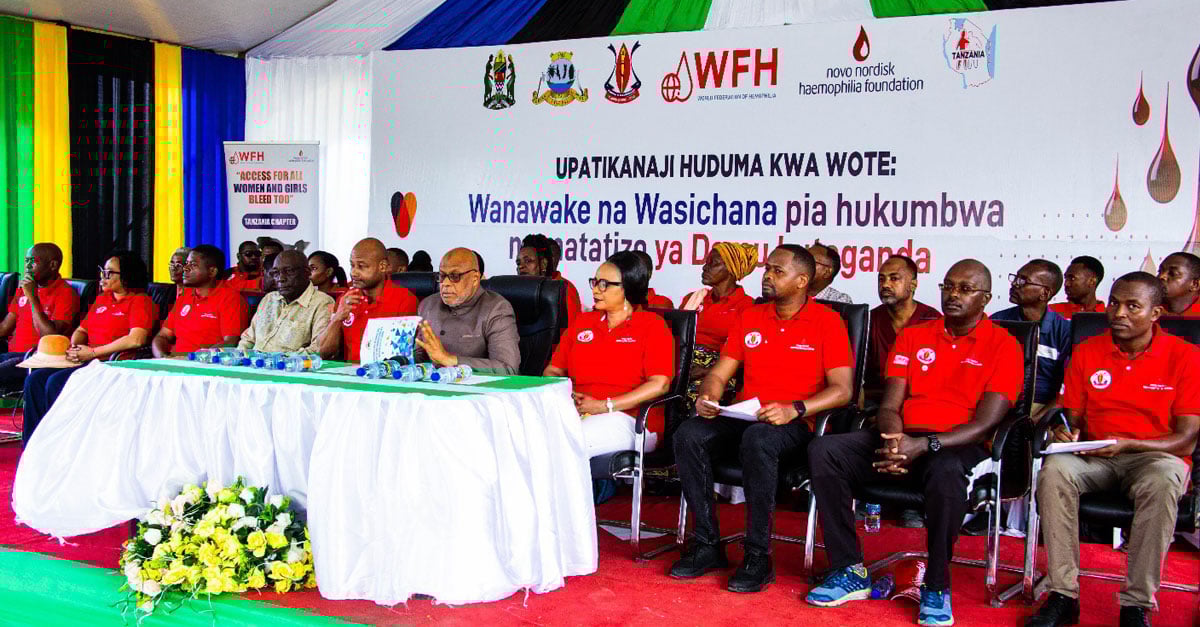
The Haemophilia Society of Tanzania (HST) was founded in 2009 and became an NMO in 2012. The organization is currently collaborating with the WFH on the WFH Humanitarian Aid Program and the WFH Cornerstone Initiative. Also, two healthcare professionals (HCPs) in the country are participating in the WFH International Hemophilia Training Centre (IHTC) Fellowship Program.
Q&A with the NMO
The following answers from the NMO have been edited for clarity.
What are the vision and mission of your NMO?
Our vision is treatment for all people with inherited rare bleeding disorders, regardless of type, gender, or tribe. Our mission is to improve the quality of life for patients and families affected by hemophilia and related conditions. By focusing on access, awareness, and sustainable care, our NMO works to ensure dignity, opportunity, and equal health services nationwide.
What services do you offer to your community?
In collaboration with the Ministry of Health, we coordinate the distribution of treatment products to our 13 satellite clinics so that as many PWBDs get care in the country—even in rural areas. Also, through our chapter leaders, we facilitate urgent care for acute bleeds, free and mobile consultations and counselling, and the distribution of information. We also support disability prevention programs.
What are the challenges your NMO faces?
Our struggles include limited treatment centres, long travel times, poor awareness, and a shortage of trained specialists. Families face late diagnosis and financial strain. To try and overcome these challenges, we are doing many things. We are advocating with governments for inclusion in national health plans and insurance coverage. We also hold awareness and patient empowerment campaigns. Our team is also supporting the training of both clinicians and traditional healers. Also, a national registry is being developed to improve tracking and long-term care planning.
Why did your NMO join the WFH?
We joined the WFH 12 years ago to connect with the community globally, access WFH Humanitarian Aid Program donations, and strengthen our advocacy efforts. The government in Tanzania could not afford to offer treatment to its population of PWBDs, so the support of the WFH gave us hope. Being an NMO has allowed us to offer training, participate in research, increase our expertise, and acquire the tools we need to improve care and engage policymakers effectively.
Which WFH programs have been the most impactful for your community?
The WFH has played a central role in improving the lives of PWBDs here, though product donations, and education and also by enabling national awareness campaigns, advocacy efforts, and stronger governance through connections with other NMOs. Thanks to our work with the WFH, PWBDs have returned to school, caregivers to work, and families have hope for a better future. The partnership has transformed hemophilia care and strengthened national healthcare capacity in Tanzania.
The WFH Humanitarian Aid Program remains critical here, as it supplies the treatment products that so many patients rely on. The Cornerstone Initiative is enhancing planning and public awareness, while the WFH IHTC Fellowship Program is equipping healthcare professionals with essential skills. Meanwhile, ultrasound and synovectomy projects are advancing long-term treatment options.
Through WFH Cornerstone Initiative, we developed a five-year plan, distributed patient ID cards, and trained families in self-infusion. Healthcare providers, teachers, and media representatives were also educated, while annual meetings reinforced transparency and accountability. Partnerships with the Ministry of Health further strengthened these efforts. Our lessons learned include the importance of cultural sensitivity, patient engagement, and strong governance in building lasting systems of care.
With WFH support, 14 treatment centres have been established in just four years. However, the country continues to depend on donated factor concentrates. A national registry is now under development, which will improve patient tracking and care delivery in the years ahead.
Would you like to highlight any of your team members?
Abdallah Makalla is the Secretary of the HST and a senior physiotherapy trainer. He’s an invaluable member of our team. Abdallah has trained physiotherapists nationwide, integrating rehabilitation into routine treatment and addressing joint damage, mobility, and quality of life. In this way, he’s helping to close a long-overlooked gap in hemophilia management in Tanzania.
As HST Secretary, he has driven outreach and prevention efforts, expanding patient identification in underserved regions. His work in data reporting and treatment monitoring has strengthened advocacy for fair access to care for our community.
Respected by both patients and professionals, Abdallah is a vital link between families and healthcare providers. His leadership and compassion embody HST’s mission to deliver sustainable, community-based care.
Would you like to share a story of a PWBD or a group of people who benefited from your collaboration with WFH?
In 2023, Tanzania held its first circumcision camp for hemophilia patients, with 26 boys safely treated. WFH support has also enabled safe dental procedures and allowed major surgeries in remote hospitals.
Have you been successful advocating with the government?
Yes. The Ministry of Health now has a touch person for hemophilia and participates in awareness campaigns, training, and clinic launches. A patient logbook, or “passport,” has been developed to record demographic and treatment details. These successes show the value of engaging policymakers in improving care for people with bleeding disorders.
How do you envision the future of the bleeding disorder community in your country?
We hope for a time when there is earlier diagnosis, wider treatment access, and national health insurance coverage. By 2026, hemophilia should be part of the National Strategic Plan for non-communicable diseases, enabling government-funded procurement of treatment products. This will provide stability and improve patient outcomes nationwide. This is another step in our journey towards being able to give PWBDs in Tanzania the most “normal” life possible.
Find out more about other NMOs
To read about the way the WFH and NMOs collaborate to make a difference in local bleeding disorders communities, please read “National member organizations: the heartbeat of the WFH” here.
To read more stories in this series, please click on one of the links below.
NMO | Country | Article |
Federação Brasileira de Hemofilia | Brazil | |
Asociación Costarricense de Hemofilia | Costa Rica | |
Fundación Apoyo al Hemofílico | Dominican Republic | |
National Hemophilia Network of Japan | Japan | |
Kenya Haemophilia Association (KHA) | Kenya | |
Kyrgyz Hemophilia Society Community of Handicapped-Hemophiliacs of the Republic of Kyrgyzstan | Kyrgyzstan | |
Libyan Association for Hemophilia | Libya | |
Hemophilia Society of Malaysia | Malaysia | |
Haemophilia Association of Mauritius | Mauritius | |
Federación de Hemofilia de la República Mexicana | Mexico | |
Syrian Hemophilia Society | Syria | |
Association Tunisienne de L’Hemophilie (ATH) | Tunisia |
* Disclaimer: These are external sites, and their content has not been developed nor endorsed by the WFH.