NMO name | Kyrgyz Hemophilia Society Community of Handicapped-Hemophiliacs of the Republic of Kyrgyzstan |
Location | Bishkek, Kyrgyzstan |
Founding date | 2007 |
PWBDs served | 420 |
Website* |
Background
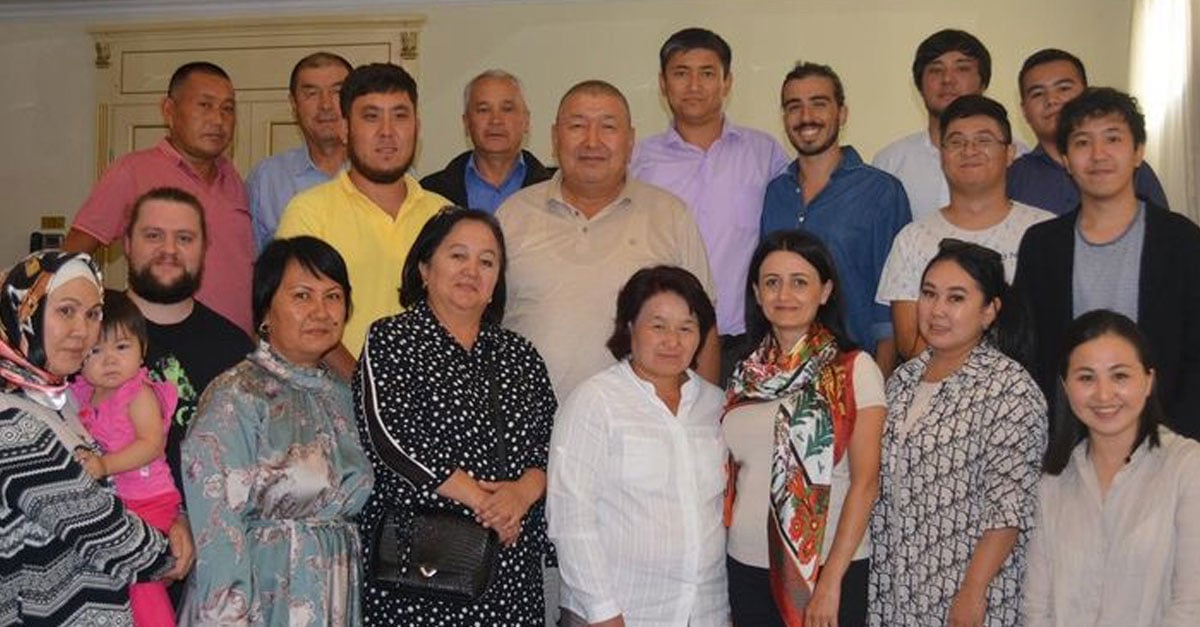
The WFH has been collaborating with the Kyrgyz Hemophilia Society Community of Handicapped-Hemophiliacs of the Republic of Kyrgyzstan for several years on different endeavours. The ongoing WFH Youth Twinning Project with Federazione delle Associazioni Emofilici – Onlus—the Italian NMO—is engaging younger generation of Kyrgyz PWBDs, nurturing them to become the next generation of leaders, and establishing a youth structure within the NMO to make sure the perspectives of young people are represented. The twinning is also helping participants learn important skills, such as project design and implementation, awareness raising and advocacy.
Kyrgyzstan was also part of the WFH GAP Program—the predecessor of the WFH Path to Access to Care and Treatment (PACT) Program—until 2022. The country is now part of a WFH country program. The goals of the current phase of the country program are to ensure equal access to treatment through the continuous improvement of knowledge and medical expertise; raise awareness of inherited bleeding disorders; and maintain a dialogue with key stakeholders in the country through the National Hemophilia Coordination Committee. The committee is chaired by the Deputy Minister of Health (MoH) and includes lead hematologists in the country, the president of the Kyrgyz NMO, MoH representatives, hematologists from the capital and the regions, NMO members, and PWBDs.
The following answers from the NMO have been edited for clarity.
What are your vision and mission?
Our vision is to have full access for treatment for all people with bleeding disorders in Kyrgyzstan, including children and adults. Our mission is to improve quality of life our patients—including providing prophylaxis to as many people as possible—represent our community at the international level, advocate for patient rights, and establish sustainable communications with all stakeholders.
Which services do you offer your bleeding disorders community?
We provide many services, including facilitating the procurement of treatment products, providing hemophilia treatment centre (HTC) training, and offering information for newly diagnosed patient families. We also work with the WFH on different programs and events, as well as with the European Haemophilia Consortium (EHC). Finally, we actively engage with government and policy makers to advocate for patient rights.
What are the challenges the bleeding disorders community faces?
The main challenges our community faces are adequate diagnosis, providing access to treatment for all patients, and the lack of hematologists in remote regions, where many members of our community live. We work with our WFH Regional Manager to try to support our members, for example by training patients on how to self-infuse and providing stakeholders with tools and education. We are work every day with officials to advocate for our community. Our team has also recently started putting more effort towards supporting women and girls with bleeding disorders, and people with von Willebrand disease (VWD).
What are the challenges your NMO faces?
We face many problems and challenges every day. For example, there are misunderstandings between patients or members, and problems with the supply of factor. Even though we get donated products from the WFH Humanitarian Aid Program, we still face shortages, and many patients are only treated on demand. We have tried to overcome these issues by negotiating and communicating with policy makers. We are trying to have a good connection with them to find solutions to problems or issues through constructive communication.
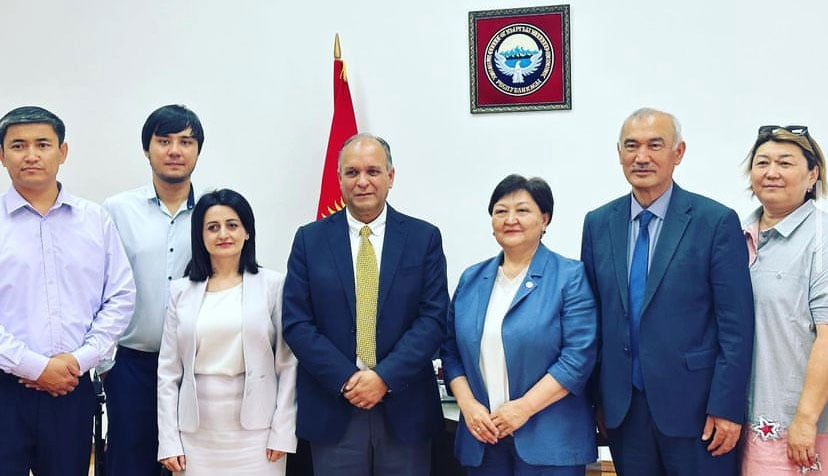
Meeting between the Kyrgyz Hemophilia Society leaders, and Cesar Garrido, President, WFH, and the Head of Kyrgyz Pharmacy Department
Our meeting with the Kyrgyz Hemophilia Society leaders and the Head of Kyrgyz Pharmacy Department was a chance for the WFH to show its commitment to Kyrgyzstan, now, and for the long term. Our goal is to collaborate with stakeholders in the country until self-sustainable care is a reality for the Kyrgyz bleeding disorders community.
—Cesar Garrido, President, WFH
How would you describe your experience collaborating with the WFH?
There have been many changes in the Kyrgyz bleeding disorders community over the last several years—particularly when it comes to getting more treatment products—and this can be attributed to our work with the WFH. We have started to advocate more for our rights with the government, we have been able to implement many projects, and our level of communication with doctors, officials, patients, and other medica communities has really improved. The WFH also helped us to train our youth wing to prepare the next generation of Kyrgyz Hemophilia Society leaders. We have also been able to support the mental health of our patients.
The WFH Humanitarian Aid Program has also been a huge help for us. Thanks to non-factor replacement therapy products, many kids have access to low-dose prophylaxis. Donations have also allowed our doctors to provide joint replacement surgeries and other procedures.
As part of your advocacy work, have you tried to influence governments to achieve change in policies affecting bleeding disorders?
We have been able to persuade the government to increase their procurement budget for treatment products. We did this with the help of our WFH Regional Manager. We had meetings with policy makers, and used WFH World Bleeding Disorders Registry (WBDR) and Patient-Reported Outcomes Burdens and Experiences (PROBE) study group data to make our case for better supporting our community.
What was your main achievement of the last year?
We were able to get the government to increase their procurement budget compared to the previous year, from only 30 million Kyrgyz Som, to 150 million Kyrgyz Som. We were able to achieve this through many meetings with officials and through collaboration with other stakeholders. The lesson we learned from the experience is that you have to predict some issues beforehand, and be prepared to quickly adapt to issues as they come up.
Is there a volunteer/employee from your organization that you would like to showcase?
Currently we have very involved youth members, namely Kudainazarov Arstanbek and Nurbek Uulu Syimykm, who were trained through the Youth Group Twinning partners project with Italy and through the EHC Youth Leadership Workshop. Other board members are very involved and active in our advocacy efforts and they are all trying to put their contribution on a volunteer basis.
Would you like to share a story of a PWBD who benefited from your collaboration with the WFH?
Here is a story from one of our members:
My father suffers from hemophilia. He spent his entire childhood in bed and in hospitals. As a child, I did not understand what was happening to him, but I helped him as much as I could. At that time, I didn’t understand the pain and difficulty that my father went through. When he was younger, he had to inject plasma when he had a bleed, and it was very dangerous, but there was no choice.
Thankfully, because of improvements in the level of care here in Kyrgyzstan, he was able to get more regular access to factor, and later, several knee surgeries. Now he can walk. He constantly monitors his health, but sometimes he forgets to take his factor, so I must remind him.
Because of this experience, was inspired to start working with the youth wing of the Kyrgyz Hemophilia Society. Things are still tough, but they are better than they were in the past. And for that I am grateful.
—Anonymous
To read about the way the WFH and NMOs collaborate to make a difference in local bleeding disorders communities, please read “National member organizations: the heartbeat of the WFH” here.
To read more stories in this series, please click on one of the links below.
| NMO | Article |
| Federación de Hemofilia de la República Mexicana (Mexico) | Click here |
| Asociación Costarricense de Hemofilia (Costa Rica) | Click here |
| Haemophilia Association of Mauritius | Click here |
| Syrian Hemophilia Society | Click here |
| National Hemophilia Network of Japan | Click here |
| Hemophilia Society of Malaysia (HSM) | Click here |
| Tunisian NMO, the Association Tunisienne de L’Hemophilie (ATH). | Click here |
* Disclaimer: This is an external website, and its content has not been developed nor endorsed by the WFH.