Mexican-NMO-header

Q&A with an NMO: Mexico

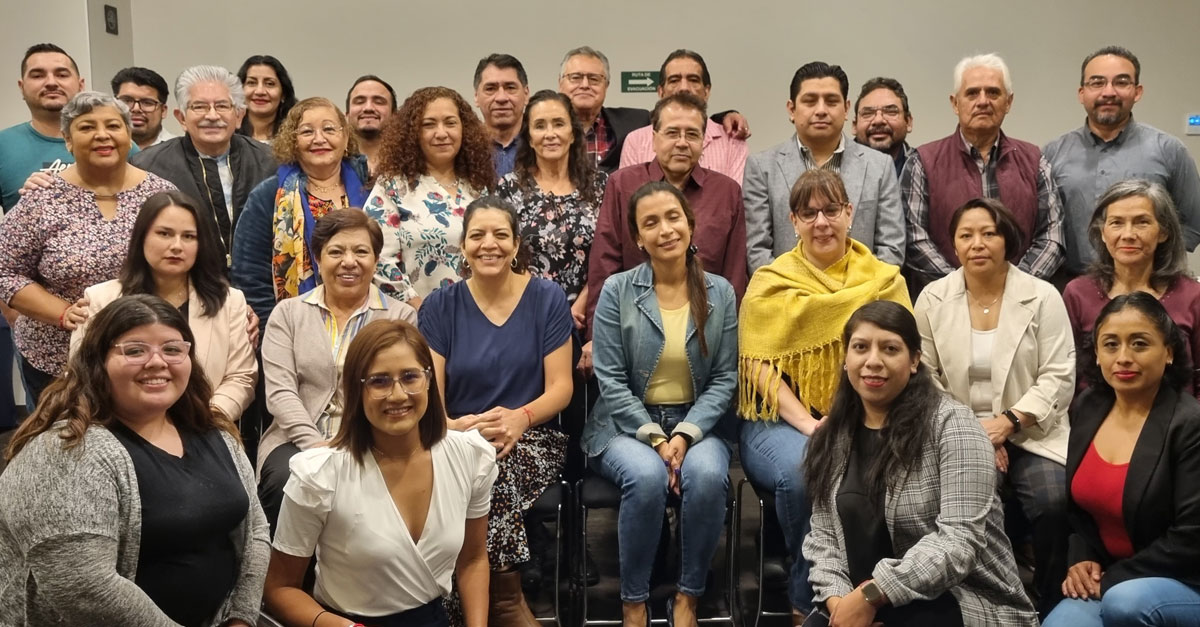
National member organizations (NMOs) are the heartbeat of the World Federation of Hemophilia (WFH). We work in close collaboration with NMOs to provide them with support tailored to their realities to help them increase the level of care for the people with bleeding disorders (PWBDs) in their countries. Over the next few months, we will be profiling several NMOs on the WFH News page, showcasing the work that they are doing, the challenges they are facing, and the difference they are making in their home countries. Today, we look at the NMO in Mexico: the Federación de Hemofilia de la República Mexicana.

Also available in: Français Español

NMO name

Federación de Hemofilia de la República Mexicana

Location

Mexico City, Mexico

Founding date

November 21, 1991

Active members

48

PWBDs served

6,349

Website*

hemofilia.org.mx

The following answers have been edited for clarity.


What services does your NMO offer to the bleeding disorders community?

We are the only national organization recognized by the WFH, and the only one with a national registry of people with bleeding disorders (PWBDs), the “Mexican Registry of Coagulopathies”, which collects data on more than 6,200 people with hemophilia and other coagulopathies in the country. We offer support related to hematology, rehabilitation, orthopedics, dentistry, psychology, social work, infusion workshops, and genetic counseling. 

What’s your mission, and what’s your vision for your NMO?

Our mission is to improve healthcare conditions in Mexico so that there are no limitations for people with hemophilia, and our people can enjoy comprehensive, multidisciplinary care. It’s also to foster the creation of a system where universal and free access to care is guaranteed for all PWBDs in our country. Our vision is to be the benchmark for care by health care professionals, and also to be able to offer exceptional physical therapy for PWBDs, as well as psychology and social work services, among other support services.

What are the challenges you usually face?

We face challenges related to governmental policies, and a general lack of commitment by different organizations. These challenges are difficult, but we are overcoming them through persistence, and by collaborating with other organizations such as the WFH.

What was your main highlight/achievement during 2021/2022?

Our main achievement has been increasing home delivery, increasing prophylaxis—and doing this for people of all ages. We have been able to accomplish this by directly working with healthcare decision makers. It wasn’t easy because of a change in government and because of management changes in the health sector. The process made us realize that we must have a constant dialogue with health and government sector authorities.

What will be the main challenges facing your community in the coming years?

Our main challenges for our community will continue to be access to treatment, lack of diagnosis, and lack of awareness in the health sector. We will overcome these challenges by keeping open channels with decision makers, and by lobbying the government—two things which we have done successfully in the past. There is also uncertainty regarding the future governmental situation, as each new government enacts changes which may or may not impact us.

Do you have anything else you’d like to share with the community?

We very much look forward to seeing our colleagues from other NMOs at the WFH 2023 Comprehensive Care Summit: New Developments in Bleeding Disorders and MSK this May!

To read about the way the WFH and NMOs collaborate to make a difference in local bleeding disorders communities, please read “National member organizations: the heartbeat of the WFH” here

* Disclaimer: This is an external website, and its content has not been developed, and is not endorsed by the WFH.

We’ve accomplished a lot this year, we need your help to continue strong.

Would you like to read more about similar articles?

Disclaimer

The information on the WFH website is provided for general information purposes only. The WFH does not engage in the practice of medicine and under no circumstances recommends particular treatment for specific individuals. For diagnosis or consultation on a specific medical problem, the WFH recommends that you contact your physician or local treatment centre. Before administering any products, the WFH urges patients to check dosages with a physician or hemophilia centre staff, and to consult the pharmaceutical company’s printed instructions.

While every effort has been made to ensure the accuracy of the information on this site, the WFH does not guarantee the information is accurate, and is not responsible in any way whatsoever for damages arising out of the use of this website or any of the information contained herein.

Messages posted to WFH discussion forums, Facebook, Twitter, and other social media platforms do not represent the opinions of the World Federation of Hemophilia, its staff, or Board of Directors. The author of a message is solely responsibility for its content. Information posted on WFH social networks and platforms should never be a substitute for individualized professional medical advice, even when the author has medical qualifications or is considered an authority. Information posted to a discussion group should not be used to diagnose or treat a specific health problem without consulting a qualified healthcare professional. The WFH recommends that you contact your physician or local treatment centre if you have any individual questions or concerns.

References and links to other websites or references to other organizations, products, services, or publications do not constitute endorsement or approval by the WFH. The WFH is not responsible and assumes no liability for the content of any linked websites.

Fraud Alert

Unauthorized solicitations – Warning

The WFH has been made aware of various correspondences—circulated via e-mail and telephone—coming from individuals impersonating WFH staff or falsely stating that they are associated with the WFH. These correspondences, which may seek to obtain money using the name of someone affiliated with the WFH, are fraudulent and come from outside of our organization.

If you receive a suspicious solicitation, exercise extreme caution. In the case of an email, look at the email address to see if it looks suspicious (for example, all WFH emails come from @wfh.org).

We are asking you to remain vigilant, and if you have any doubts about the correspondence, please forward the email to the WFH at [email protected] or call +1 514-875-7944.