For many years, hemophilia care in Bangladesh was extremely limited. Treatment once depended mainly on fresh blood or fresh frozen plasma, with no factor products available. This meant that even small bleeds could become serious. The World Federation of Hemophilia (WFH) and the WFH Humanitarian Aid Program have played a major role in changing that reality. Through treatment donations, technical support, training, and advocacy, the WFH has helped strengthen care and expand access to newer therapies. “The WFH introduced the products, the knowledge, the technical know-how… they have training development and everything, so without the WFH, we cannot run. This is a paradigm shift for us,” said Najmul Alam, President of the Hemophilia Society of Bangladesh (HSB).
In addition to the support provided through the WFH Humanitarian Aid Program, the WFH is engaged in Bangladesh through several other initiatives. These include the WFH Path to Access to Care and Treatment (PACT) Program, which supports outreach, diagnosis, and sustainable access to care; the International External Quality Assessment Scheme (IEQAS), which helps strengthen and standardize laboratory diagnosis; and the World Bleeding Disorders Registry (WBDR), which enables healthcare professionals at hemophilia treatment centres in Bangladesh to collect, manage, and use patient data more effectively.
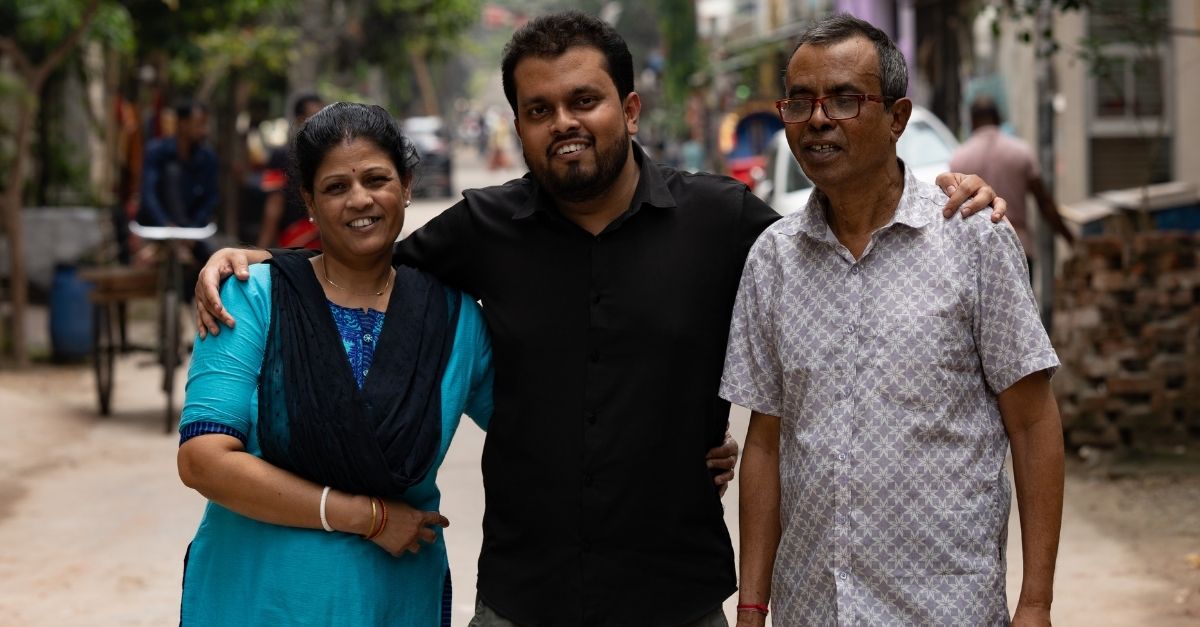
We have death and life in this world. I just want him to live his life the way he likes.
— Ruba Modak, mother of Abeer Modak
In 2021, non-factor replacement therapy was provided for the first time to 17 patients at one hemophilia treatment centre, providing new possibilities for people with hemophilia, including those with inhibitors. Abdul Wohab, MD, Professor of Pediatric Hematology and Oncology, at Bangladesh Shishu Hospital & Institute, said patients receiving the therapy are now able to take part in school and work. Success stories like these have provided the data that allow organizations like the HSB to effectively advocate greater government support. Effective advocacy means more support for more people, which means more impact—and even more convincing data.
For Abeer, the change has been life-altering. “After using the new therapy, I can go to my office. I complete my daily work. Last year, I got a promotion.” With care in the big cities getting, better, the HSB can now look to expand services across the country in more remote areas, so people with bleeding disorders can access care closer to home.
This is the second article in a limited series on the WFH in Bangladesh. To read “Treatment allows youth in Bangladesh to live an active life” and watch the video, click here.
The WFH Humanitarian Aid Program has donated nearly 79 million IUs of factor and 859,000 mg of non-factor replacement therapy to Bangladesh since 2015. Over 4.2 million IUs of factor, and 162,000 mg of non-factor replacement therapy were donated in 2025 alone. To find out more about the WFH Humanitarian Aid Program please click here.
About the WFH Humanitarian Aid Program
The WFH Humanitarian Aid Program improves the lack of access to care and treatment by providing much-needed support for people with inherited bleeding disorders in developing countries. By providing patients with a more predictable and sustainable flow of humanitarian aid donations, the WFH Humanitarian Aid Program makes it possible for patients to receive consistent and reliable access to treatment and care. None of this would be possible without the generous support of Sanofi and Sobi, our Founding Visionary Contributors; Bayer, CSL Behring and Roche, our Visionary Contributors; Grifols, our Leadership Contributor; and Takeda, our Contributor. To learn more about the WFH Humanitarian Aid Program, visit www.treatmentforall.org.