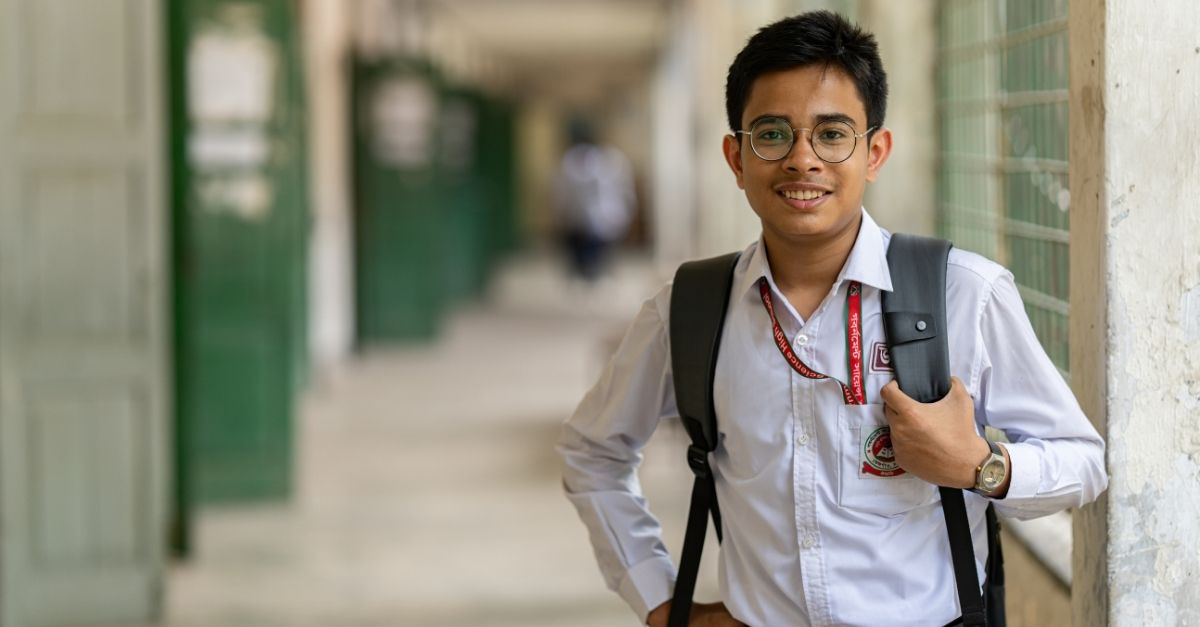
Tanvirul’s mother first noticed something unusual while bathing him when he was nine months old. Doctors ordered blood tests, which eventually confirmed the diagnosis of hemophilia. As he grew older, his condition became increasingly severe. “When I was younger, the days were very hard for me,” he says. Bleeding in his knees and hip joints caused constant pain and dramatically reduced his mobility. Although doctors tried several therapies and medications, complications arose when he developed inhibitors to factor VIII treatment, making it ineffective. By 2019, his condition had deteriorated significantly. “I had to attend my school examinations in wheelchair,” he says. “Two years I had to walk by using a crutch.”
Fortunately, it was at this point that Tanvirul life turned around—thanks to therapy provided by the WFH Humanitarian Aid Program. Prophylactic treatment allowed him to move away from a life marred by bleeds—and a future that likely would have seen him spent most of his adulthood in a wheelchair. Now, he not only lives without the fear of an acute bleed, but he can even participate in sports activities, such as cricket, one of his newfound passions.
With the continuous advocacy of the Hemophilia Society of Bangladesh, the situation [in the country] is improving. We are helping the government with all the technical expertise to create guidelines for hemophilia management in the country, and we hope that… the government will follow up and allocate the budget so that they can also start procuring treatment products.
—Harshal Kale, Regional Program Manager, South Asia & East Asia, WFH
In addition to support provided by the WFH Humanitarian Aid Program, the WFH is active in Bangladesh through the WFH Path to Access to Care and Treatment (PACT) Program, designed to improve outreach and diagnosis and increase access to sustainable care; the International External Quality Assessment Scheme (IEQAS) which is helping to improve and standardize laboratory diagnosis; and the World Bleeding Disorders Registry (WBDR), which provides healthcare professionals at hemophilia treatment centres (HTCs) in Bangladesh with a platform to collect and manage their data.
Tanvirul’s friends have been an important source of support throughout his journey. Classmates for nearly a decade, they bonded through a shared love of art and watched firsthand how hemophilia limited his ability to participate in everyday activities. Today, they have seen the remarkable difference treatment has made, allowing him to enjoy a more active and independent life.
“After starting the new medication,” Tanvirul says, “I can go to school, I can play. I can do everything,” he says. “And now, for five years, I don’t have new bleeding.” For his mother, the change has brought new hope into her life. She is now optimistic her son can fulfill his dream of becoming a doctor and helping future generations of people with hemophilia avoid the suffering he endured.
The WFH Humanitarian Aid Program has donated nearly 79 million IUs of factor and 859,000 mg of non-factor replacement therapy to Bangladesh since 2015. Over 4.2 million IUs of factor, and 162,000 mg of non-factor replacement therapy were donated in 2025 alone. To find out more about the WFH Humanitarian Aid Program please click here.
About the WFH Humanitarian Aid Program
The WFH Humanitarian Aid Program improves the lack of access to care and treatment by providing much-needed support for people with inherited bleeding disorders in developing countries. By providing patients with a more predictable and sustainable flow of humanitarian aid donations, the WFH Humanitarian Aid Program makes it possible for patients to receive consistent and reliable access to treatment and care. None of this would be possible without the generous support of Sanofi and Sobi, our Founding Visionary Contributors; Bayer, CSL Behring and Roche, our Visionary Contributors; Grifols, our Leadership Contributor; and Takeda, our Contributor. To learn more about the WFH Humanitarian Aid Program, visit www.treatmentforall.org.