About the NMO
NMO name | Haemophilia Foundation of Nigeria (HFN) |
Location | Kaduna North, Nigeria |
Founding date | 2005 |
PWBDs served | Over 1,000 |
Website* |
Background
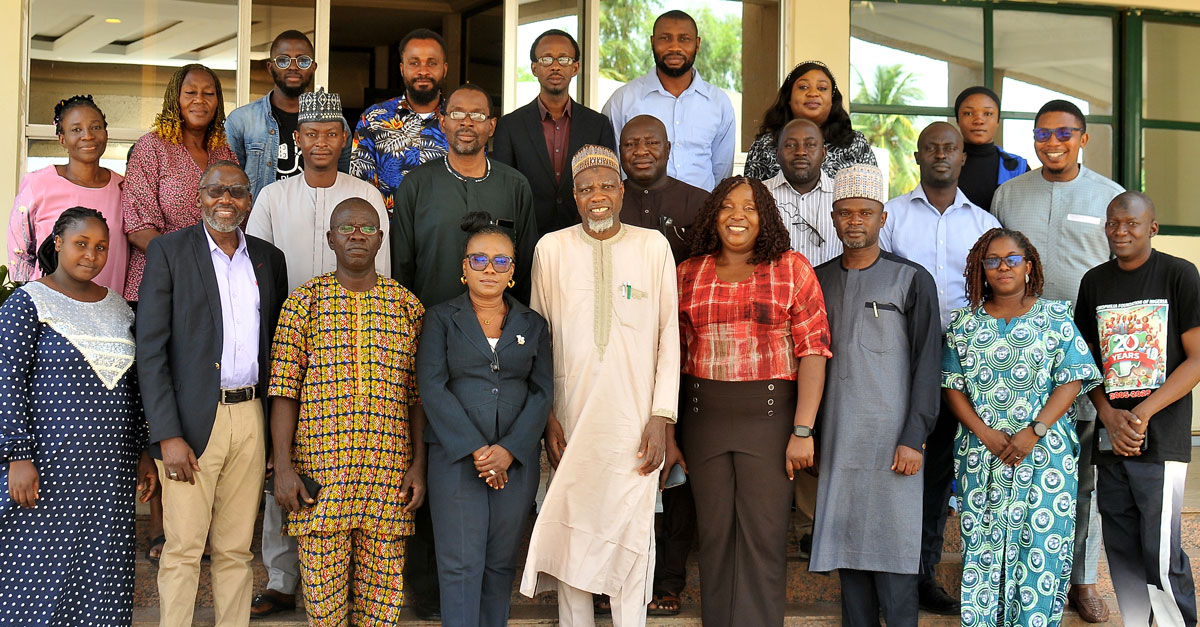
The Haemophilia Foundation of Nigeria (HFN) was founded 2005 by Megan Adediran, a mother of two boys with hemophilia, and a former WFH Board Member. The HFN has been a WFH NMO since 2006. Two major WFH initiatives—the WFH Path to Access to Care and Treatment (PACT) Program and the WFH Humanitarian Aid Program—are active in the country. Also, lab technicians are participating in the International External Quality Assessment Scheme (IEQAS), which improves and standardizes laboratory diagnosis. Several hemophilia treatment centres (HTCs) are contributing data to the WFH World Bleeding Disorders Registry (WBDR). Previously, the WFH Cornerstone Initiative has been active in the country, as has the WFH Twinning Program.
Q&A with the NMO
The following answers from the NMO have been edited for clarity.
What are the vision and mission of your NMO?
The Haemophilia Foundation of Nigeria envisions a future where every person with a bleeding disorder in the country has access to quality, reliable, and affordable care and can live a long, healthy, and productive life. Its mission is to support, educate, and advocate for people with bleeding disorders and their families across Nigeria, while also working to raise awareness among healthcare professionals and policymakers.
What services do you offer to your community?
The foundation provides a wide range of services designed to meet both medical and social needs. These include diagnosis support, awareness programs, patient education, treatment product distribution, and psychosocial support.
What are the challenges your NMO faces?
The foundation faces persistent challenges such as low awareness, limited access to diagnosis and treatment, and insufficient government involvement. To address these issues, we partner with public hospitals to establish HTCs, conduct national awareness campaigns, and work closely with the WFH to maximize the use of donated treatment products and healthcare professional training. Unfortunately, many patients remain undiagnosed, particularly outside major cities. To try and tackle this issue, the HFN runs outreach programs, trains healthcare workers, and distributes donated products to those in need.
Why did your NMO join the WFH, and how has your experience been?
The foundation joined the WFH to become part of a global community dedicated to improving care for people with bleeding disorders. Collaboration with the WFH has given us access to expertise, training, and treatment support that has transformed lives across Nigeria. The WFH Humanitarian Aid Program and the WFH PACT Program have both been particularly impactful for us, increasing treatment availability and building local medical capacity.
Which WFH program has been the most impactful for your community?
The WFH PACT Program has had the greatest influence on the community in Nigeria. It has helped us train healthcare workers—such as doctors, nurses, and lab scientists—in multiple states and improve diagnosis rates in rural areas. Despite challenges such as poor infrastructure and long travel distances, the program has strengthened partnerships, expanded access to care, and demonstrated that steady progress—no matter how small—can create lasting change.
How has care improved in your country since you joined the WFH?
Care for people with bleeding disorders has improved significantly for the inherited bleeding disorders community in Nigeria since we joined the WFH. Greater awareness has led to earlier diagnoses and better case management across treatment centres. Healthcare professional training has improved considerably. We’ve also seen growth in family support networks, and better coordination with hospitals. Continued advocacy has also made a huge difference for us, with bleeding disorders now included in Nigeria’s National Non-Communicable Diseases policy—a major milestone toward sustainable care and government engagement.
Have you been successful advocating with the government?
The foundation has successfully secured recognition of hemophilia and other bleeding disorders in national health policies. This success highlights that progress in advocacy requires persistence, collaboration, and consistent communication with policymakers. The inclusion of bleeding disorders in the National Non-Communicable Diseases policy mentioned above is a perfect example of a big advocacy win for us.
Would you like to share a story of a PWBD who has benefited from your collaboration with the WFH?
We’d like to celebrate Florence Olukokun, a dedicated nurse and long-time volunteer whose commitment has made a lasting impact on our community. Florence has been instrumental in advocacy, awareness, and in mobilizing more nurses to join the cause. For over a decade, she has been our hemophilia camp nurse—bringing not just her professional expertise but also a deep passion for empowering PWBDs to take charge of their own health.
Do you have a special message for the global bleeding disorders community?
You are not alone. To all NMOs around the world, we say keep pushing for better care, and don’t stop advocating for the rights of your community.
Find out more about the WFH in Nigeria
To read a three-part series on the transformation that has taken place for the bleeding disorders community in Nigeria thanks to the WFH and our supporters, click on one of the links below.
- To read the first article in the series, “Our actions today. Their future tomorrow: The path to diagnosis and care in Nigeria” click here
- To read the second article in the series, “Our actions today, their future tomorrow: Working together to make sure every patient counts” click here
- To read the final article in the series, “Our actions today, their future tomorrow: Transformation Through Collaboration” click here
Find out more about other NMOs
To read about the way the WFH and NMOs collaborate to make a difference in local bleeding disorders communities, please read “National member organizations: the heartbeat of the WFH” here.
To read more stories in this series, please click on one of the links below.
NMO | Country | Article |
Federação Brasileira de Hemofilia | Brazil | |
Asociación Costarricense de Hemofilia | Costa Rica | |
Fundación Apoyo al Hemofílico | Dominican Republic | |
National Hemophilia Network of Japan | Japan | |
Kenya Haemophilia Association (KHA) | Kenya | |
Kyrgyz Hemophilia Society Community of Handicapped-Hemophiliacs of the Republic of Kyrgyzstan | Kyrgyzstan | |
Libyan Association for Hemophilia | Libya | |
Hemophilia Society of Malaysia | Malaysia | |
Haemophilia Association of Mauritius | Mauritius | |
Federación de Hemofilia de la República Mexicana | Mexico | |
Syrian Hemophilia Society | Syria | |
Haemophilia Society of Tanzania (HST) | Tanzania | |
Association Tunisienne de L’Hemophilie (ATH) | Tunisia | |
Haemophilia Foundation of Zambia (HFZ) | Zambia |
* Disclaimer: This is an external site, and its content has not been developed nor endorsed by the WFH.