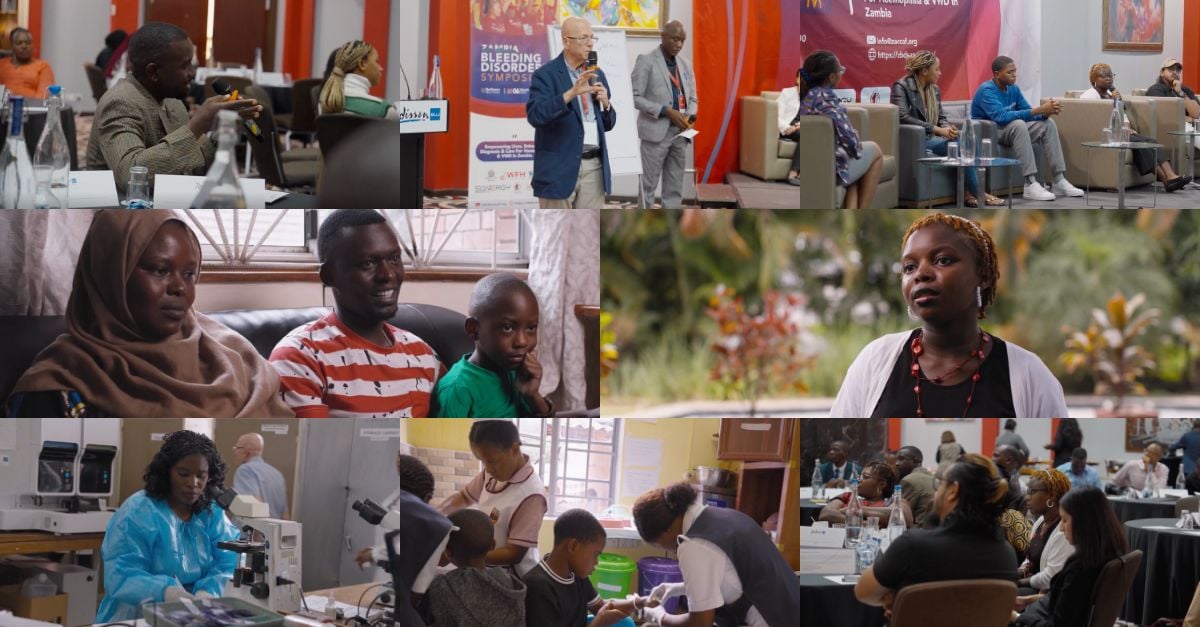
The WFH provides essential support for healthcare professionals in Zambia through several efforts, including donated treatment products and training through the WFH Humanitarian Aid Program. The federation is also active in the country through the Path to Access to Care and Treatment (PACT) Program, a WFH Research Support Program grant, and the WFH World Bleeding Disorders Registry (WBDR).
The multidisciplinary symposium saw specialists enthusiastically collaborate on a range of topics—and leave the event with actionable learnings. “What was really astonishing is the commitment of the people that came… the room was full at 8 a.m.” said Assad Haffar, MD, WFH Medical & Humanitarian Aid Director. “And the room was still packed at 6 p.m., which reflects the commitment and the interest of the people there.” Haffar explains that government partnership in hemophilia care is of critical importance. As an example, he highlighted Zambia’s pioneering role in introducing non-factor replacement therapy, which was made possible through the collaboration of several organizations, including the government. “Zambia had the first patient put on prophylactic treatment with non-factor replacement therapy,” he noted.
For patients, the changes that have come about thanks to the WFH have been nothing short of life changing. “I started taking treatment for hemophilia in 2018,” said Omben, a man with hemophilia. “I used to come here in the hospital to get the treatment every week. It was just disturbing my life. I didn’t manage to go to school. Even working, maybe to go somewhere to ask for some job. I’d work, and I’d be sick, I’d be fired.” With access to treatment products, he can have more stability in his life and hold a job. He also credits on-factor replacement therapy with changing the life of his younger brother, who also has hemophilia. Instead of a life of unpredictable bleeds, Omben’s brother can go to school regularly with his peers.
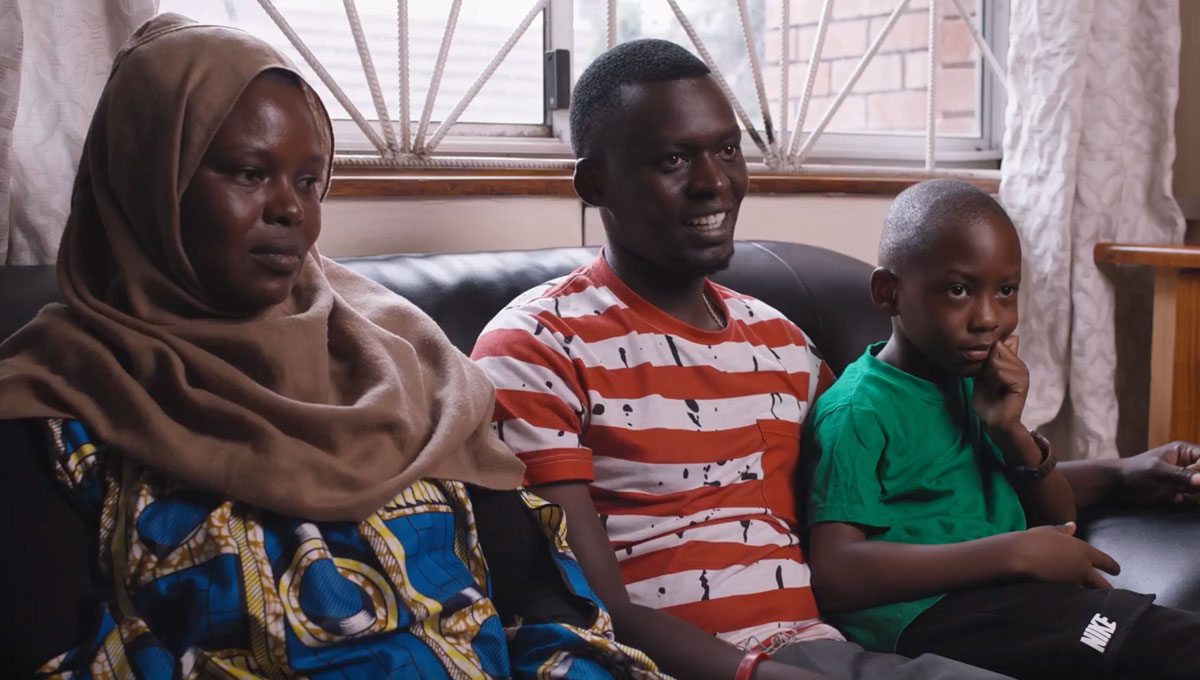
Clinicians echoed the impact of WFH support. “It’s very fulfilling for me as a physician, to know that this child can go to school without so many hindrances,” said Telo Siame-Mumba, MD, Pediatrician, University Teaching Hospital, Lusaka. Similarly, Chilala Sichula, MD, Pediatric Registrar, University Teaching Hospital, Ministry of Health, also has very positive feedback about the WFH Humanitarian Aid Program: “Consistency of access makes a very big difference for us because at least we get to see the improved quality of life.”
For newly diagnosed patients like Chatowa, a young woman with von Willebrand disease (VWD), the future is full of hope. Initially, she says, “I personally was very, very scared and I felt alone because of how rare I was told it was.” Now, with access to support, her outlook has completely changed: “I’m actually studying medicine at the moment, and I want to help people who have my problem and other bleeding disorders.”
The WFH Humanitarian Aid Program has donated over 16.3 million IUs of factor and over 188,000 mg of non-factor replacement therapy to Zambia since 2015. Nearly 2.5 million IUs of factor, and 22,000 mg of non-factor replacement therapy were donated last year alone. To find out more about the WFH Humanitarian Aid Program please click here.
About the WFH Humanitarian Aid Program
The WFH Humanitarian Aid Program improves the lack of access to care and treatment by providing much-needed support for people with inherited bleeding disorders in developing countries. By providing patients with a more predictable and sustainable flow of humanitarian aid donations, the WFH Humanitarian Aid Program makes it possible for patients to receive consistent and reliable access to treatment and care. None of this would be possible without the generous support of Sanofi and Sobi, our Founding Visionary Contributors; Bayer, CSL Behring and Roche, our Visionary Contributors; Grifols, our Leadership Contributor; and Takeda, our Contributor. To learn more about the WFH Humanitarian Aid Program, visit www.treatmentforall.org.