The WFH supports the inherited bleeding disorders community in Zambia through a range of initiatives designed to help the country build a health infrastructure that can deliver long-term, reliable care. Through the WFH Humanitarian Aid Program, the WFH delivers donated treatment products and provides essential training for healthcare professionals. At the same time, the Path to Access to Care and Treatment (PACT) Program focuses on expanding diagnosis, improving outreach, and increasing access to sustainable care across the country. In addition to this, a WFH Research Support Program grant is enabling healthcare professionals strengthen their data management practices; and local data are contributing to global hemophilia research via the WFH World Bleeding Disorders Registry (WBDR).
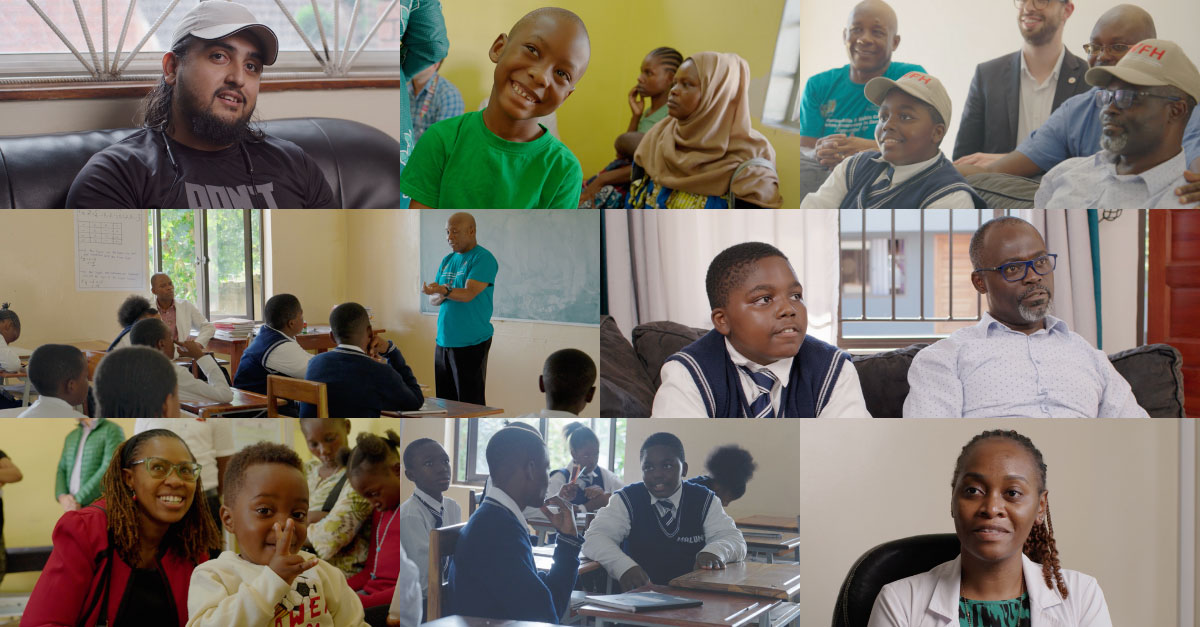
Chirag, an adult living with hemophilia, remembers the challenges he faced when he was a child. Often, his family purchased factor VIII privately from South Africa to help him control his bleeds. But when Chirag broke his leg, the limitations of factor therapy became clear. After five surgeries and extensive factor use, he developed inhibitors, making bleeding episodes harder to control. The real breakthrough for him came when he started receiving non-factor replacement therapy. Thanks to this treatment, Chirag has bleeds very infrequently now. “I go to the gym… I do music… I’m living the best ‘hemophilia life’,” he says.
We have a lot of our children that come to receive [non-factor replacement therapy]… about 30 children, and ever since they started receiving it, none of them has had a major bleed. They can go to school, parents can go for work.
—Chilala Sichula, MD, Pediatric Registrar, University Teaching Hospital, Ministry of Health
For Manasseh and his family, emicizumab has brought stability. “His medication has changed our lifestyle.,” says Ackson. “It has given us that leverage to work, knowing that even when we are out… doing other sorts of things, we know that our child is safe.” Ackson hopes that Manasseh, who dreams of becoming a doctor, will inspire others and advocate for broader access. “So, for me, I wish my son can drive that agenda, be an example to the community… And he can pass on the torch to other people that may have the same condition to forge ahead.”
The WFH Humanitarian Aid Program has donated over 16.3 million IUs of factor and over 188,000 mg of non-factor replacement therapy to Zambia since 2015. Nearly 2.5 million IUs of factor, and 22,000 mg of non-factor replacement therapy were donated last year alone. To find out more about the WFH Humanitarian Aid Program please click here.
About the WFH Humanitarian Aid Program
The WFH Humanitarian Aid Program improves the lack of access to care and treatment by providing much-needed support for people with inherited bleeding disorders in developing countries. By providing patients with a more predictable and sustainable flow of humanitarian aid donations, the WFH Humanitarian Aid Program makes it possible for patients to receive consistent and reliable access to treatment and care. None of this would be possible without the generous support of Sanofi and Sobi, our Founding Visionary Contributors; Bayer, CSL Behring and Roche, our Visionary Contributors; Grifols, our Leadership Contributor; and Takeda, our Contributor. To learn more about the WFH Humanitarian Aid Program, visit www.treatmentforall.org.