About the NMO
NMO name | Kenya Haemophilia Association (KHA) |
Location | Nairobi, Kenya |
Founding date | 1992 |
PWBDs served | 1,218 |
Website* |
Background
The Kenya Haemophilia Association (KHA) was founded in 1979 and became a WFH NMO in 1992. Since then, the organization has been involved with the WFH on a number of endeavours, including the WFH Humanitarian Aid Program, the International External Quality Assessment Scheme (IEQAS) and the WFH Path to Access to Care and Treatment (PACT) Program.
Q&A with the NMO
The following answers from the NMO have been edited for clarity.
What services do you offer to your community?
The Kenya Haemophilia Association (KHA) aims for the highest standard of care for people with hemophilia and other bleeding disorders in Kenya. Our mission is to work with stakeholders for the benefit of all affected people. We offer treatment, patient and caregiver education, psychosocial support, and family tree tracing.
What are the challenges your NMO faces?
Inadequate insurance for PWBDs, stigma, dependence on donors for treatment, complicated tax exemption processes, and families who must unfortunately prioritize survival over care. We’ve overcome these challenges by advocating for policy changes, raising awareness, partnering with donors, and seeking inclusion in disability programs and other social programs.
Why did your NMO join the WFH?
We joined the WFH to get broader treatment access and to have the opportunity to join a global network. And, of course, the huge benefit of training and capacity building that are offered by the WFH. We have seen a major shift from isolated, reactive care to more coordinated, comprehensive and patient centered systems. This has allowed us to expand screening and diagnosis, improve access to treatment, and build stronger national and county level partnerships.
How would you describe your experience collaborating with the WFH?
The WFH’s support has enabled the KHA to improve screening, diagnosis, and care, while also empowering healthcare professionals and PWBDs.
Which WFH programs have been the most impactful for your community?
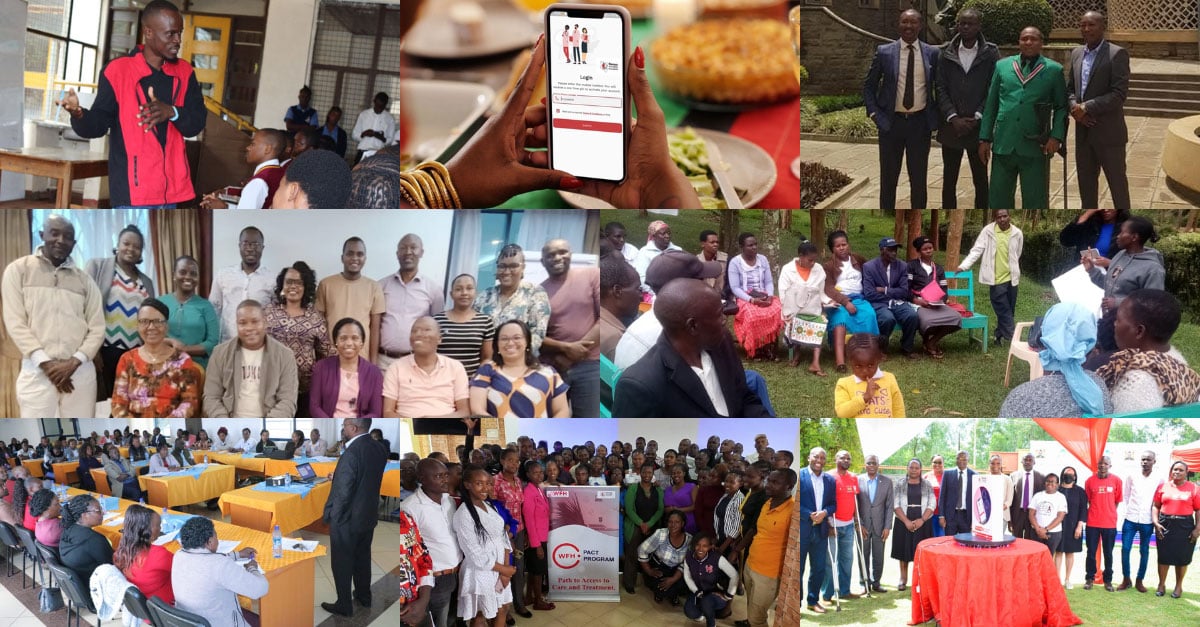
Under the Path to Access to Care and Treatment (PACT) program, the KHA successfully trained Community Health Assistants (CHAs) in hemophilia and other bleeding disorders. CHAs operate in both urban and rural areas, often covering far larger territories than clinics and spending more time on the ground. This training has translated into measurable results: more accurate diagnoses, faster referrals, and a noticeable reduction in treatment delays. It has also increased awareness among healthcare workers who may otherwise never have encountered a bleeding disorder case.
We have also benefitted from the WFH Humanitarian Aid Program, the WFH Twinning Program and national member organization capacity building facilitated by the WFH.
What progress have you made over the years?
Access to better care—made possible by our collaboration with the WFH—has significantly reduced both mortality and disability rates in Kenya. Cases of children developing severe disabilities due to untreated bleeds have dropped. Rural communities are increasingly bringing children to clinics, and advanced procedures like synovectomy are now offered in Kenya.
What advice can you give other NMOs?
The Kenyan experience shows that even when governments cannot directly fund treatment, they can provide vital support in other ways. In Kenya, all hemophilia clinics are housed within government facilities, with staff on government payrolls, and import duties on donated medicine are waived.
Engaging communities is essential—when they understand the condition and its needs, they become powerful advocacy ambassadors. The KHA also fosters collaboration with NMOs in the region to share resources, strategies, and lessons learned.
Would you like to highlight any of your team members?
We would like to highlight one of our volunteers: Carlos Maube. He stands out as both a PWBD and a dedicated volunteer. Over more than a decade, he has worn many hats: managing the receipt and distribution of WFH Humanitarian Aid Program donations, ensuring all government paperwork for tax waivers is completed, coordinating KHA’s activities in the Western region, and supporting administrative functions.
Would you like to share a story of a PWBD who benefited from your collaboration with WFH?
Wayne, a person with hemophilia B from Turkana, lived over 36 hours away from his nearest treatment facility. During the COVID-19 lockdowns, multiple untreated bleeds left him unable to walk. Thanks to the WFH, Wayne received treatment at Kenyatta National Hospital. Over several months, he progressed from not being able to walk at all to standing with one crutch. His recovery is ongoing, but his determination to return to school inspires everyone who meets him.
Have you been successful advocating with governments?
In 2022, KHA launched national treatment guidelines in partnership with the Ministry of Health. We also tabled a petition to parliament in 2019, though COVID-19 temporarily shifted government priorities. Efforts are underway to retable it, alongside petitions to the East African Legislative Assembly.
Do you have any message for the global bleeding disorders community?
From Kenya to every corner of the world: our journeys may differ, but our mission is shared—to ensure no one is left behind in access to care. Every bleed matters, and every life counts.
Find out more about other NMOs
To read about the way the WFH and NMOs collaborate to make a difference in local bleeding disorders communities, please read “National member organizations: the heartbeat of the WFH” here.
To read more stories in this series, please click on one of the links below.
NMO | Country | Article |
Federação Brasileira de Hemofilia | Brazil | |
Asociación Costarricense de Hemofilia | Costa Rica | |
Fundación Apoyo al Hemofílico | Dominican Republic | |
National Hemophilia Network of Japan | Japan | |
Kyrgyz Hemophilia Society Community of Handicapped-Hemophiliacs of the Republic of Kyrgyzstan | Kyrgyzstan | |
Libyan Association for Hemophilia | Libya | |
Hemophilia Society of Malaysia | Malaysia | |
Haemophilia Association of Mauritius | Mauritius | |
Federación de Hemofilia de la República Mexicana | Mexico | |
Syrian Hemophilia Society | Syria | |
Association Tunisienne de L’Hemophilie (ATH) | Tunisia |
* Disclaimer: These are external sites, and their content has not been developed nor endorsed by the WFH.