À propos
Actions
Données et outils
Évenements
Actualités
news-managing-pain-may11

The challenge of evaluating and managing pain

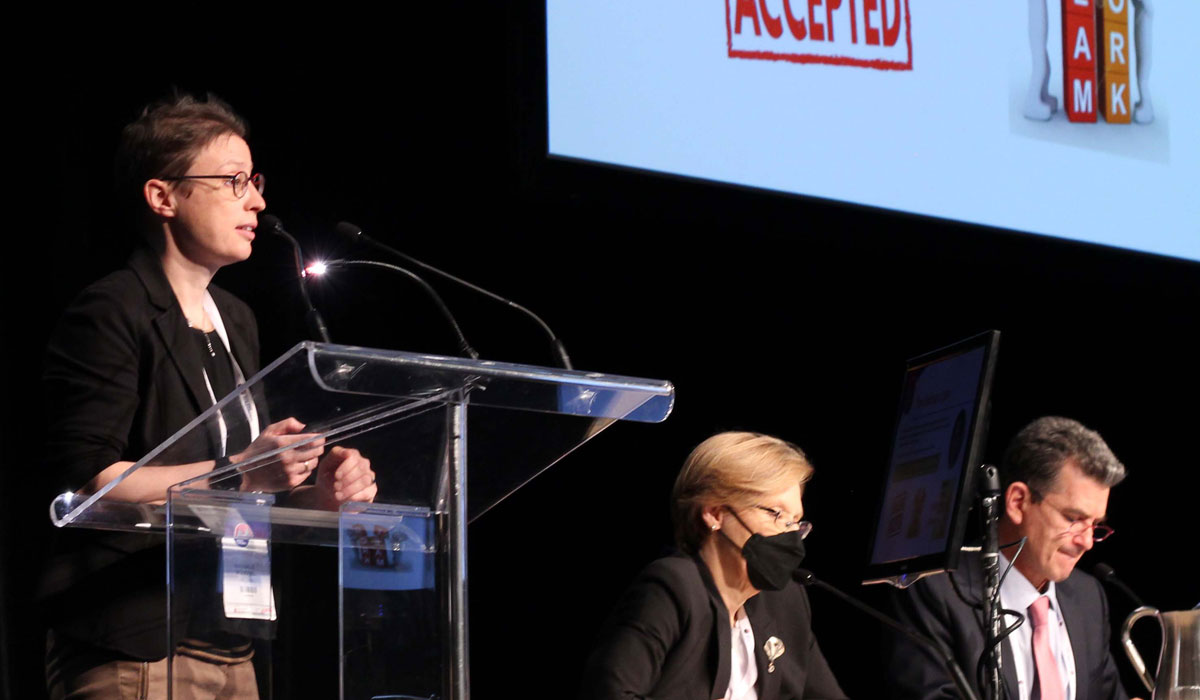
Today, the session “The challenge of evaluating and managing pain” was given at the WFH 2022 World Congress. The event was chaired by Barbara Konkle, Research Director and Professor of Medicine at the Washington Center for Bleeding Disorders, U.S.A., and World Federation of Hemophilia medical board member.

Aussi disponible en : English Español

Today, the session “The challenge of evaluating and managing pain” was given at the WFH 2022 World Congress. The event was chaired by Barbara Konkle, Research Director and Professor of Medicine at the Washington Center for Bleeding Disorders, U.S.A., and World Federation of Hemophilia medical board member.

Tyler Buckner, Associate Professor, Medicine-Hematology at the University of Colorado, Anschutz Medical Campus, U.S.A, gave a talk called, “Evaluating pain from a patient-centered perspective”. He looked at why we need to measure pain, how to measure pain, and what to do with the results. Findings show that there is a high prevalence of pain among people with a bleeding disorder (PWBD), especially in those with joint disease, and that the pain is highly impactful to the patient’s quality of life. Buckner said thought must go into measurement tools. And, once we have results, we must integrate pain measurement into practice, and incorporate mental health assessments into care. Ultimately, we want to create a conversation and foster shared decision making.

“Managing pain from a broad biopsychosocial perspective” was given by Nathalie Roussel, Associate Professor at the University of Antwerp, Belgium. She said that there are many challenges to assessing pain, such as hemophilia severity, joint health, mental health, misbeliefs, deconditioning, and malalignment. In terms of managing pain, we must look at many factors, such as information and communication, lifestyle, braces, aids and other adaptations, medication, surgical options, exercise, and psychological intervention. She found that pain is poorly related to structural damage, and that it is multifactorial. Roussel also found that information and communication; psychosocial interventions; exercise and physiotherapy; medication; and lifestyle changes can all help patients better manage pain.

Valérie-Anne Chantrain, PT, MSc, PhD candidate at the Universiteit Antwerpen, Belgium, gave a talk called, “The impact of pain on sleep and quality of life”. She found that in terms of sleep, chronic pain patients spend less time asleep, have a greater delay in sleep onset; experience poorer sleep efficiency, and have arousals. Chantrain says that sleep deprivation leads to cytokines secretion, which leads to morning interleukin, which leads to rheumatoid arthritis, arthritis, hemophilic arthropathy and joint pain, and swelling and joint destruction. Proper sleep evaluation is important, including cognitive behavioural therapy for insomnia.

Unfortunately, the presentation for “Patient perspective” by Bojan Pirnat, Blood Safety and Supply Committee Member at the Canadian Hemophilia Society, Canada was not received in time for this article.

WFH 2022 World Congress

May 8 to 11, 2022

We’ve accomplished a lot this year, we need your help to continue strong.

Would you like to read more about similar articles?

Disclaimer

The information on the WFH website is provided for general information purposes only. The WFH does not engage in the practice of medicine and under no circumstances recommends particular treatment for specific individuals. For diagnosis or consultation on a specific medical problem, the WFH recommends that you contact your physician or local treatment centre. Before administering any products, the WFH urges patients to check dosages with a physician or hemophilia centre staff, and to consult the pharmaceutical company’s printed instructions.

While every effort has been made to ensure the accuracy of the information on this site, the WFH does not guarantee the information is accurate, and is not responsible in any way whatsoever for damages arising out of the use of this website or any of the information contained herein.

Messages posted to WFH discussion forums, Facebook, Twitter, and other social media platforms do not represent the opinions of the World Federation of Hemophilia, its staff, or Board of Directors. The author of a message is solely responsibility for its content. Information posted on WFH social networks and platforms should never be a substitute for individualized professional medical advice, even when the author has medical qualifications or is considered an authority. Information posted to a discussion group should not be used to diagnose or treat a specific health problem without consulting a qualified healthcare professional. The WFH recommends that you contact your physician or local treatment centre if you have any individual questions or concerns.

References and links to other websites or references to other organizations, products, services, or publications do not constitute endorsement or approval by the WFH. The WFH is not responsible and assumes no liability for the content of any linked websites.

Fraud Alert

Unauthorized solicitations – Warning

The WFH has been made aware of various correspondences—circulated via e-mail and telephone—coming from individuals impersonating WFH staff or falsely stating that they are associated with the WFH. These correspondences, which may seek to obtain money using the name of someone affiliated with the WFH, are fraudulent and come from outside of our organization.

If you receive a suspicious solicitation, exercise extreme caution. In the case of an email, look at the email address to see if it looks suspicious (for example, all WFH emails come from @wfh.org).

We are asking you to remain vigilant, and if you have any doubts about the correspondence, please forward the email to the WFH at [email protected] or call +1 514-875-7944.