Encouragingly, there’s a secondary effect to WFH Humanitarian Aid Program training: the simple forging of relationships between organizations which creates a powerful network for supporting people with bleeding disorders (PWBDs). Simply put, when a crisis happens, people know who they can call. In Uganda this summer, this simple awareness possibly saved the life of a young man.
Mwaka Isaac Okwongo was referred to St. Mary’s Hospital Lacor from another facility because of a severe hemorrhagic anemia that followed an exploratory laparotomy (a surgical incision in the abdominal cavity done to examine the abdominal organs and aid diagnosis). When first admitted, he had never been diagnosed with hemophilia A, even though he had had frequent painful joint swellings his whole life and had knee joint deformities. As his condition worsened, physicians who had been trained to recognize the signs of a bleeding disorder began to suspect he might have hemophilia. A request was put in for a transfer of factor from other hospitals, and once administered, Okwongo’s bleeding stopped, and his condition improved. He was then referred to Mulago National Referral Hospital for further diagnostic evaluation by a hematologist.
Unfortunately, Okwongo’s condition soon worsened, and he was admitted to the hospital again with severe bowel pain. Doctors decided that they needed to urgently perform another explorative laparotomy—but they lacked the factor stock to do so. The resident physician immediately contacted Agnes Kisakye, the Executive Secretary of the Haemophilia Foundation of Uganda (HFA). Kisakye was able to use her contacts at other hospitals to quickly secure more factor for Okwongo. She also put the doctor in touch with a hematologist from the Mulago National Referral Hospital, who was able to provide the team with invaluable advice on how to ration the factor as efficiently as possible so that it would last for Okwongo’s entire hospitalization.
Okwongo is now expected to make a full recovery. His life was saved thanks to factor donated by the WFH Humanitarian Aid Program—but also thanks to the rapid actions of the entire medical team. Years of training and education by the Program team have helped to build a robust bleeding disorder treatment network in Uganda. This network has helped save lives and give PWBDs in the country a better quality of life. To read another story about how the WFH Humanitarian Aid Program’s training is making a difference in Uganda, please click here.
Over 10 million IUs have been donated to Uganda through the WFH Humanitarian Aid Program since 2015. Last year, nearly 1.5 million IUs of factor and over 34,000 mg of non-factor replacement therapy were provided to the African country. To find out more about the WFH Humanitarian Program, please click here.
About the WFH Humanitarian Aid Program
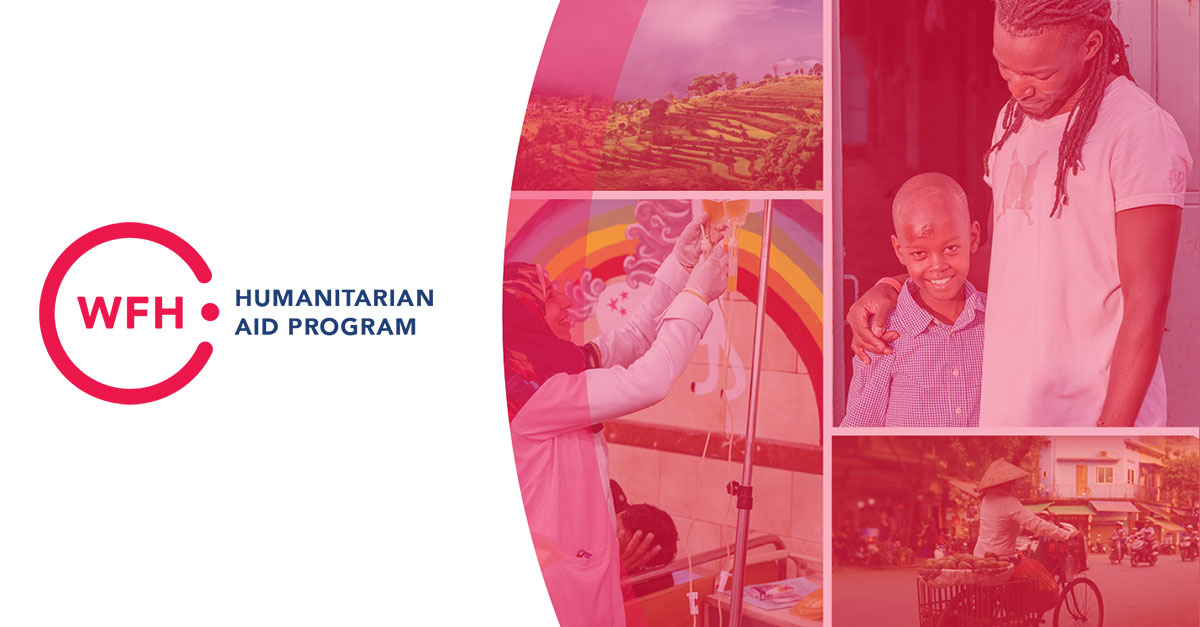
The WFH Humanitarian Aid Program improves the lack of access to care and treatment by providing much-needed support for people with inherited bleeding disorders in developing countries. By providing patients with a more predictable and sustainable flow of humanitarian aid donations, the WFH Humanitarian Aid Program makes it possible for patients to receive consistent and reliable access to treatment and care. None of this would be possible without the generous support of Sanofi and Sobi, our Founding Visionary Contributors; Bayer, CSL Behring and Roche, our Visionary Contributors; Grifols, our Leadership Contributor; and Takeda and Japan Blood Products Organization, our Contributors. To learn more about the WFH Humanitarian Aid Program, visit www.treatmentforall.org.