Cameroon-header

Research Support Program (RSP) grant supports advocacy in Cameroon

Access to treatment and care for people with hemophilia (PWH) in Cameroon has historically been very difficult. There are two hemophilia treatment centres (HTCs) in the country, but because of a limited transportation infrastructure and financial challenges, PWH are often not able to visit the facilities on a regular basis. As a result, the community suffers from sub-optimal bleed treatment, and consequently, associated long-term sequelae, including chronic joint disease. To help gather data on this reality to help with advocacy, the HTC in Yaoundé University Teaching Hospital used a WFH World Bleeding Disorders Registry (WBDR) Research Support Program (RSP) grant to collect prospective data and analyze the extent of joint disease in the Cameroonian bleeding disorders population.

Also available in: Français Español

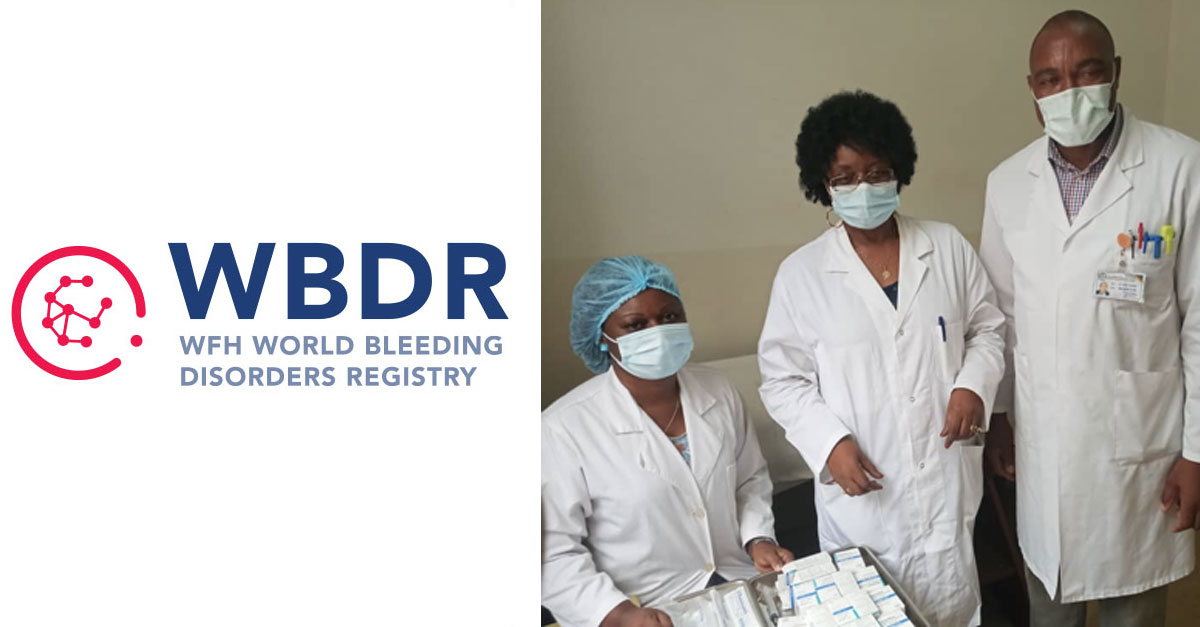
Data is of critical importance to advocacy, because without it, the significant burden of disease can’t be convincingly communicated to healthcare decision makers. The team at the Yaoundé HTC was awarded a grant through Research Support Program (RSP) of the World Bleeding Disorders Registry (WBDR)—the only global registry collecting standardized clinical data on PWH and people with von Willebrand disease (VWD). This grant allowed the team to collect and analyze new and existing data easily and systematically.

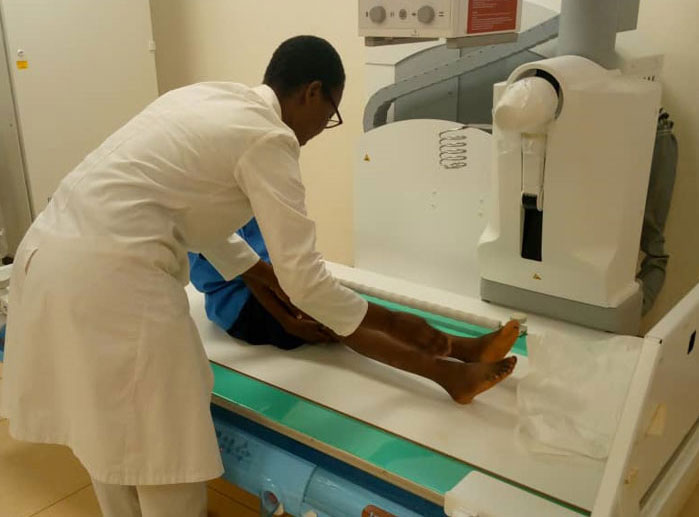
The project was implemented in Cameroon in December 2020 and completed in November 2022. The research aimed to study the epidemiological, clinical, and radiological profile of joint disease in PWH in Cameroon. The Yaoundé HTC team did the assessments using the Hemophilia Joint Health Score (HJHS) method, which measures joint health in the domain of body structure and function for the joints most affected by bleeding in hemophilia. All data were then entered in the WBDR. Radiological and ultrasound assessments were also done for the elbows, knees and ankles of PWH.

Using the WBDR to capture and analyze the data will be instrumental in helping us advocate for people with bleeding disorders (PWBDs) in Cameroon.

—Ndoumba Annick, MD, Yaoundé hemophilia treatment centre (HTC)

The HTC Yaoundé team recruited 38 PWHs and examined 228 joints. The average age of the PWH was 16 years old, and ranged from three to 42 years old. The results of HJHS showed that 84% of PWH had damaged joints. Overall, the most affected joints were the knees (48% of affected joints), followed by the elbow (32% of affected joints) and ankle (20% of affect joints). In addition, the radiographic findings showed an enlargement of the epiphysis in 55% of joints. The ultrasound showed that 45% of joints had hemosiderin deposition; fluid effusion was found in 35%; and 32% of joints had bone erosion. In short, the study convincingly proved that most PWH in Cameroon have a significant degree of joint damage—starting as young as three years old.
Thanks to the funding from the WBDR RSP, and using the WBDR as a tool, the Yaoundé HTC team was able to demonstrate the significant impact of sub-optimal treatment on joint health on PWH in Cameroon. Having the data collected in a prospective manner and stored in a secure database provides the HTC—and the national member organization (NMO)—with evidence-based support for initiatives that can improve care. This is the first study of its kind for Cameroon and will be used as a model for other countries with similar challenges.

To find out more about the WFH WBDR Research Support Program, please click here. To find out more about the WBDR, click here.

We’ve accomplished a lot this year, we need your help to continue strong.

Would you like to read more about similar articles?

Disclaimer

The information on the WFH website is provided for general information purposes only. The WFH does not engage in the practice of medicine and under no circumstances recommends particular treatment for specific individuals. For diagnosis or consultation on a specific medical problem, the WFH recommends that you contact your physician or local treatment centre. Before administering any products, the WFH urges patients to check dosages with a physician or hemophilia centre staff, and to consult the pharmaceutical company’s printed instructions.

While every effort has been made to ensure the accuracy of the information on this site, the WFH does not guarantee the information is accurate, and is not responsible in any way whatsoever for damages arising out of the use of this website or any of the information contained herein.

Messages posted to WFH discussion forums, Facebook, Twitter, and other social media platforms do not represent the opinions of the World Federation of Hemophilia, its staff, or Board of Directors. The author of a message is solely responsibility for its content. Information posted on WFH social networks and platforms should never be a substitute for individualized professional medical advice, even when the author has medical qualifications or is considered an authority. Information posted to a discussion group should not be used to diagnose or treat a specific health problem without consulting a qualified healthcare professional. The WFH recommends that you contact your physician or local treatment centre if you have any individual questions or concerns.

References and links to other websites or references to other organizations, products, services, or publications do not constitute endorsement or approval by the WFH. The WFH is not responsible and assumes no liability for the content of any linked websites.

Fraud Alert

Unauthorized solicitations – Warning

The WFH has been made aware of various correspondences—circulated via e-mail and telephone—coming from individuals impersonating WFH staff or falsely stating that they are associated with the WFH. These correspondences, which may seek to obtain money using the name of someone affiliated with the WFH, are fraudulent and come from outside of our organization.

If you receive a suspicious solicitation, exercise extreme caution. In the case of an email, look at the email address to see if it looks suspicious (for example, all WFH emails come from @wfh.org).

We are asking you to remain vigilant, and if you have any doubts about the correspondence, please forward the email to the WFH at [email protected] or call +1 514-875-7944.