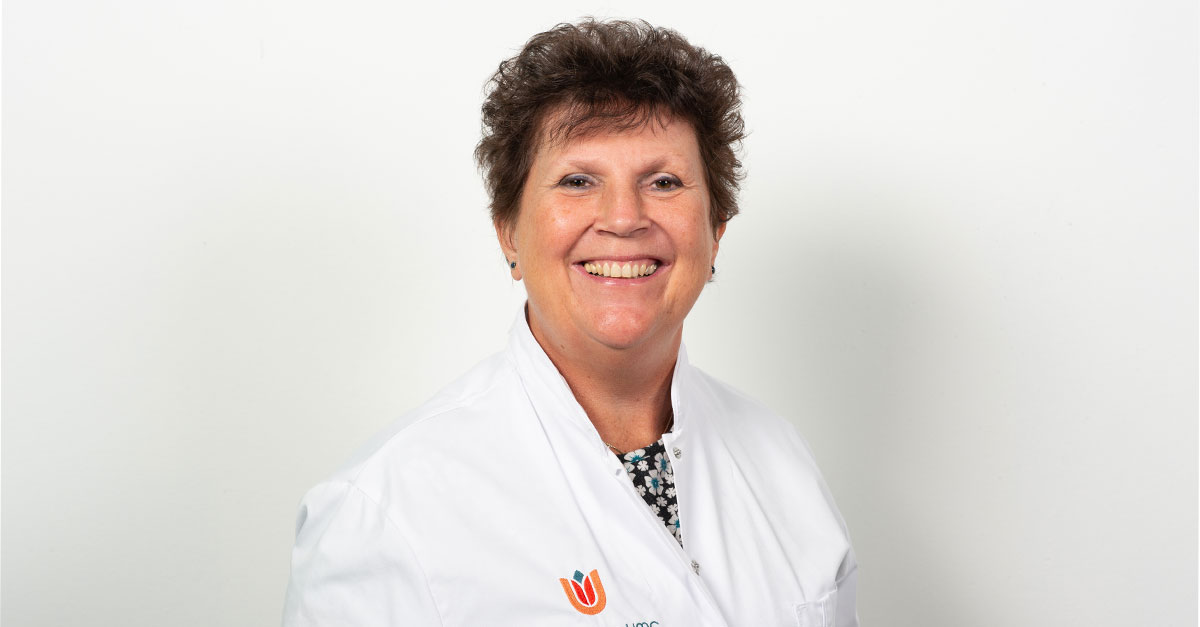
Marlène has been using the WFH Shared Decision-Making (SDM) Tool since it was translated into Dutch in 2024. She incorporates the tool into her daily clinical practice whenever people with bleeding disorders (PWBDs) or their families are facing important treatment decisions, particularly during diagnosis, transitions in care, or when considering a new therapy.
Shared decision-making is not a one-time thing. It is a process. You provide information, make sure patients understand it, encourage them to discuss it with their family, and then come back to the conversation. There doesn’t have to be an immediate decision.
—Marlène Beijlevelt, Nurse Practitioner, Amsterdam University Medical Center, Amsterdam, Netherlands
One experience that stands out for Marlène involved a mother who was expecting her second son. Her first child has hemophilia, but she chose not to learn during pregnancy whether her unborn child would also have the condition. Marlène introduced the WFH SDM Tool to the mother so that she could get the latest information about current treatment options, allowing her to explore different avenues at her own pace and feel prepared for different possibilities before her child’s birth. “Even if we don’t yet know whether the baby has hemophilia,” Marlène explained, “having the information beforehand helps families feel prepared instead of overwhelmed.”
Marlène also uses the tool with adolescents transitioning from pediatric to adult care and with PWBDs who may be considering a change in treatment, often sending them the online link before their clinic appointments so they can review the available treatment options in advance. The WFH SDM Tool does not replace a personal conversation with the healthcare team; rather, it helps patients prepare for that conversation, identify what matters most to them, and formulate the questions they want to discuss. “Patients need time to digest the information,” she explains. “Shared decision-making is something you return to throughout life whenever circumstances or treatment options change.”
Marlène believes the WFH SDM Tool benefits healthcare professionals as much as patients. When PWBDs and their caregivers arrive informed, the whole team can engage in more meaningful conversations and make decisions together with greater confidence.
Looking ahead, Marlène hopes to see even broader awareness and adoption of the WFH SDM Tool among healthcare professionals, national member organizations (NMOs), and PWBDs. In the Netherlands, she is involved in an initiative to show that shared decision-making is not an additional burden for healthcare providers—but rather a resource that improves communication and supports better care. By fostering understanding, encouraging open conversations, and respecting each patient’s preferences, the WFH Shared Decision-Making Tool supports rather than replaces the personal dialogue between PWBDs, families, and their healthcare team, helping to make truly patient-centred care possible.
To find out more about the WFH Shared Decision-Making (SDM) Tool, click here.
We like to acknowledge and thank our WFH Corporate Partners, Pfizer, Roche, Sanofi and Sobi for their contributions to the WFH SDM Program.