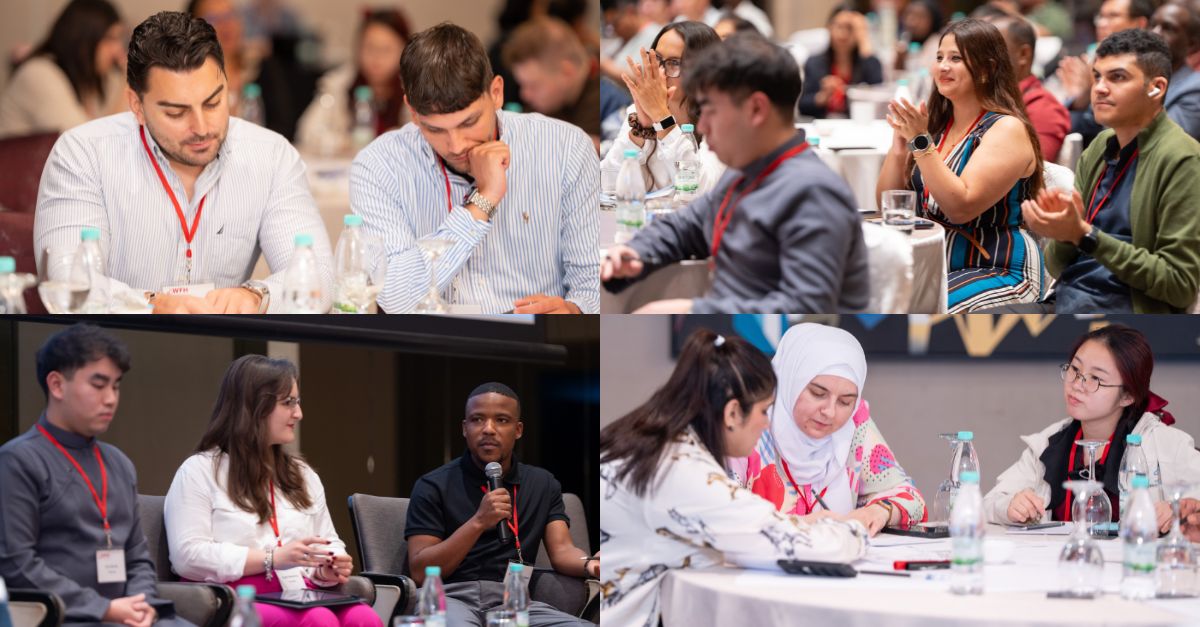
The WFH Youth Leadership Program is designed to foster engagement, skill building and international collaboration among national member organization (NMO) youth members, encourage participants to gain meaningful experiences in their local communities, and support their long-term engagement with their NMOs. The two-year program milestones included in-person trainings and real-world project assignments. After their first leadership training in Dubai, fellows were asked to complete a project of their choice within the framework of their NMOs to apply their new skills, gain experience in project management and contribute to the mission and strategic priorities of their NMOs. Participants who successfully completed their projects were invited to attend major WFH events in April at the WFH 2026 World Congress in Kuala Lumpur.
The two-year arc of the program felt intentional in the best way. Dubai gave me the foundation, the frameworks, the connections, the confidence to think beyond my immediate context. By the time we reached the Congress in Kuala Lumpur, I was not arriving as a participant anymore. I was arriving as someone with a project completed, lessons learned, and something real to contribute.
—Šejla Sarač, Bosnia & Herzegovina, Haemophilia Society of Bosnia and Herzegovina
In Kuala Lumpur, the youth fellows attended the WFH Global NMO Training, which featured capacity-building sessions, workshops, and networking opportunities designed to strengthen NMO organizational capacities. They also participated in the WFH Annual Meeting of the General Assembly, either as official delegates of their NMOs or as observers, to experience firsthand the WFH governance processes, and attended the WFH 2026 World Congress, where they learned from international experts in the field.
The sessions around leadership, advocacy, governance and strengthening NMOs had the greatest impact on me. I also found the discussions around access to treatment, youth involvement and building sustainable foundations very meaningful. These topics directly relate to the work I am involved in and gave me practical ideas that I can bring back to Australia and our community work.
—Alan Dursun, Australia, Haemophilia Foundation Australia
As the first cohort concludes, participants will continue their leadership journey by mentoring the next group of youth fellows and having the opportunity to contribute to the WFH Youth Committee, which supports and advises the WFH on youth programs and initiatives. Building on the skills, networks, and confidence gained through the program, they are also encouraged to remain active in their NMOs and local bleeding disorders communities, where they can continue applying their experience and supporting meaningful youth engagement.
I plan to apply what I learned by actively strengthening collaboration and communication in my local NMO. This includes contributing more intentionally in group discussions, supporting teamwork initiatives, and encouraging open exchange of ideas to improve planning and decision-making processes. I also intend to share the insights gained from the training sessions to help improve how we approach structured activities and member engagement.
—Ramolibeli Mohlaoli, Lesotho, Haemophilia Association of Lesotho
The WFH looks forward to learning about the many successes that the 2026 WFH Youth Leadership cohort will realize in the coming years and collaborating with the next cohort that will participate in the WFH 2028 World Congress.
To find out more about the WFH Youth Leadership Program, please click here.
The WFH would like to give special thanks to Hemophilia of Georgia (HOG) for their support of the WFH Youth Leadership Program.