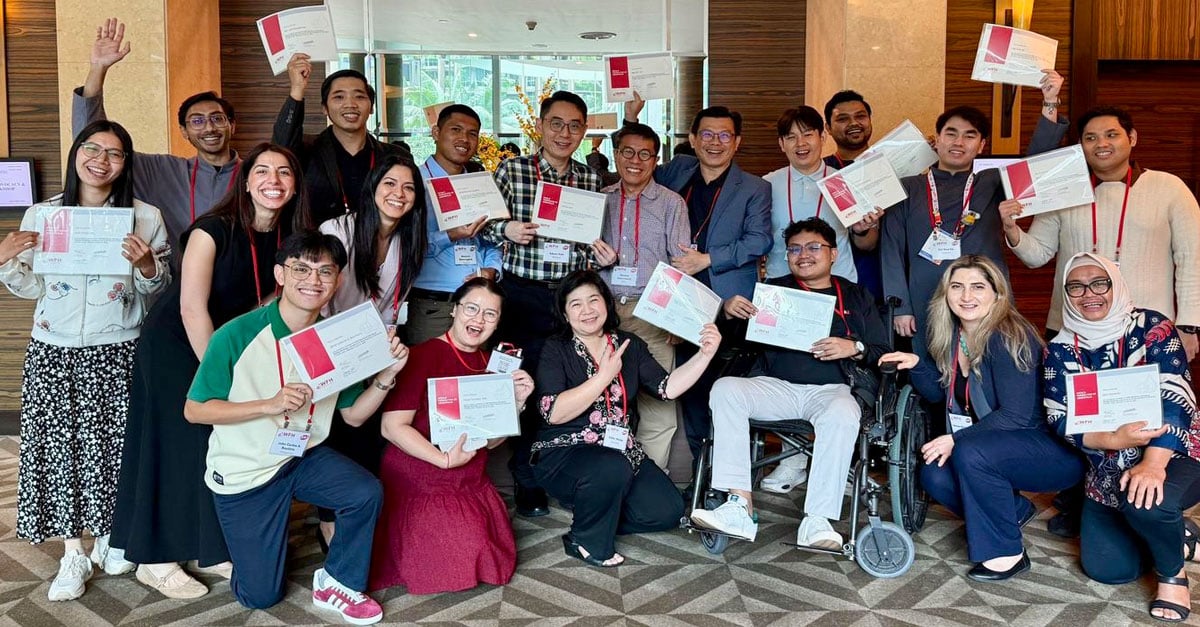
Workshop participants were introduced to key concepts, practical tools, and strategies for data-driven advocacy in Southeast Asia during the morning session. Discussions focused on how reliable data can help NMOs identify gaps in care, communicate needs more effectively, and influence decision-makers responsible for health policy and resource allocation.
Participants also explored how registry data—including information collected through the WFH World Bleeding Disorders Registry (WBDR) and the WFH Annual Global Survey (AGS)—can support advocacy and planning at the national level. These tools can help NMOs better understand treatment access, diagnosis rates, and service gaps within their countries.
Interactive group exercises and case studies during the event gave participants the opportunity to apply data-driven advocacy principles to real-world situations relevant to their communities and organizations. There was also an open discussion on the challenges of data collection in the Asia-Pacific region, where participants had the chance to share their experiences, identify common barriers with their peers, and discuss practical approaches to improving data quality, sustainability, and the long-term use of data in advocacy efforts.
The second half of the workshop—led by facilitators Brian O Mahony and Deon York—focused on defining the strategic direction and future priorities of the ASEAN Hemophilia Network (AHN). Through collaborative discussions, participants agreed on four key areas of focus: data-driven advocacy, effective data collection systems, the development of appropriate educational materials, and organizational sustainability.
