WFH Shared Decision Making Tool: three years of global impact

WFH Shared Decision Making Tool: three years of global impact

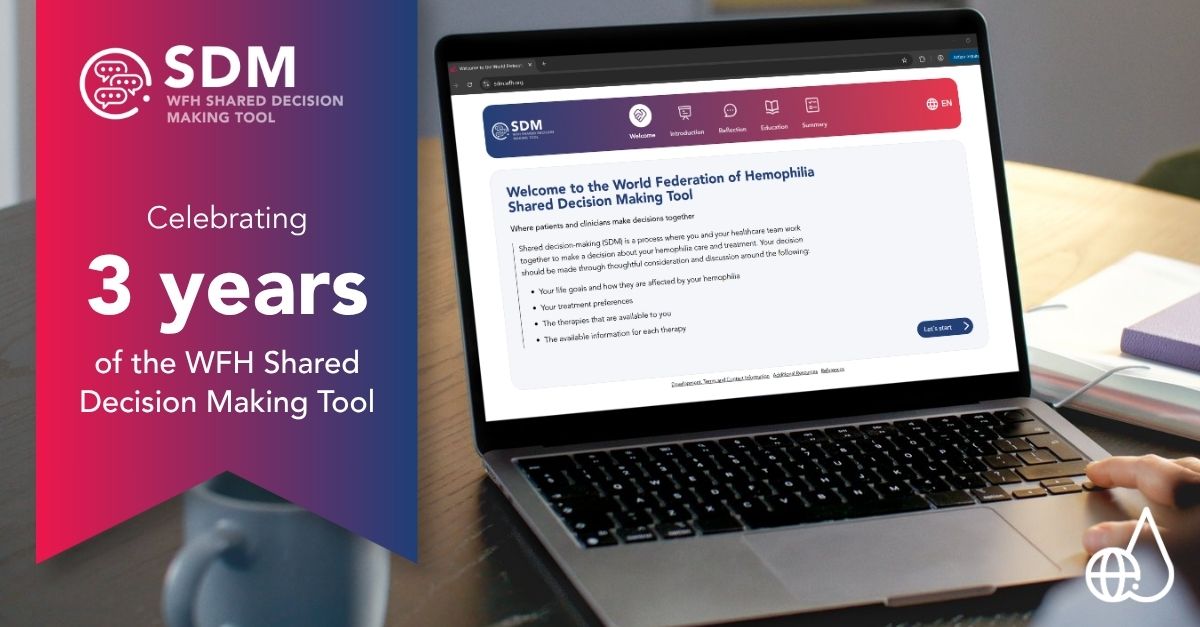
Since its launch in 2023, the World Federation of Hemophilia (WFH) Shared Decision Making (SDM) Tool has grown from a global digital decision-support tool into a broader implementation initiative supporting people with hemophilia, caregivers, and healthcare professionals. Over the past three years, the WFH SDM Tool was visited by more than 34,000 people, with 16,357 actively using it across more than 157 countries. The resource is currently available in English, French, Spanish, Japanese, German, Dutch, Italian, Croatian, Malay, Danish, and Czech—with two additional languages in production.

Also available in: Français Español

The WFH Shared Decision Making (SDM) Tool is an interactive decision-support system designed to facilitate discussions regarding treatment options between people with hemophilia A or B and/or caregivers and their healthcare team, leading to informed decision-making. A key strength of the tool is that it continues to evolve; it’s regularly updated to reflect emerging evidence, new therapies, and changes in hemophilia care. Over the last three years, the tool has generated a growing body of scientific evidence supporting the development, implementation, and evaluation of shared decision-making in hemophilia care, including four peer-reviewed publications, four scientific abstracts, and one additional evaluation manuscript currently in development. To read the report WFH Shared Decision-Making Tool: Three years of global impact, click here.

A major milestone for the tool was the publication of 15 best practice recommendations for implementing SDM in clinical practice. “Implementing Shared Decision-Making in Haemophilia Care: Best Practice Recommendations From a Western European Multi-Stakeholder Delphi Process” was developed through a rigorous, multi-stakeholder eDelphi consensus process and published in Haemophilia, the official journal of the WFH (click here to access that publication). Regional workshops have helped build capacity among people with hemophilia and healthcare professionals, with activities in the Americas and Europe and expansion to the Asia-Pacific region planned for 2026.
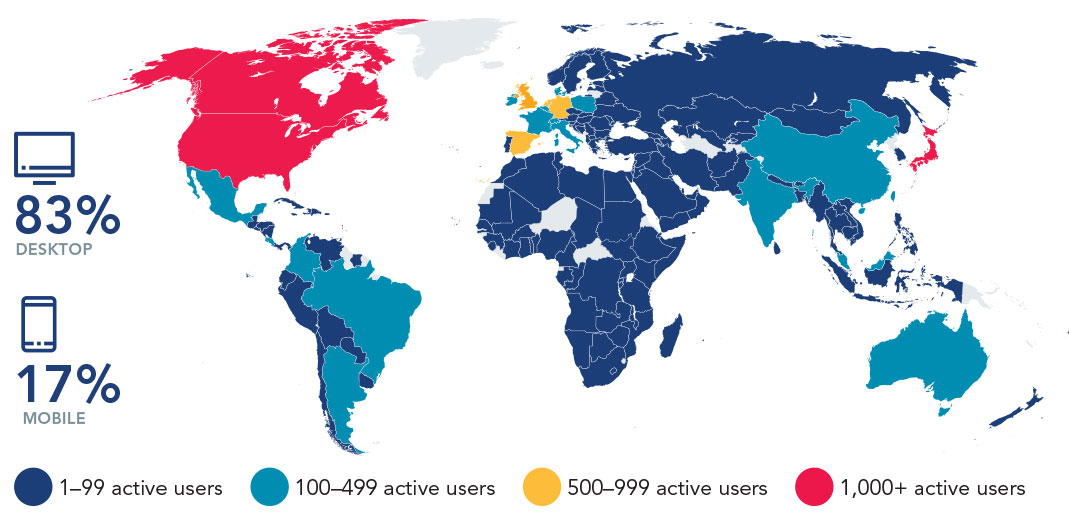
WFH Shared Decision Making (SDM) Tool users worldwide

The usefulness of the tool has fostered a growing community of dedicated individuals who are moving the initiative beyond awareness and toward practical implementation in clinical care. This growing international network of “SDM champions” is creating the foundation for broader implementation of shared decision-making in clinical practice. Marlène Beijlevelt, a Nurse Practitioner specializing in bleeding disorder care in the Amsterdam University Medical Center, Amsterdam, is one such champion. She incorporates the tool into her daily clinical practice whenever people with bleeding disorders or their families are facing important treatment decisions, particularly during diagnosis, transitions in care, or when considering a new therapy (read her story here).

Looking ahead, the next phase of the WFH Shared Decision Making (SDM) Tool will focus on expanding access, strengthening implementation in clinical practice, and growing a sustainable global network of SDM champions.

To read the report WFH Shared Decision-Making Tool: Three years of global impact, click here. To find out more about the WFH Shared Decision-Making (SDM) Tool, click here.

We like to acknowledge and thank our WFH Corporate Partners, Pfizer, Roche, Sanofi and Sobi for their contributions to the WFH SDM Program.

We’ve accomplished a lot this year, we need your help to continue strong.

Would you like to read more about similar articles?

Disclaimer

The information on the WFH website is provided for general information purposes only. The WFH does not engage in the practice of medicine and under no circumstances recommends particular treatment for specific individuals. For diagnosis or consultation on a specific medical problem, the WFH recommends that you contact your physician or local treatment centre. Before administering any products, the WFH urges patients to check dosages with a physician or hemophilia centre staff, and to consult the pharmaceutical company’s printed instructions.

While every effort has been made to ensure the accuracy of the information on this site, the WFH does not guarantee the information is accurate, and is not responsible in any way whatsoever for damages arising out of the use of this website or any of the information contained herein.

Messages posted to WFH discussion forums, Facebook, Twitter, and other social media platforms do not represent the opinions of the World Federation of Hemophilia, its staff, or Board of Directors. The author of a message is solely responsibility for its content. Information posted on WFH social networks and platforms should never be a substitute for individualized professional medical advice, even when the author has medical qualifications or is considered an authority. Information posted to a discussion group should not be used to diagnose or treat a specific health problem without consulting a qualified healthcare professional. The WFH recommends that you contact your physician or local treatment centre if you have any individual questions or concerns.

References and links to other websites or references to other organizations, products, services, or publications do not constitute endorsement or approval by the WFH. The WFH is not responsible and assumes no liability for the content of any linked websites.

Fraud Alert

Unauthorized solicitations – Warning

The WFH has been made aware of various correspondences—circulated via e-mail and telephone—coming from individuals impersonating WFH staff or falsely stating that they are associated with the WFH. These correspondences, which may seek to obtain money using the name of someone affiliated with the WFH, are fraudulent and come from outside of our organization.

If you receive a suspicious solicitation, exercise extreme caution. In the case of an email, look at the email address to see if it looks suspicious (for example, all WFH emails come from @wfh.org).

We are asking you to remain vigilant, and if you have any doubts about the correspondence, please forward the email to the WFH at [email protected] or call +1 514-875-7944.