Launched in 2018, the WBDR collects standardized, real-world clinical data on people with hemophilia and von Willebrand disease (VWD). The growing body of evidence on the platform is helping to improve understanding of the diagnosis, treatment, and management of bleeding disorders across different healthcare settings globally.
As of December 31, 2025, the WBDR includes data from over 19,000 people with hemophilia and VWD across 131 hemophilia treatment centres (HTCs) in 49 countries. This includes 17,196 people with hemophilia (PWH) and 1,893 people with VWD, reflecting continued growth in global participation and patient representation.
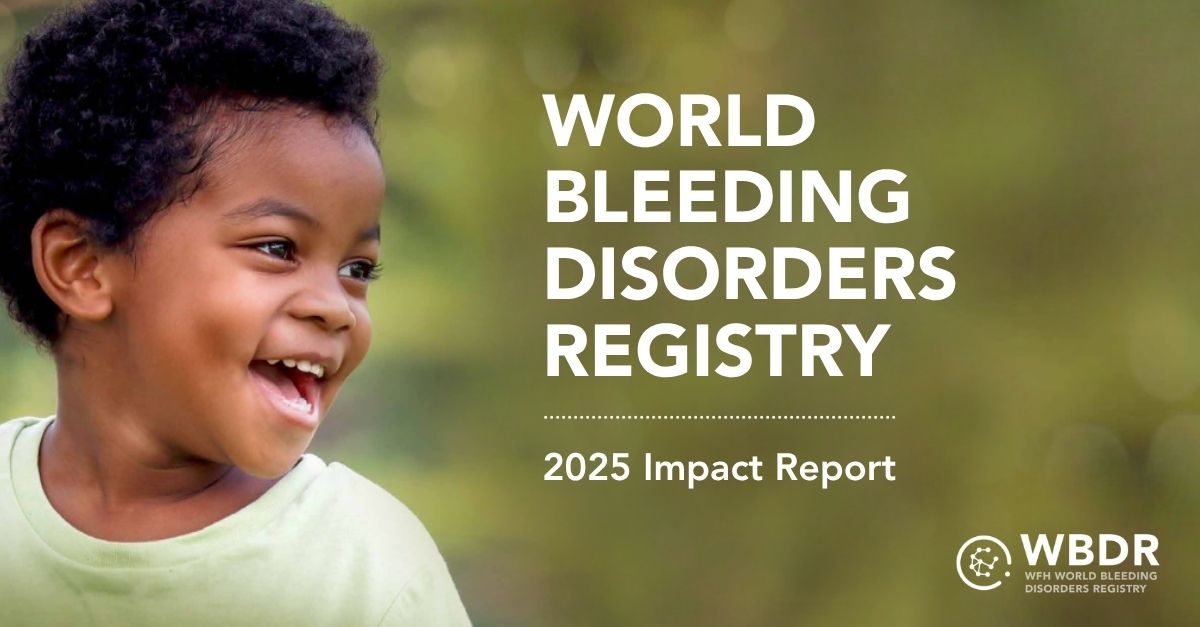
The 2025 WBDR Impact Report shows how the registry is supporting research, strengthening advocacy, and helping identify gaps in care. The report also highlights the importance of high-quality data in improving treatment access, monitoring outcomes, and advancing equity for people with bleeding disorders worldwide.
Key highlights from the 2025 report include:
- Continued growth in WBDR participation, with 49 countries and 131 HTCs represented
- A 12% increase in the number of PWH enrolled since 2024
- A 14% increase in the number of people with VWD enrolled since 2024
- Stronger focus on data collection for women and girls with bleeding disorders, a population that remains underdiagnosed and underserved globally
- Continued investment in research capacity through the WBDR Research Support Program, which has supported 59 projects across 25 countries since 2018
- Five years of impact from the WBDR HTC Funding Program, which has supported 39 HTCs in 22 countries to improve data collection and patient follow-up
- Ongoing work to strengthen data quality, training, and regional capacity-building for research and advocacy
The WBDR continues to serve as a global benchmark for gathering real-world data and understanding bleeding disorders care. Its success is made possible by the commitment of healthcare providers, participating HTCs, people with bleeding disorders, and partners who contribute to the registry and help turn data into action.

The WFH encourages additional HTCs to join the WBDR so that the registry can continue to expand its reach, strengthen global evidence, and support the shared mission of Treatment for All.
To read the 2025 WBDR Impact Report, please click here. To learn more about the WBDR, please click here.
The WBDR is made possible through the support of visionary partner Sobi and collaborating partners Grifols, Pfizer, and Sanofi.