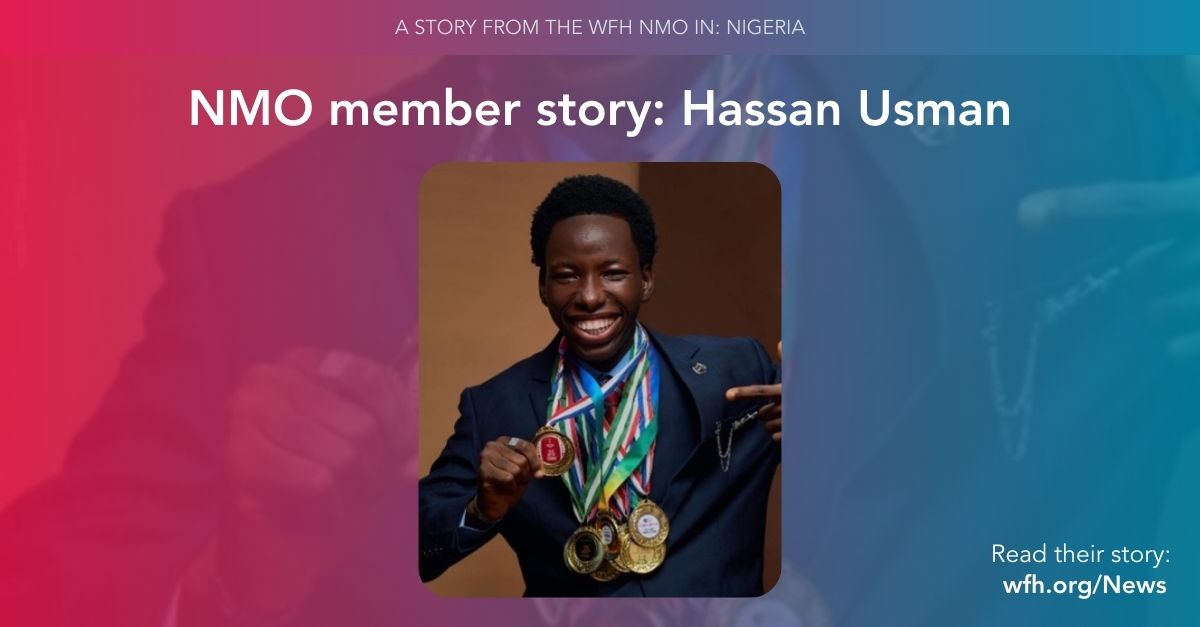
The following is an edited version of Hassan Usman’s testimonial.
For most of my childhood and teenage years, I lived with a body I didn’t understand. I bruised easily, bled for long periods, and suffered pain that often left me unable to walk. Growing up in northern Nigeria, people around me believed I was simply weak. Some mocked me, others blamed me, and many thought I was cursed. I tried everything—traditional herbs, spiritual healing, and constant prayers—but nothing stopped the bleeding or the swelling in my joints. I remember nights when I woke up drenched in blood, terrified and confused, with no explanation for what was happening to me. For more than ten years, this was my reality.
My life began to change when a nurse in my neighbourhood suggested I seek medical help in Lagos. At Lagos University Teaching Hospital, I finally heard the word that explained everything: hemophilia A. It was the first time a doctor understood what I was going through. Through the Hemophilia Foundation of Nigeria (HFN), I learned more about my condition and began receiving proper care. The day I learned how to self-infuse treatment was the day I took control of my life. With each infusion, my confidence grew, and the bleeding episodes that once ruled my life became manageable.
Today, I am continuing my education and rebuilding the future I once thought I would never have. I can move freely, plan ahead, and live with far less fear.
I share my story because so many people in Nigeria are still living undiagnosed, misunderstood, and untreated—just as I was. I hope my journey encourages others to seek help and reminds them that answers, support, and hope are within reach.
Hassan Usman has received support from the WFH and the Haemophilia Foundation of Nigeria (HFN), the national member organization (NMO) in Nigeria. To find out more about the HFN, please read “NMO profile: making a difference with the WFH in Nigeria” here.
To read about the way the WFH and NMOs collaborate to make a difference in local bleeding disorders communities, please read “National member organizations: the heartbeat of the WFH” here.