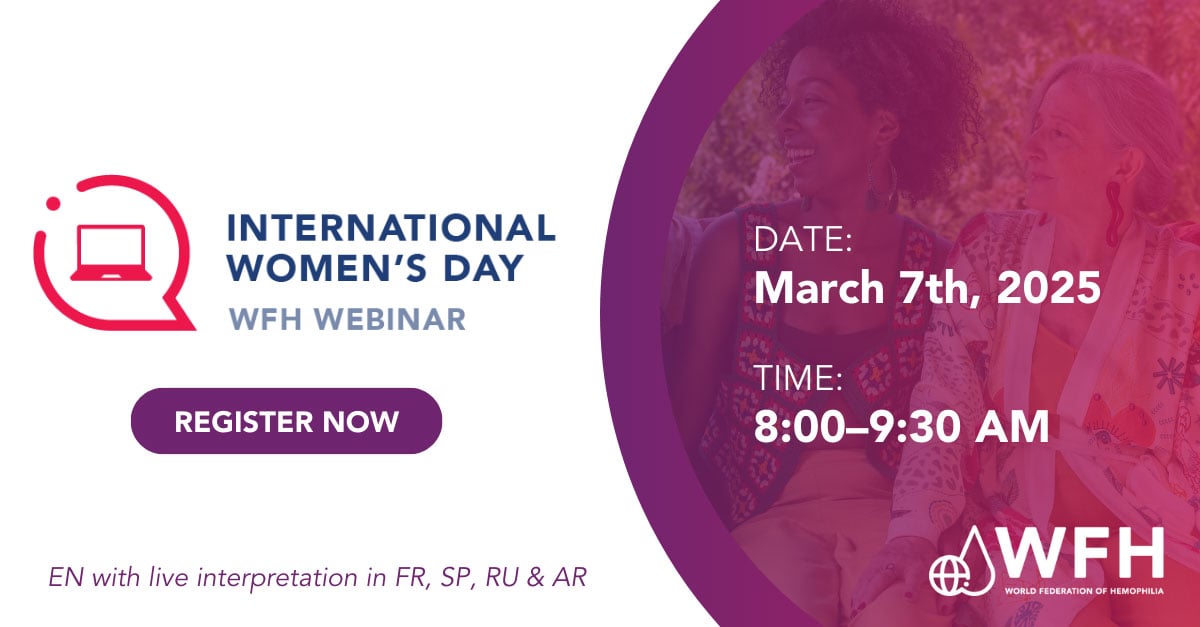
This lack of knowledge related to women and girls in the bleeding disorders community is a clear indicator that more needs to be done to identify and support these individuals. Want to learn more, get involved, and stay up to date? Join us on March 7, 2025, from 8 a.m. to 9:30 a.m. EST for the annual WFH International Women’s Day webinar.
Here are some of the major challenges faced by WGBDs around the world today.
Delayed or limited access to diagnosis
WGBD are often underdiagnosed, or misdiagnosed, as many symptoms—such as heavy menstrual bleeding, iron deficiency, and excessive bleeding after childbirth or surgery—are mistaken for other conditions or not taken seriously. There can also be a normalization of these bleeding symptoms within one’s family, and WGBD may not even realize that these symptoms are something to bring up with their healthcare professional (HCP).
Women and girls with bleeding disorders deserve better care, more understanding and a faster diagnosis. It is time to break the taboo and ensure that their symptoms are taken seriously. No woman should have to suffer in silence, and their health should not depend on ignorance or stigma.
—Marlène Beijevelt, member of the WFH Women with Inherited Bleeding Disorders Committee
Stigma and discrimination
Cultural and societal stigmas surrounding menstruation and bleeding disorders can lead to discrimination. WGBD may feel ashamed or embarrassed to discuss their symptoms, preventing them from seeking medical help. This stigma can also affect their social interactions and mental health. The fear of bleeding episodes and their impact on daily activities can also lead to a reduced quality of life.
Limited access to specialized care
Even with a diagnosis, access to specialised care and treatment for bleeding disorders for men and women is limited in many countries. WGBD often face additional barriers to care, such as gender bias in healthcare systems that prioritize male patients.
There are several unique challenges which women and girls with bleeding disorders face in Pakistan and in other developing countries. There are social and cultural challenges, which include living in a male dominated society and facing social taboos. As well, the diagnostic and treatment facilities are only available in major cities.
—Tahira Zafar, MD, WFH Women with Inherited Bleeding Disorders Committee
Lack of research and data collection
There is a significant gap in research and data on bleeding disorders in women and girls, as WGBD are underserved and underrepresented in surveillance, medical databases, and research. Many scientific studies focus on male patients, leading to a lack of understanding of how these disorders affect women. This gap hinders the development of effective treatments and policies tailored to their needs.
Be part of the WFH International Women’s Day Webinar
Want to learn more, get involved, and stay up to date? Join us on March 7, 2025, from 8 a.m. to 9:30 a.m. EST for the annual WFH International Women’s Day webinar. This year, participants will have the opportunity to learn about bleeding assessment tools (BATs), including health-related quality of life assessments for WGBD, and how understanding one’s symptoms is important in advocacy. Participants will also learn about how WGBDs can use BATs to advocate for themselves. The webinar will include a Q&A period. Live interpretation will be offered in French, Spanish, Russian and Arabic.
To find out more about this International Women’s Day webinar and to register, click here. To support the creation of free educational resources and tools like this one, contribute to the WFH today by visiting give.wfh.org.
World Hemophilia Day
On April 17, 2025, the global bleeding disorders community will come together to celebrate World Hemophilia Day. This year’s theme is “Access for all: Women and girls bleed too”. Visit our World Hemophilia Day page by clicking here and find out about how you can support WGBDs.
The International Women’s Day webinar is made possible through the generous support of Hemophilia of Georgia (HoG), LFB Ethical Commitment, the National Bleeding Disorders Foundation (NBDF), Novo Nordisk and Sanofi.