The work of the WFH in Jamaica has included support for the training of healthcare practitioners (HCPs), the empowerment of the patient community in both Kingston and Montego Bay, the exchange of information between Jamaica and Trinidad & Tobago, and the development of the national member organization (NMO), the Haemophilia Society of Jamaica. Another major avenue of support provided by the WFH is the supply of treatment product donations through the WFH Humanitarian Aid Program.
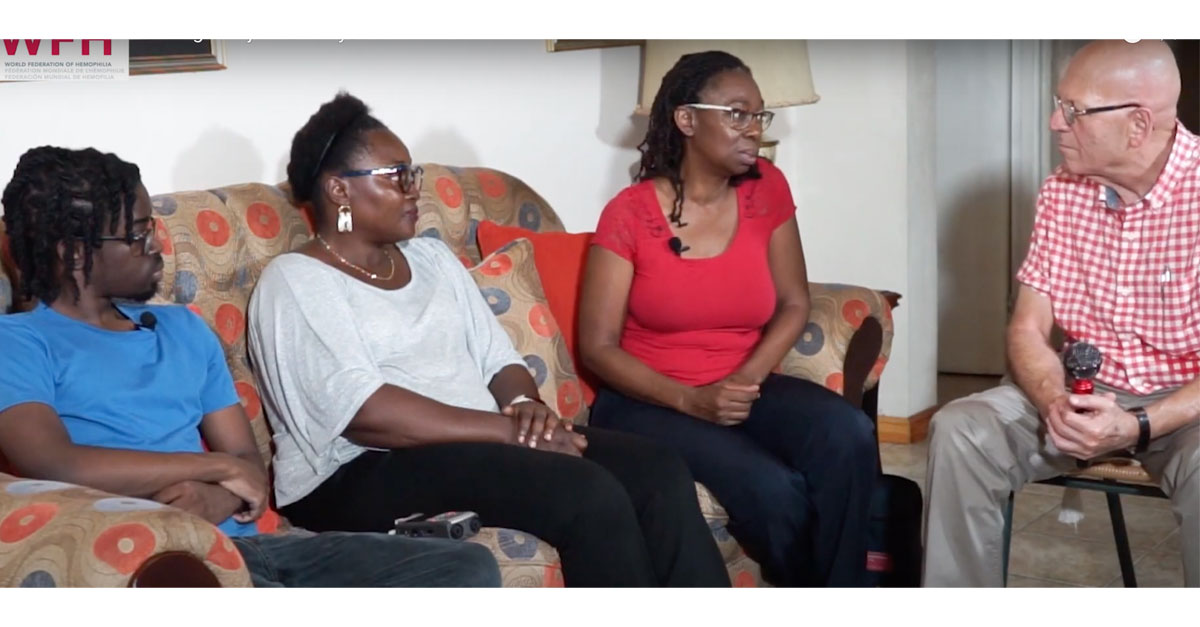
Brandon Blake is a young man who was diagnosed with severe hemophilia A at birth. He lives in Jamaica, and he has an older brother who also has hemophilia. Even though only a few years separate the siblings, Brandon’s experience living with hemophilia—although still very difficult—is much better than his older brother’s. For him, factor has been more readily available. When he has a bleed and goes to the HTC, there will be factor there for him which has been donated by the WFH Humanitarian Aid Program. In the case of his brother, factor availability was much less certain. Brandon’s level of care is also higher because of a general increase in the level of care and diagnosis rates, which are the result of years of work by the WFH team through the WFH Humanitarian Aid Program.
Today, Brandon works in investment banking, after having graduated with a degree in finance and economics from the University of the West Indies. While his life is still far from easy, Brandon is grateful. WFH Humanitarian Aid Program donations mean that although his mobility is affected, he no longer spends days or weeks at a time in a hospital—a regular fact of life for his older brother. He’s also grateful to the unwavering dedication that his parents have shown. “They have been very supportive,” he explains. “They’ve pretty much given most of their lives to supporting [my brother and I].”
The gradual increase in care has been brought about thanks to close collaboration between the WFH and dedicated stakeholders in Jamaica. In the short time since Brandon and his brother were young boys, the level of care in the country has gone from a situation where factor supply was sporadic, to where it can be depended on. “We are coming from a place in the hospital where… if we had expired factor that was like two or three years old, we would be celebrating,” explains Magda Nwoxhoka, a hematologist who has cared for the brothers long enough to think of them as family. The improvement in care brings hope to the family—hope that the future will be easier. “I cannot say how thankful we are to the donors,” says Elizabeth Blake, Brandon’s mother. “It’s like they’re life savers.”
Over 795 thousand IUs of factor have been donated to Jamaica through the WFH Humanitarian Aid Program so far in 2023, along with 76 thousand IUs of non-factor replacement therapy. Since 2015, over 7.5 million IUs of factor, and almost 200 thousand IUs of non-factor replacement therapy have been donated. To find out more about the WFH Humanitarian Program, please click here.
About the WFH Humanitarian Aid Program
The WFH Humanitarian Aid Program improves the lack of access to care and treatment by providing much-needed support for people with inherited bleeding disorders in developing countries. By providing patients with a more predictable and sustainable flow of humanitarian aid donations, the WFH Humanitarian Aid Program makes it possible for patients to receive consistent and reliable access to treatment and care. None of this would be possible without the generous support of Sanofi and Sobi, our Founding Visionary Contributors; Bayer, CSL Behring and Roche, our Visionary Contributors; Grifols, our Leadership Contributor; and Takeda and Japan Blood Products Organization, our Contributors. To learn more about the WFH Humanitarian Aid Program, visit www.treatmentforall.org.