The WFH Humanitarian Aid Program has been active in Cambodia for many years. The Program has supported people with bleeding disorders (PWBDs) through the donation of over 8.7 million IUs of donated factor, and through the training of healthcare professionals (HCPs). This support has drastically transformed the care in the country. Where once PWBDs were almost never diagnosed, now, they are properly treated and put on prophylaxis. The sharing of knowledge between HCPs also means that the country is becoming more self-sustaining for the treatment of PWBDs—a key objective for the World Federation of Hemophilia (WFH).
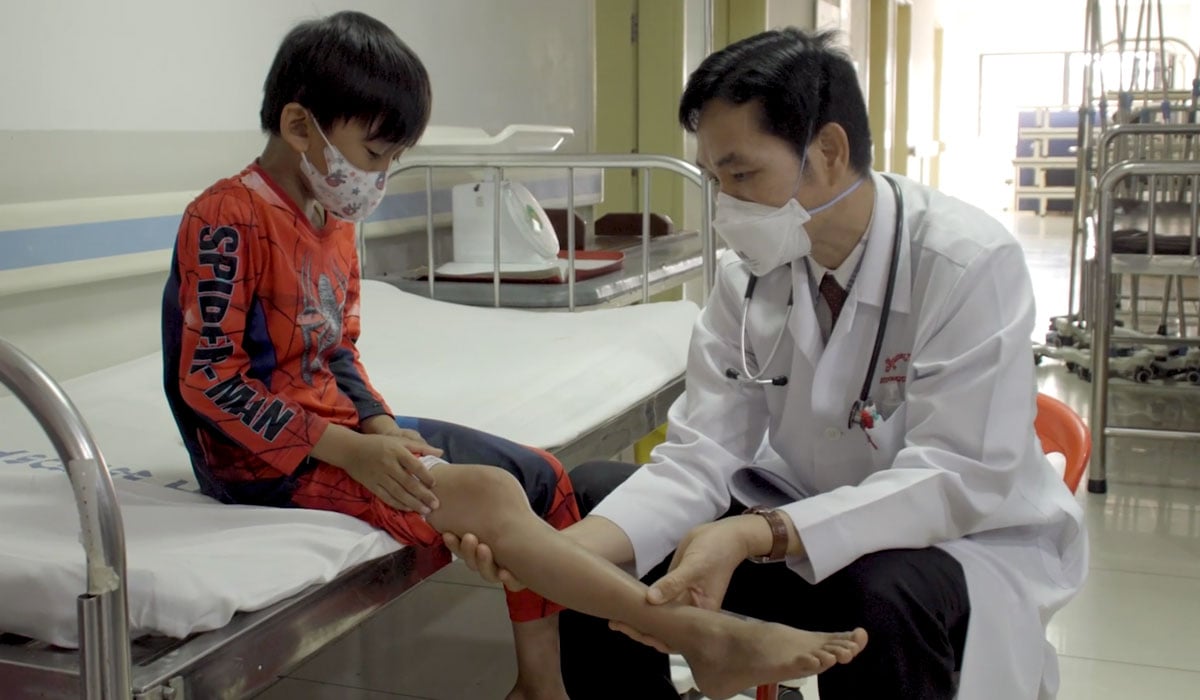
Ourng Somali’s son has hemophilia. Over countless appointments with different doctors, he was consistently misdiagnosed, and given treatment regimens that were ineffective. Fortunately, the situation completely changed when he went to the National Pediatric Hospital in Phnom Penh. He was finally correctly diagnosed, and given factor donated by the WFH Humanitarian Aid Program. His health immediately improved. Thanks to regular treatments he can now attend school consistently and play with other boys.
Specialists at the National Pediatric Hospital hemophilia treatment centre (HTC) have noticed drastic reductions in disabilities and acute bleeds at their facility since they began working with the Program. The donated factor has helped immensely, but medical training—for diagnosis and for treatment—has proven to be even more effective. Because trained specialists can go and train their colleagues, the quality of education is organically expanding and sustainable. In other words, in Cambodia, care is no longer dependent on the direct intervention of the Program.
The WFH Humanitarian Aid Program has given the National Pediatric Hospital the tools to make a difference. Pechkethia, MD, says that their HTC has seen the number of patients needing acute treatment decrease. When patients are admitted to the hospital, their stays are now much shorter than they were in the past. The impact, he says, goes far beyond the patient: healthy kids means healthier families, and healthier communities.
“What we have accomplished so far is an example for medical staff of the next generation,” says Chean Sophal, MD. “We have sustainably improved the diagnosis care and treatment of patients.”
The WFH Humanitarian Aid Program has donated over 8.7 million IUs of donated factor—and almost 38,000 mg of non-factor replacement therapy—to Cambodia since 2015. To find out more about the Program, please click here.
About the WFH Humanitarian Aid Program
The WFH Humanitarian Aid Program improves the lack of access to care and treatment by providing much-needed support for people with inherited bleeding disorders in developing countries. By providing patients with a more predictable and sustainable flow of humanitarian aid donations, the WFH Humanitarian Aid Program makes it possible for patients to receive consistent and reliable access to treatment and care. None of this would be possible without the generous support of Sanofi and Sobi, our Founding Visionary Contributors; Bayer, CSL Behring and Roche, our Visionary Contributors; Grifols, our Leadership Contributor; and Takeda and Japan Blood Products Organization, our Contributors. To learn more about the WFH Humanitarian Aid Program, visit www.treatmentforall.org.