HA-Khan-Sokhai-Cambodia-header

From bed to business: a WFH Humanitarian Aid Program story from Cambodia

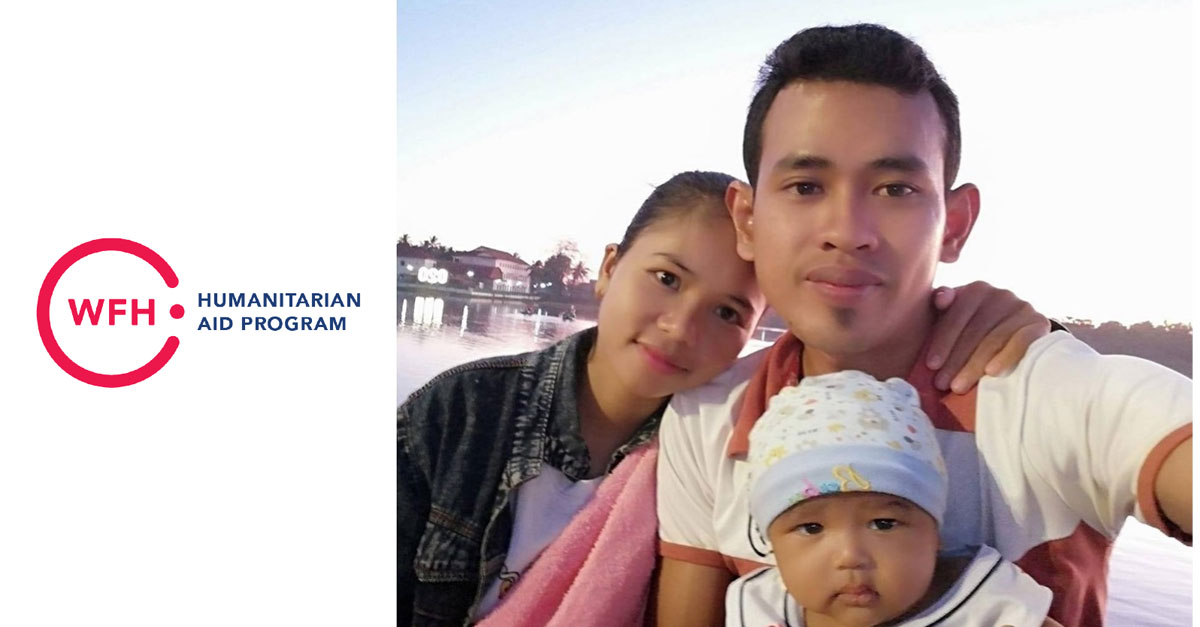
The World Federation of Hemophilia (WFH) Humanitarian Aid Program works to help countries reach a level of sustainable care for people with bleeding disorders (PWBDs). A key steppingstone in this process is to improve care to a point where prophylaxis is readily available, because PWBDs who don’t have acute bleeds spend less time in hospitals, which frees up resources for specialists. These specialists can then spend more time working on making lasting progress forward instead of working from bleed-to-bleed. In the case of Khan Sokhai, a man with hemophilia A, prophylaxis meant he could open his own barbershop and provide for his family.

Also available in: Français Español

Khan Sokhai was born to a farming family in a small village in Kampong Cham province, Cambodia. From the age of twelve, he began suffering from debilitating bleeds which would mainly affect his ankles. Despite the severity of his condition, and the best efforts of physicians, he wasn’t diagnosed with a bleeding disorder. As he grew up, his condition progressed to the point, where, in 2009, part of his right leg was amputated due to complications related to ankle osteoarthritis.

Soon after this procedure, Sokhai was referred to a hemophilia treatment centre (HTC) where he was finally diagnosed as having hemophilia A. At that facility, he received donated treatment product provided by the WFH Humanitarian Aid Program. While this meant that his acute bleeds were less severe, he still couldn’t work consistently, and his joints continued to degrade, although to a lesser degree than before treatment.
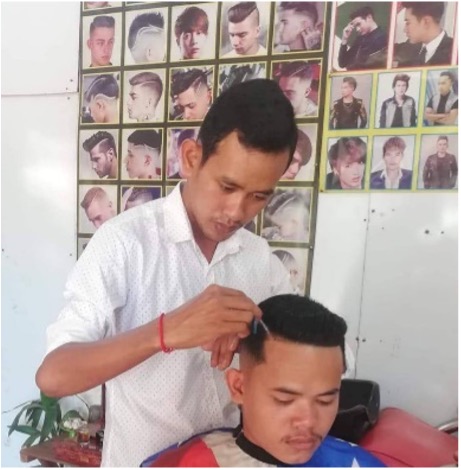
Then, in 2020, Sokhai’s life took a dramatic change for the better. Thanks to the years-long work of the WFH Humanitarian Aid Program and the dedication of HTC staff, the level of care in Cambodia increased to a point where prophylaxis began to be more readily available. Sokhai was selected for a prophylactic therapy regimen, and his condition improved dramatically. For the first time in his life, he was able to live bleed-free.

Now, less than three years after he began the treatment, Sokhai runs his own barbershop. He can provide for his wife and two sons, and no longer lives in fear of a debilitating acute bleed. Instead of living from one emergency to the next, he can plan appointments around his schedule at the HTC at the National Pediatric Hospital Cambodia in Phnom Penh.

The WFH Humanitarian Aid Program has donated over 15 million IUs of factor and over 276,000 mg of non-factor replacement therapy to Cambodia since 2015. Over two million IUs of factor, and nearly 57,000 mg of non-factor replacement therapy have already been donated so far this year. To watch a video about the improvement in care in Cambodia, click here. To find out more about the WFH Humanitarian Aid Program, please click here.

About the WFH Humanitarian Aid Program

The WFH Humanitarian Aid Program improves the lack of access to care and treatment by providing much-needed support for people with inherited bleeding disorders in developing countries. By providing patients with a more predictable and sustainable flow of humanitarian aid donations, the WFH Humanitarian Aid Program makes it possible for patients to receive consistent and reliable access to treatment and care. None of this would be possible without the generous support of Sanofi and Sobi, our Founding Visionary Contributors; Bayer, CSL Behring and Roche, our Visionary Contributors; Grifols, our Leadership Contributor; and Takeda and Japan Blood Products Organization, our Contributors. To learn more about the WFH Humanitarian Aid Program, visit www.treatmentforall.org.
We’ve accomplished a lot this year, we need your help to continue strong.

Would you like to read more about similar articles?

Disclaimer

The information on the WFH website is provided for general information purposes only. The WFH does not engage in the practice of medicine and under no circumstances recommends particular treatment for specific individuals. For diagnosis or consultation on a specific medical problem, the WFH recommends that you contact your physician or local treatment centre. Before administering any products, the WFH urges patients to check dosages with a physician or hemophilia centre staff, and to consult the pharmaceutical company’s printed instructions.

While every effort has been made to ensure the accuracy of the information on this site, the WFH does not guarantee the information is accurate, and is not responsible in any way whatsoever for damages arising out of the use of this website or any of the information contained herein.

Messages posted to WFH discussion forums, Facebook, Twitter, and other social media platforms do not represent the opinions of the World Federation of Hemophilia, its staff, or Board of Directors. The author of a message is solely responsibility for its content. Information posted on WFH social networks and platforms should never be a substitute for individualized professional medical advice, even when the author has medical qualifications or is considered an authority. Information posted to a discussion group should not be used to diagnose or treat a specific health problem without consulting a qualified healthcare professional. The WFH recommends that you contact your physician or local treatment centre if you have any individual questions or concerns.

References and links to other websites or references to other organizations, products, services, or publications do not constitute endorsement or approval by the WFH. The WFH is not responsible and assumes no liability for the content of any linked websites.

Fraud Alert

Unauthorized solicitations – Warning

The WFH has been made aware of various correspondences—circulated via e-mail and telephone—coming from individuals impersonating WFH staff or falsely stating that they are associated with the WFH. These correspondences, which may seek to obtain money using the name of someone affiliated with the WFH, are fraudulent and come from outside of our organization.

If you receive a suspicious solicitation, exercise extreme caution. In the case of an email, look at the email address to see if it looks suspicious (for example, all WFH emails come from @wfh.org).

We are asking you to remain vigilant, and if you have any doubts about the correspondence, please forward the email to the WFH at [email protected] or call +1 514-875-7944.