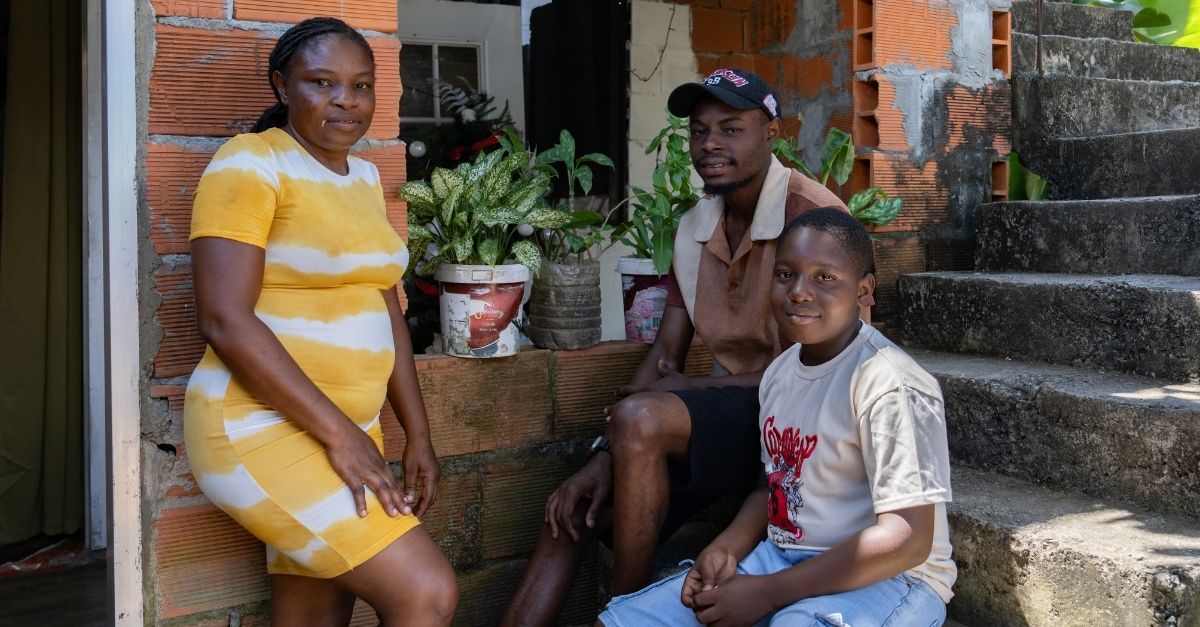
For Jasiah, a young man with hemophilia, growing up in Trinidad and Tobago meant long hospital stays and limited awareness of the treatments available. During difficult periods in primary school, he spent months in the hospital. His mother, Brigit, recalls the hardship their family endured on one occasion when he broke his leg—a crisis that involved travel to another city and a several days in the hospital. The experience exposed the challenges families can face when treatment is difficult to access quickly. Fortunately for Jasiah and others in the local inherited bleeding disorders community—including his younger brother—training and donated treatment products provided by the WFH Humanitarian Aid Program changed everything. Through many collective efforts facilitated by the Program—including partnerships with the Society for Inherited and Severe Blood Disorders of Trinidad and Tobago and local hemophilia treatment centres (HTCs)—a stronger and more sustainable model of care is emerging in the country.
These parents can go to work, these kids can go to school. So, having prophylaxis and treatments available to them… that was a game changer for our patients with hemophilia.
—Nadia Stoute Vigil, Nurse, Pediatric Hematology; Scarborough General Hospital
A key success story made possible thanks to the WFH Humanitarian Aid Program was the introduction of a steady supply of donated treatment product to Trinidad and Tobago. This made it possible for the community to move from treating acute bleeds to being able to provide prophylactic treatment. Camille Greene, MD, Consultant, Pediatrics, Scarborough General Hospital, explained that the current model of prophylactic treatment helps patients not only avoid repeated bleeds, but also reduce pain and joint damage. The home-based treatment the HTC employs also limits time consuming and costly travel by families. This change happened gradually: healthcare teams first supported patients in clinics, then trained families to administer treatment safely at home.
For families, this shift has meant fewer disruptions to school, work, and everyday life. The transformation in the quality of life of PWBDs in the country has been equally dramatic. Camille Greene, MD, recalls one particular boy with hemophilia, and his transition from a wheelchair to being able to walk: “[His original care team] were convinced he wouldn’t walk. And we just said, you know, he’s just getting [factor] too infrequently. Let’s try maybe secondary prophylaxis. [Soon he was] walking and I was like, ‘Are you the same boy?’ It was just amazing.”
The experience in Trinidad and Tobago shows that access to treatment depends on more than just medicine. Through sustained cooperation between healthcare professionals, patient organizations, families, governments, and global partners, PWBDs can receive timely care, build confidence in managing their condition, and pursue fuller, more independent lives.
The WFH Humanitarian Aid Program has donated over 8.3 million IUs of factor to Trinidad and Tobago since 2015. Almost 1.4 million IUs of factor were donated in 2025 alone. To find out more about the Program, please click here.
About the WFH Humanitarian Aid Program
The WFH Humanitarian Aid Program improves the lack of access to care and treatment by providing much-needed support for people with inherited bleeding disorders in developing countries. By providing patients with a more predictable and sustainable flow of humanitarian aid donations, the WFH Humanitarian Aid Program makes it possible for patients to receive consistent and reliable access to treatment and care. None of this would be possible without the generous support of Sanofi and Sobi, our Founding Visionary Contributors; Bayer, CSL Behring and Roche, our Visionary Contributors; Grifols, our Leadership Contributor; and Takeda, our Contributor. To learn more about the WFH Humanitarian Aid Program, visit www.treatmentforall.org.