Nepal-header

WFH Humanitarian Aid Program supports Nepalese NMO advocacy

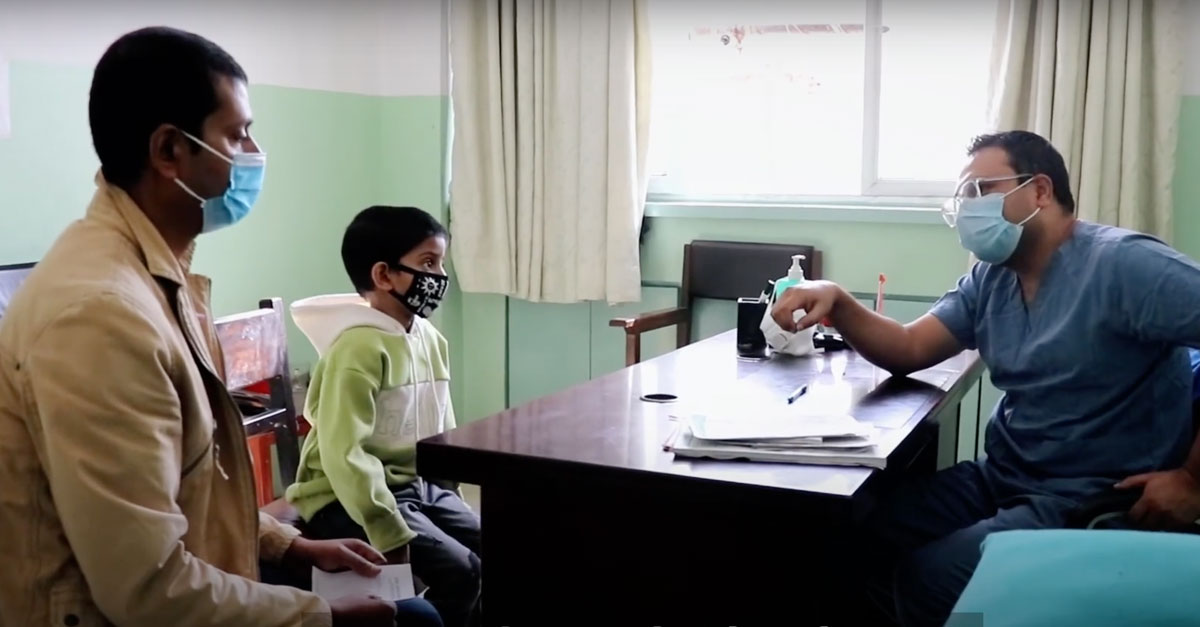
The World Federation of Hemophilia (WFH) supports transformational change by equipping and empowering our national member organizations (NMOs) and healthcare providers with the knowledge and tools they need to identify, support and treat people living with bleeding disorders in their communities, while promoting global advocacy, exchange and collaboration. All of this is done with one objective in mind: to help countries along their journey to sustainability in inherited bleeding disorders care. In Nepal, the WFH Humanitarian Aid Program has played a crucial role in helping the Nepal Hemophilia Society (NHS) effectively advocate with multiple levels of government.

Also available in: Français Español

The WFH and the NHS have been collaborating for years to improve care in the country. This work has been done through several programs, notably the WFH Path to Access to Care and Treatment (PACT) Program, the WFH Development Grant Program (DGP), and the WFH Humanitarian Aid Program.

The result of this collaboration has been official recognition of the local bleeding disorders community, the development of a 10-year strategic plan by the Ministry of Health and Population, and the provision of free treatment products for people with bleeding disorders (PWBDs). The NHS also worked with other organizations to further bolster its efforts; for example, it became a member of the National Federation of the Disabled Nepal (NFDN) to help raise awareness for the community in Nepal.

WFH program support and WFH Humanitarian Aid Program donations played a crucial role in establishing the NHS as a credible representative of the bleeding disorders community. The Nepalese NMO effectively demonstrated that timely access to factor concentrates significantly improved quality of life: patients experienced fewer bleeding episodes, leading to enhanced overall health and well-being. The NMO also proved that the ability to manage and prevent bleeding incidents translated into increased productivity, better social integration, and improved mental health for PWBDs.

In 2017, a significant milestone was marked in Nepal when hemophilia was recognized as a disability under the Nepal Government Act. This legal recognition strengthened advocacy efforts, laying the groundwork for more government support. Now, all three levels of government in Nepal—central, provincial, and local—provide minimal but crucial support for the procurement of factor concentrates. Other support includes a 10-year strategic plan to provide PWBDs with free treatment; the establishment of better care centres for hemophilia patients; and commitments to provide day care facilities, coagulation labs, physiotherapy care, and psychosocial counseling to the community.

The progress made by Nepal is encouraging—and inspirational for other countries. Life is still very difficult for PWBDs, but things are getting better, and people in the community can now see that sustainable care could one day be possible.

Almost 6.9 million IUs of factor were donated to Nepal through the WFH Humanitarian Aid Program in 2023, along with 265 thousand IUs of non-factor replacement therapy. Since 2015, nearly 8.6 million IUs of factor, and over 850 thousand IUs of non-factor replacement therapy have been donated. To find out more about the WFH Humanitarian Program, please click here.

About the WFH Humanitarian Aid Program

The WFH Humanitarian Aid Program improves the lack of access to care and treatment by providing much-needed support for people with inherited bleeding disorders in developing countries. By providing patients with a more predictable and sustainable flow of humanitarian aid donations, the WFH Humanitarian Aid Program makes it possible for patients to receive consistent and reliable access to treatment and care. None of this would be possible without the generous support of Sanofi and Sobi, our Founding Visionary Contributors; Bayer, CSL Behring and Roche, our Visionary Contributors; Grifols, our Leadership Contributor; and Takeda and Japan Blood Products Organization, our Contributors. To learn more about the WFH Humanitarian Aid Program, visit www.treatmentforall.org.
We’ve accomplished a lot this year, we need your help to continue strong.

Would you like to read more about similar articles?

Disclaimer

The information on the WFH website is provided for general information purposes only. The WFH does not engage in the practice of medicine and under no circumstances recommends particular treatment for specific individuals. For diagnosis or consultation on a specific medical problem, the WFH recommends that you contact your physician or local treatment centre. Before administering any products, the WFH urges patients to check dosages with a physician or hemophilia centre staff, and to consult the pharmaceutical company’s printed instructions.

While every effort has been made to ensure the accuracy of the information on this site, the WFH does not guarantee the information is accurate, and is not responsible in any way whatsoever for damages arising out of the use of this website or any of the information contained herein.

Messages posted to WFH discussion forums, Facebook, Twitter, and other social media platforms do not represent the opinions of the World Federation of Hemophilia, its staff, or Board of Directors. The author of a message is solely responsibility for its content. Information posted on WFH social networks and platforms should never be a substitute for individualized professional medical advice, even when the author has medical qualifications or is considered an authority. Information posted to a discussion group should not be used to diagnose or treat a specific health problem without consulting a qualified healthcare professional. The WFH recommends that you contact your physician or local treatment centre if you have any individual questions or concerns.

References and links to other websites or references to other organizations, products, services, or publications do not constitute endorsement or approval by the WFH. The WFH is not responsible and assumes no liability for the content of any linked websites.

Fraud Alert

Unauthorized solicitations – Warning

The WFH has been made aware of various correspondences—circulated via e-mail and telephone—coming from individuals impersonating WFH staff or falsely stating that they are associated with the WFH. These correspondences, which may seek to obtain money using the name of someone affiliated with the WFH, are fraudulent and come from outside of our organization.

If you receive a suspicious solicitation, exercise extreme caution. In the case of an email, look at the email address to see if it looks suspicious (for example, all WFH emails come from @wfh.org).

We are asking you to remain vigilant, and if you have any doubts about the correspondence, please forward the email to the WFH at [email protected] or call +1 514-875-7944.