TOP STORIES

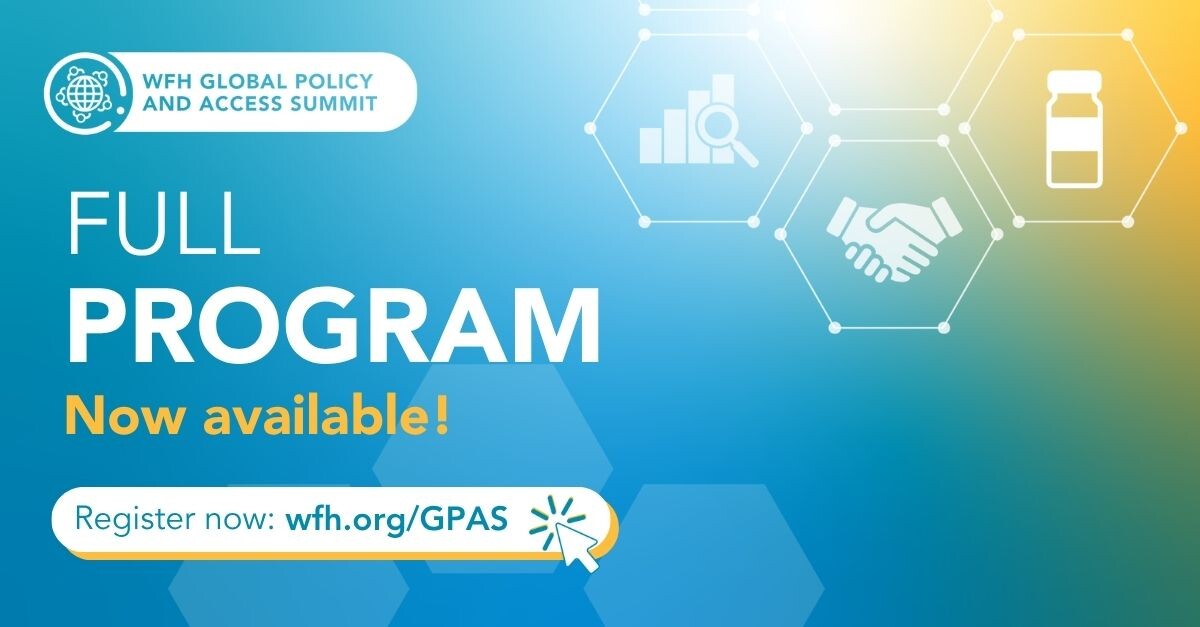
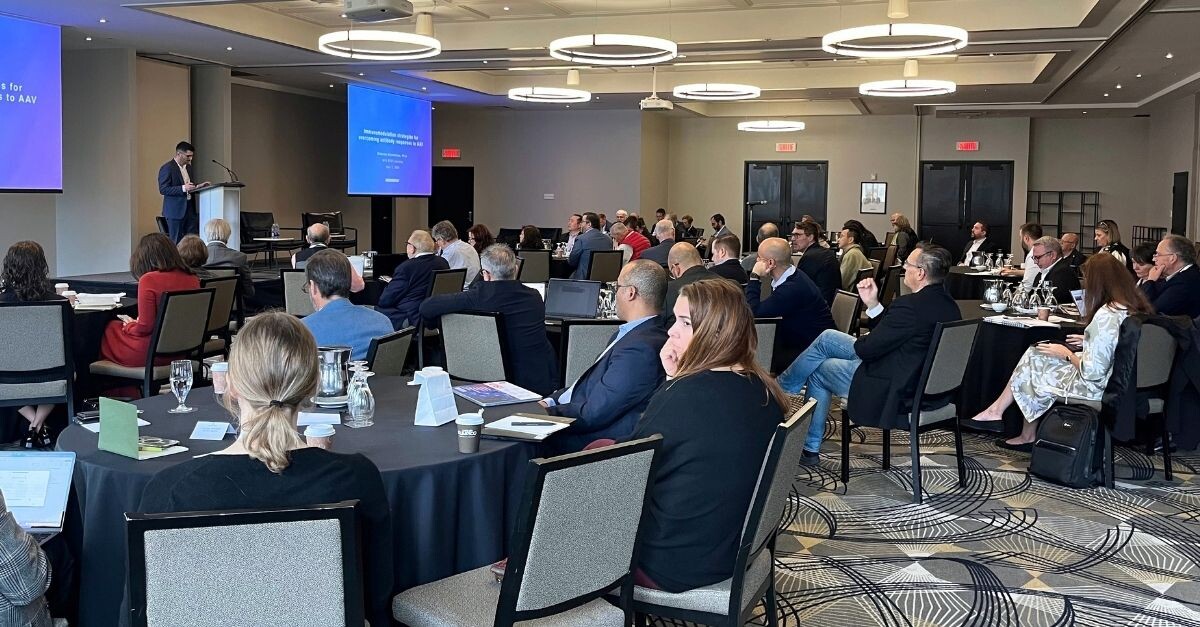
Join us virtually on October 20 and 21, 2026, for the fifth edition of the WFH Global Policy and Access Summit (GPAS). This free, two-day global event is a unique opportunity to learn, discuss, and exchange knowledge on navigating the evolving treatment landscape and addressing existing gaps in access to care and treatment for people with bleeding disorders.
August 20
In Lebanon, refugees and non-Lebanese people with inherited bleeding disorders (PWBDs) can’t access treatment products because they aren’t nationals. Staying true to its mission to support every patient within Lebanese borders who needs care, the Lebanese Association for Hemophilia (LAH)—the World Federation of Hemophilia (WFH) national member organization (NMO)—has been stepping in to provide access to treatment regardless of nationality or legal status.
August 21
For years, Tanvirul Haq’s childhood was shaped by pain, limited mobility, and the constant disruption caused by severe bleeding episodes. Diagnosed with hemophilia as an infant, the Bangladeshi youth struggled to participate in everyday activities that many healthy children take for granted. Today, thanks to access to non-factor replacement therapy provided by the World Federation of Hemophilia (WFH), he can attend school regularly, play with his friends, and enjoy a far more active and independent life.
August 10
National member organizations (NMOs) are the heartbeat of the World Federation of Hemophilia (WFH). The WFH works in close collaboration with NMOs to provide them with support tailored to their realities to help them increase the level of care for the people with bleeding disorders (PWBDs) in their countries. Every few weeks we will be profiling an NMO on the WFH News page, showcasing the work that they are doing, the challenges they are facing, and the difference they are making in their communities. Today, we look at the NMO in the Ivory Coast, the Hémophilie et autres maladies du sang de Cote d’Ivoire (ONG IHMS-CI).
August 5

ALL NEWS

Disclaimer

The information on the WFH website is provided for general information purposes only. The WFH does not engage in the practice of medicine and under no circumstances recommends particular treatment for specific individuals. For diagnosis or consultation on a specific medical problem, the WFH recommends that you contact your physician or local treatment centre. Before administering any products, the WFH urges patients to check dosages with a physician or hemophilia centre staff, and to consult the pharmaceutical company’s printed instructions.

While every effort has been made to ensure the accuracy of the information on this site, the WFH does not guarantee the information is accurate, and is not responsible in any way whatsoever for damages arising out of the use of this website or any of the information contained herein.

Messages posted to WFH discussion forums, Facebook, Twitter, and other social media platforms do not represent the opinions of the World Federation of Hemophilia, its staff, or Board of Directors. The author of a message is solely responsibility for its content. Information posted on WFH social networks and platforms should never be a substitute for individualized professional medical advice, even when the author has medical qualifications or is considered an authority. Information posted to a discussion group should not be used to diagnose or treat a specific health problem without consulting a qualified healthcare professional. The WFH recommends that you contact your physician or local treatment centre if you have any individual questions or concerns.

References and links to other websites or references to other organizations, products, services, or publications do not constitute endorsement or approval by the WFH. The WFH is not responsible and assumes no liability for the content of any linked websites.

Fraud Alert

Unauthorized solicitations – Warning

The WFH has been made aware of various correspondences—circulated via e-mail and telephone—coming from individuals impersonating WFH staff or falsely stating that they are associated with the WFH. These correspondences, which may seek to obtain money using the name of someone affiliated with the WFH, are fraudulent and come from outside of our organization.

If you receive a suspicious solicitation, exercise extreme caution. In the case of an email, look at the email address to see if it looks suspicious (for example, all WFH emails come from @wfh.org).

We are asking you to remain vigilant, and if you have any doubts about the correspondence, please forward the email to the WFH at [email protected] or call +1 514-875-7944.

Disclaimer

The information on the WFH USA website is provided for general information purposes only. The WFH USA does not engage in the practice of medicine and under no circumstances recommends particular treatment for specific individuals. For diagnosis or consultation on a specific medical problem, the WFH USA recommends that you contact your physician or local treatment centre. Before administering any products, the WFH USA urges patients to check dosages with a physician or hemophilia centre staff, and to consult the pharmaceutical company’s printed instructions.

While every effort has been made to ensure the accuracy of the information on this site, the WFH USA does not guarantee the information is accurate, and is not responsible in any way whatsoever for damages arising out of the use of this website or any of the information contained herein.

Messages posted to WFH USA discussion forums, Facebook, Twitter, and other social media platforms do not represent the opinions of the World Federation of Hemophilia, its staff, or Board of Directors. The author of a message is solely responsibility for its content. Information posted on WFH USA social networks and platforms should never be a substitute for individualized professional medical advice, even when the author has medical qualifications or is considered an authority. Information posted to a discussion group should not be used to diagnose or treat a specific health problem without consulting a qualified healthcare professional. The WFH USA recommends that you contact your physician or local treatment centre if you have any individual questions or concerns.

References and links to other websites or references to other organizations, products, services, or publications do not constitute endorsement or approval by the WFH USA. The WFH USA is not responsible and assumes no liability for the content of any linked websites.

Website privacy policy

The WFH USA does not collect personally identifying information about you when you visit our site, unless you choose to provide such information to us. Providing such information is strictly voluntary. This policy is your guide to how we will handle information we learn about you from your visit to our website.

Use of links

Throughout our website, we provide links to other servers which may contain information of interest to our readers. We take no responsibility for, and exercise no control over, the organizations, views, or accuracy of the information contained on other servers. When linking to the WFH USA, we request that you ensure that there are no associated connections for commercial purposes. Any official use of the name WFH USA or the use of its logo needs to be approved by the WFH USA. If you have a link you’d like us to consider adding to our website, please send an email to [email protected] with the subject “Link request.”

Use of text and images

All information, photographs, graphics, and other material on this website are protected by copyright. While users of this website may use the content for personal, non-commercial use, none of the content of this website can be modified, translated, transferred or sold, copied, reproduced, published, or distributed, in whole or in part, without the prior written consent of the WFH USA. To view a copy of the WFH USA’s permissions guidelines, click here.

The WFH USA encourages the dissemination of its information and welcomes proposals on the reprinting, redistribution, and translation of its materials. If you would like to publish information that you find on our website, please send your request to [email protected].

Accessibility

If you have suggestions on how to make the site more accessible, please contact us at [email protected].

Opt-Out or Change Your Contact Information

Our website provides users the opportunity to opt-out of receiving communications from us through a special online form or via the communication they have received. You may, at all times, choose to receive which communications within the organization you can receive or none at all. You may also update your contact information previously provided to us via another online form.

Questions about our policies

If you have any questions about this privacy statement, the practices of this site, or your dealings with this website, you can contact us at [email protected].

Fraud alert

Unauthorized solicitations – Warning

The WFH USA has been made aware of various correspondences—circulated via e-mail and telephone—coming from individuals impersonating WFH USA staff or falsely stating that they are associated with the WFH USA. These correspondences, which may seek to obtain money using the name of someone affiliated with the WFH USA, are fraudulent and come from outside of our organization.

If you receive a suspicious solicitation, exercise extreme caution. In the case of an email, look at the email address to see if it looks suspicious (for example, all WFH USA emails come from @wfhusa.org or @wfh.org).

We are asking you to remain vigilant, and if you have any doubts about the correspondence, please forward the email to the WFH USA at [email protected] or call 1-877-417-7944.

International Award for Outstanding Service - Recipients

International Healthcare Volunteer Award - Recipients

Previous years

2012 Piet de Kleijn
The Netherlands
2010 Dr. Mammen Chandy
India
2008 Dr. Man-Chiu Poon
Canada
2006 Dr. Norma de Bosch
Venezuela
2004 Dr. Parttraporn Insarangkura
Thailand

Dr. Carol K. Kasper
United States

Twins of the Year Awards

2022 Amman (Jordan) – Dublin (Ireland)
2021 Addis Ababa (Ethiopia) – Minneapolis (U.S.A) and
Tehran (Iran) – Milan (Italy)
2020 Aluva (India) – Newcastle (UK)
2019 Yogyakarta / Solo (Indonesia) – Utrecht (Netherlands)
2018 Abidjan (Ivory Coast) – Brussels (Belgium)
2017 Santa Cruz de la Sierra (Bolivia) – Buenos Aires (Argentina)
2016 Kampala (Uganda) – London (UK)
2015 Varna (Bulgaria) – Bonn (Germany)
2014 Arequipa (Peru) – Los Angeles (USA)
2013 Davangere (India) – Liverpool (UK)
Ludhiana (India) – Detroit (USA)
2012 Hanoi (Vietnam) – Melbourne (Australia)
2011 Manado (Indonesia) – Utrecht (Netherlands)
2010 Delhi (India) – Winnipeg (Canada)
Yaoundé (Cameroon) – Geneva (Switzerland)
2009 Chisinau (Moldova) – Warsaw (Poland)
Colombo (Sri Lanka) – Vellore (India)
2008 Gaborone (Botswana) – Philadelphia (USA)
2007 Vientiane (Laos) – Brest (France)
Damascus (Syria) – Montpellier (France)
2006 Lima (Peru) – Fort Worth (USA)
2005 Yerevan (Armenia) – Minneapolis (USA)
Casablanca (Morocco) – Caen (France)
2004 Beirut (Lebanon) – Geneva (Switzerland)
Santo Domingo (Dominican Republic) – Caracas (Venezuela)
2003 Cairo (Egypt) – Knoxville (USA)
2002 Moscow (Russia) – Liverpool (UK)
Panama – Valencia (Spain)
2001 Bangalore (India) – St. Louis (USA)
2000 Pune (India) – Bradford (UK)
1999 Montevideo (Uruguay) – Buenos Aires (Argentina)
Tianjin (China) – Calgary (Canada)
1998 Plovdiv (Bulgaria) – Bonn (Germany)
1997 Bogota (Colombia) – Los Angeles (USA)
Tartu (Estonia) – Stockholm (Sweden)
1996 Timisoara (Romania) – Munich (Germany)
Riga (Latvia) – Munster (Germany)
1995 Klaipeda (Lithuania) – Malmo (Sweden)
1994 Bratislava (Slovakia) – Tel Hashomer (Israel)

Pietrogrande Prize

2025Greig Blamey
Canada
2023Nicholas Goddard
United Kingdom
2021Axel Seuser
Germany
2019Dr. Adolfo Llinás
Colombia
2017Pamela Hilliard
Canada
2015Kathy Mulder
Canada
2013James Luck
United States
2012Piet de Kleijn
The Netherlands
2011Dr. Lily Heijnen
The Netherlands
2010Dr. Horacio Caviglia
Argentina
2009Jerome D. Wiedel
United States
2008Dr. Federico Fernández-Palazzi
Venezuela
2007Michael Heim
Israel
2006Brenda Buzzard
United Kingdom
2005Dr. Marvin Gilbert
United States

Henri Horoszowski Award

2025 Shubhranshu S. Mohanty
India
Haemophilic pseudotumour – New improvised classification system and its outcome in 168 cases at a Tertiary care centre
2021 Baolai Hua
China
The effects of intra-articular injection of TNF-alpha Antagonists in treatment of haemophilic synovitis
2019 Maarten Eerdekens
Belgium
Association between multi-segment foot kinetics and blood induced joint damage in adult patients with hemophilic ankle arthropathy
2017 Fabio Souza
Brazil
Decrease in joint inflammation, swelling and pain after a swimming protocol in animal model of experimental-induced hemarthrosis
2015 SM Javd Mortazavi
Iran
Bilateral total knee arthroplasty in patients with hemophilia: A safe and cost-effective procedure
2013 Lize F.D. van Vulpen
United States
A fusion protein of IL4 and IL10, is equally effective in protecting cartilage from blood-induced damage compared to the individual components
2012 Horacio Caviglia
Argentina
Pseudotumor Surgery in Haemophilia A patients: Comparitive results between inhibitor and non-inhibitor patients
2011 Nick Goddard
United Kingdom and
Monique van Meegeren
The Netherlands
Early onset administration of IL-4 and IL-10 prevents blood-induced cartilage damage in vitro
2010 Lydia Abad-Franch
Spain
Influence of an Aquatic Training Protocol on the Reduced Risk of Cardiovascular Morbidity and Mortality in a Hemophiliac
2009 Sebastien Lobet
Belgium
Impact of Hemophilia Ankle Arthropathy on Gait Disability: Analysis of Energetic and Mechanical Variables
2008 Jose Alberto Tlacuilo-Parra
Mexico
Bone Turnover Markers and Bone Mineral Density in Children with Hemophilia
2007 Natalie Jansen
The Netherlands
Protective Abilities of Interleukin-10 in Blood-induced Cartilage Damage
2006 Axel Seuser and E. Kusch
Germany
Multi-Center Study of Orthopedic Outcome of the Lower Extremities in 249 Children with Hemophilia
2005 Frank van Genderen, Nico van Meeteren, Lily Heijnen, Piet de Kleijn, Marijke van den Berg, Paul Helders
The Netherlands
The Hemophilia Activities List: Final development and validation of a hemophilic-specific self-assessment questionnaire on functional abilities
2004 Goris Roosendaal, Zalima N Jahangier, Kim MG Jacobs, Johannes WJ Bijlsma, Floris PJG Lafeber
The Netherlands
Radiosynoviorthesis using YTTRIUM-90 results in adverse direct effects on cartilage: a human in vitro study
2003 Axel Seuser, Thomas Wallny, Günter Schumpe, Elmar Trunz, Hans-Hermann Brackman
Germany
How to advise young haemophiliacs to find the right sport? A new and safe algorithm
2002 James Luck, Jr. and Mauricio Silva
United States
Long-Term Review of Total Knee Arthroplasty
2001 Federico Fernández-Palazzi
Venezuela
Oxytetracycline Chlorohydrate: A new material for chemical synovial orthoses
2000 Horacio Caviglia
Argentina
Pseudotumours
1999 William J. Ribbans and J.L. Hicks
United Kingdom
Communication and Co-operation for the New Millennium – The Future of the Musculoskeletal Committee in the 21st Century
1998 Adolfo Llinas, Mauricio Silva, Monica Duarte, Gonzalo Ucros, Graciela Perini, Angela Maria Cerquera, Andres Forero
Colombia
Chromic phosphate synoviorthesis without age restriction should be the first treatment option for chronic active hemophilic synovitis

Functional Scales

The outcomes of interest collected by the WBDR include demographic characteristics, clinical and treatment-related outcomes, burden of disease outcomes, and patient-reported outcomes.

The WBDR includes five functional scales as part of its extended data set:

WBDR hemophilia data sets

WBDR Minimal Data Set

The WBDR Minimal Data Set (MDS) is a set of data on demographics, diagnosis, symptoms and treatment which are collected on patients participating in the WBDR.

WBDR Extended Data Set

The WBDR Extended Data Set (EDS) is a larger set of data, with more details than the MDS, which includes questions on patient demographics, diagnosis, symptoms, treatment and burden of disease. The EDS can be used by hemophilia treatment centers to collect data on patients participating in the WBDR. The WBDR Extended Data Set (EDS), was added to the database in March 2019.

United States - Columbus, Ohio

Year of IHTC designation: 2018

Nationwide Children’s Hospital

Areas of Specialty

  • Dental care
  • Laboratory diagnosis
  • Nursing
  • Orthopedic care and surgery
  • Pediatric hematology services
  • Physiotherapy/occupational therapy
  • Psychology/social services

United States - Houston, Texas

Year of IHTC designation: 2000

Gulf States Hemophilia and Thrombophilia Center
University of Texas Health Science Center at Houston

Areas of Specialty

  • Adult and pediatric hematology
  • Laboratory diagnosis and hemostasis
  • Nursing
  • Blood banking
  • Physiotherapy/ Occupational therapy
  • Psychology/Social services

United States - Los Angeles, California

Year of IHTC designation: 1970

Lifespan Orthopaedic Hemophilia Treatment Center at Luskin Orthopedic Institute for Children

Areas of Specialty

  • Adult and pediatric hematology
  • Laboratory diagnosis and hemostasis
  • Nursing
  • Orthopedic care and surgery
  • Physiotherapy
  • Psychology/Social services

United States - New York, New York

Year of IHTC designation: 1993

Mount Sinai School of Medicine
Mount Sinai Medical Center

Areas of Specialty

  • Adult and pediatric hematology
  • Laboratory diagnosis and hemostasis
  • Nursing
  • Orthopedic care and surgery
  • Molecular genetics
  • Social services

United States - Rochester, Minnesota

Year of IHTC designation: 1974

Mayo (Rochester) Comprehensive Hemophilia Center, and International Hemophilia Training Center (WFH)
Mayo Clinic/Foundation and Mayo Medical School

Areas of Specialty

  • Adult and pediatric hematology
  • Blood banking
  • Laboratory diagnosis and hemostasis
  • Molecular genetics
  • Nursing
  • Orthopedic care and surgery
  • Physiotherapy
  • Psychology/ Social services

United States - San Diego, California

Year of IHTC designation: 2018

Hemophilia & Thrombosis Treatment Center
University of California San Diego

Areas of Specialty

  • Adult hematology
  • Physiotherapy/occupational therapy
  • Dental care
  • Orthopaedic care (no surgery)
  • Laboratory diagnosis
  • Nursing
  • Psychology/social services

United Kingdom - London

Year of IHTC designation: 1970

Katharine Dormandy Haemophilia Centre and Thrombosis Unit
Royal Free Hospital

Areas of Specialty

  • Adult hematology
  • Laboratory diagnosis and hemostasis
  • Nursing
  • Orthopedic care and surgery
  • Physiotherapy/Occupational therapy
  • Molecular genetics
  • Psychology/Social services

United Kingdom - Oxford

Year of IHTC designation: 1972

Oxford Haemophilia and Thrombosis Centre
Churchill Hospital

Areas of Specialty

  • Adult and pediatric hematology
  • Laboratory diagnosis and hemostasis
  • Orthopedic care and surgery
  • Nursing
  • Molecular genetics
  • Physiotherapy/Occupational therapy
  • Psychology and social services

United Kingdom - Sheffield

Year of IHTC designation: 1992

Sheffield Haemophilia and Thrombosis Centre
Royal Hallamshire Hospital

Areas of Specialty

  • Adult hematology
  • Laboratory diagnosis and hemostasis
  • Molecular genetics

Brazil - Campinas, SP

Year of IHTC designation: 2008

Hemocentro – “Unidade de Hemofilia Cláudio Luiz Pizzigatti Corrêa”
Hemocentro Unicamp, University of Campinas

Areas of Specialty

  • Adult and pediatric hematology
  • Laboratory diagnosis and molecular genetics
  • Nursing
  • Dentistry
  • Orthopedic care and surgery
  • Physiotherapy

Belgium - Brussels

Year of IHTC designation: 2013

Haemostasis and Thrombosis Unit
Division of Haematology
Cliniques universitaires Saint-Luc

Areas of Specialty

  • Adult and pediatric hematology
  • Laboratory diagnosis
  • Orthopedic care and surgery
  • Physiotherapy

Austria - Vienna

Year of IHTC designation: 1972

Medical University of Vienna
Department of Medicine I
Clinical Division of Hematology and Hemostaseology

Areas of Specialty

  • Adult and pediatric hematology

Australia - Melbourne

Year of IHTC designation: 2005

Ronald Sawers Haemophilia Treatment Centre

Areas of Specialty

  • Adult hematology
  • Laboratory diagnosis and hemostasis
  • Orthopedic care and surgery
  • Nursing
  • Dental care
  • Blood banking
  • Psychology
  • Social work

Argentina - Buenos Aires

Year of IHTC designation: 1974

Instituto Asistencial “Dr. Alfredo Pavlovsky”
(Fundación de la Hemofilia)

Instituto De Investigaciones Hematológicas “Dr. Mariano R. Castex” (IIHEMA
(Academia Nacional de Medicina)

Areas of Specialty

  • Adult and pediatric hematology
  • Physiotherapy
  • Dental care
  • Orthopaedic care and surgery
  • Laboratory diagnosis and genetic diagnosis
  • Nursing
  • Psychology
  • Social services