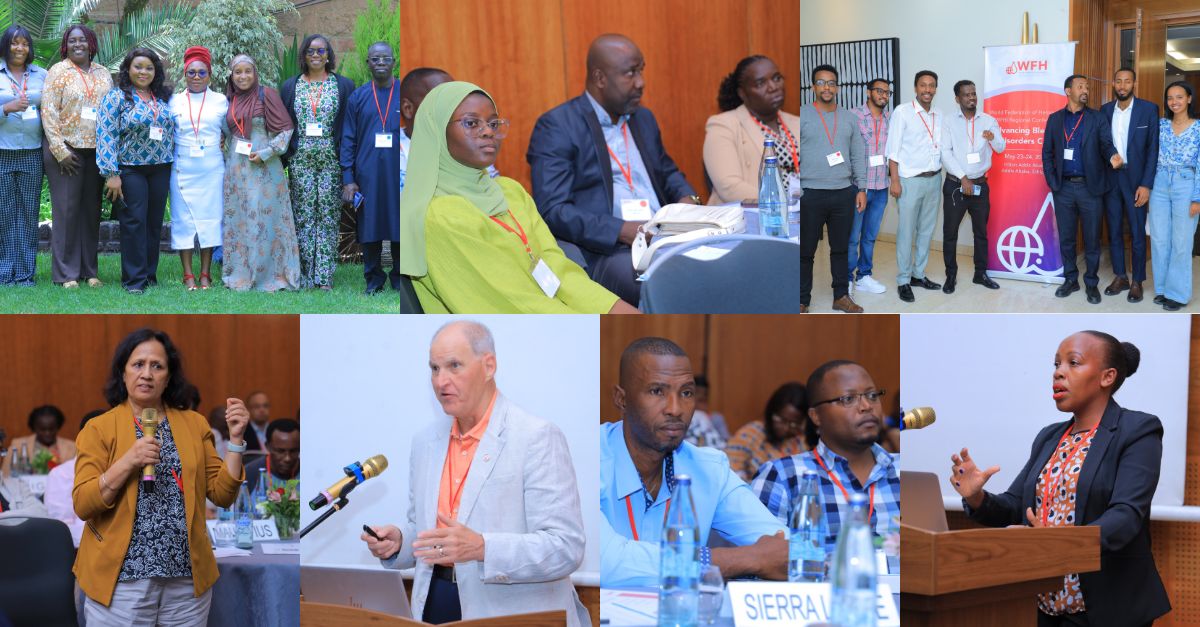
The conference featured plenary sessions, workshops, and panel discussions focused on diagnosis, clinical management guidelines, data collection, and international policy developments. Key topics included implementation of the 79th World Health Assembly Resolution on hemophilia and other bleeding disorders, as well as updates to the 2025 World Health Organization (WHO) Essential Medicines List for hemophilia and von Willebrand disease treatments.
Two parallel program tracks allowed participants to engage in more specialized discussions. One track focused on laboratory and clinical management, including country case presentations, while the second explored strategies to improve healthcare systems, advocacy efforts, and the implementation of global policy frameworks.
This conference demonstrated the power of regional collaboration in advancing diagnosis, treatment, and advocacy for people with bleeding disorders across Africa.
—Cesar Garrido, President, WFH
The speakers and panelists included clinical experts, patient advocates, and representatives from the Ministries of Health from the region and internationally. Several WFH board members were also present: Cesar Garrido, WFH President; Emna Gouider, MD, Medical Member; Alok Srivastava, MD, Medical Member; Maria Elisa Mancuso, MD, Medical Member; Bradley Rayner, Lay Member; Len Valentino, MD, President, WFH USA; and Alain Baumann, WFH CEO.
The WFH recognizes the important role of the Ethiopian Hemophilia Society in hosting the event. Ethiopia has maintained a longstanding partnership with the WFH through the WFH Humanitarian Aid Program, the WFH Twinning Program, and initiatives aimed at improving care for both local and refugee populations living with bleeding disorders.
The “WFH Regional Conference: Advancing Bleeding Disorders Care” event was supported in part thanks to funding provided by WFH Humanitarian Aid Program Visionary Contributor CSL Behring. The WBDR is made possible by the support of our visionary partner Sobi, and our collaborating partners Grifols, Pfizer and Sanofi.
About the WFH Humanitarian Aid Program
The WFH Humanitarian Aid Program improves the lack of access to care and treatment by providing much-needed support for people with inherited bleeding disorders in developing countries. By providing patients with a more predictable and sustainable flow of humanitarian aid donations, the WFH Humanitarian Aid Program makes it possible for patients to receive consistent and reliable access to treatment and care. None of this would be possible without the generous support of Sanofi and Sobi, our Founding Visionary Contributors; Bayer, CSL Behring and Roche, our Visionary Contributors; Grifols, our Leadership Contributor; and Takeda, our Contributor. To learn more about the WFH Humanitarian Aid Program, visit www.treatmentforall.org.