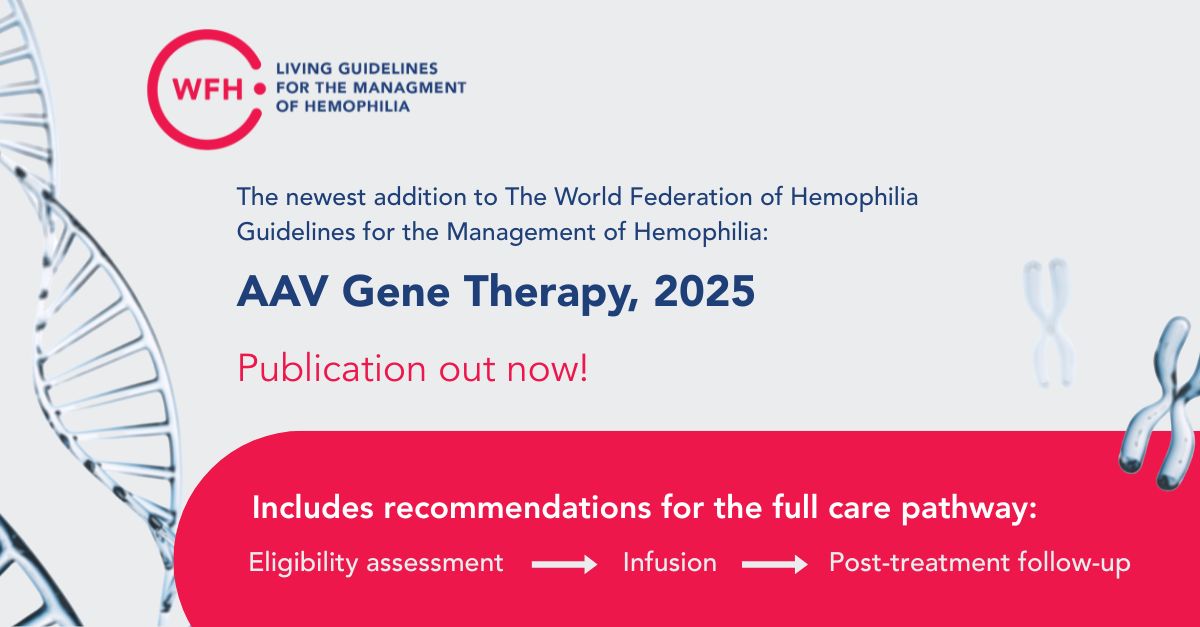
“The WFH Guidelines for the Management of Haemophilia: AAV Gene Therapy, 2025” were developed under the WFH Living Guidelines Model, an approach designed to support future updates as new evidence emerges.
Overview
AAV gene therapy offers the possibility of sustained increases in clotting factor levels and reduced bleeding, but its use requires careful patient selection, specialized centre readiness, and long-term monitoring. The new guidelines provide recommendations for hemophilia treatment centres, comprehensive care teams, and PwH, covering the full care pathway from eligibility assessment through infusion and post-treatment follow-up.
Key recommendations
The following is a summary of the key recommendations from the guidelines.
Eligibility and screening
The guidelines outline the assessments needed to determine whether a person with hemophilia may be considered eligible for AAV gene therapy. These include:
- AAV antibody testing
- Inhibitor testing
- Comprehensive liver assessment
Need for specialized treatment centres
AAV Gene therapy must be delivered in appropriately equipped and experienced centres. The guidelines highlights the need for:
- Defined approvals and infrastructure
- Trained multidisciplinary teams
- Clear standard operating procedures (SOPs)
Patient education and shared decision-making
PwH should receive clear, tailored information about:
- The gene therapy process
- Potential benefits, risks and uncertainties
- Monitoring requirements
- Recommended lifestyle considerations
Infusion safety
The guidelines emphasizes the importance of structured peri-infusion monitoring to identify and manage potential infusion-related reactions. Some measures include:
- Regular vital-sign checks during infusion
- A defined observation period afterward
- Having appropriate medications and support available
Long-term monitoring
Because gene therapy requires ongoing follow-up, the guidelines recommend:
- Regular monitoring of liver health
- Ongoing assessment for inhibitor development
- Continued tracking of bleeds
- Appropriate screening in individuals with liver-related risk factors
Note: PwH may still require clotting factor support for certain activities or procedures.
Registry participation
To strengthen global understanding of long-term outcomes, the guidelines encourages PwH who receive AAV gene therapy to participate in the WFH Gene Therapy Registry or a linked national registry.
To read the full text, “WFH Guidelines for the Management of Hemophilia: AAV Gene Therapy, 2025”, click here.