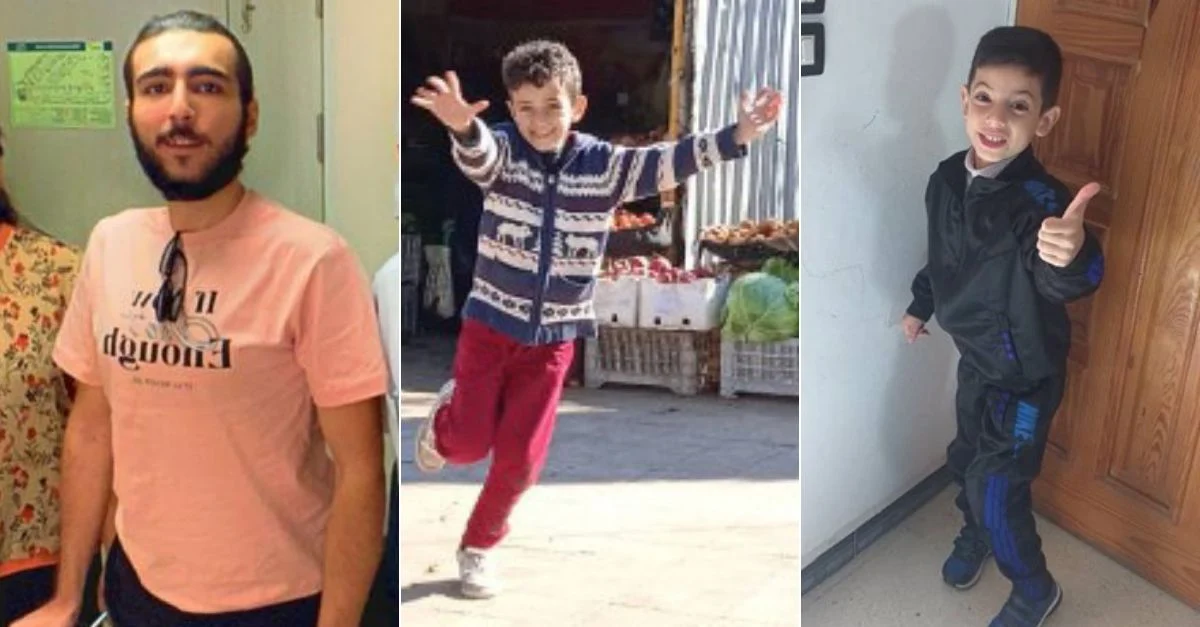
In 2025, we shared the stories of three young men from Syria, showing how product donations and dedicated support made a real difference in their lives. The following are summaries of those inspirational articles.
Rida Hadle
Rida Hadle, a young man with severe hemophilia A from Damascus, Syria, is walking again thanks to an international effort led by the WFH. Donated treatment products provided by the WFH Humanitarian Aid Program made it possible for him to undergo a complex hip replacement in India, allowing him to walk again. Months of rehabilitation restored his mobility, independence—and hope for the future.
To read, the full article, “Syrian man walks again thanks to global collaboration”, please click here.
Gadir Mahmoud
For more than four years, 10-year-old Gadir Mahmoud endured frequent, painful ankle bleeds that left him unable to walk normally. Everything changed when he began prophylactic non-factor replacement therapy through the WFH Humanitarian Aid Program. Since starting treatment, Gadir has not experienced a single bleed and no longer needs factor VIII. His recovery highlights how access to modern prophylactic care can transform the lives of children with hemophilia.
To read the full article, “Prophylaxis brings relief to 10-year-old with hemophilia”, please click here.
Yousha Mazo
For 11-year-old Yousha Mazo from Syria, severe hemophilia A once meant repeated hospitalizations, missed school, and constant fear of dangerous bleeds. His life changed in 2023 when he began prophylactic non-factor replacement therapy through the WFH Humanitarian Aid Program. Since then, bleeding episodes have nearly stopped. Today, Yousha can walk, play, and attend school—showing how sustained humanitarian support can restore childhood and hope.
To read the full article, “Life transformed for Syrian boy with severe hemophilia A”, please click here.
The WFH in Syria
Over 9.8 million IUs of factor were donated to Syria through the WFH Humanitarian Aid Program in 2025, along with 38 thousand mgs of non-factor replacement therapy. Since 2015, over 48 million IUs of factor, and over 220 thousand mgs of non-factor replacement therapy have been donated. To find out more about the WFH Humanitarian Program, please click here.
About the WFH Humanitarian Aid Program
The WFH Humanitarian Aid Program improves the lack of access to care and treatment by providing much-needed support for people with inherited bleeding disorders in developing countries. By providing patients with a more predictable and sustainable flow of humanitarian aid donations, the WFH Humanitarian Aid Program makes it possible for patients to receive consistent and reliable access to treatment and care. None of this would be possible without the generous support of Sanofi and Sobi, our Founding Visionary Contributors; Bayer, CSL Behring and Roche, our Visionary Contributors; Grifols, our Leadership Contributor; and Takeda, our Contributor. To learn more about the WFH Humanitarian Aid Program, visit www.treatmentforall.org.