This dramatic change has been made possible through the collaborative work of the WFH Humanitarian Aid Program and healthcare practitioners (HCPs), hemophilia treatment centres (HTCs) and the local national member organization (NMO), La Fundación Nacional de Hemofilia. Before the expanded Program began its work in the Dominican Republic, life was very hard for PWBDs. This was especially true for children, who would often suffer permanent joint damage due to acute bleeds. “My childhood here in the Dominican Republic was difficult, because access to medication was virtually nonexistent,” explains, Ricardo Coste, MD, a hematologist, and a person with hemophilia. “On some occasions, because of my family’s economic limitations, I was not able to treat my hemophilia properly.”
As a developing country, the Dominican Republic doesn’t yet have the means to purchase enough treatment products due to their high cost. That’s why product donations given through the WFH Humanitarian Aid Program are so important. Initially, the donations made it possible for PWBDs to be treated for acute bleeds. Now, they are making it possible for people to go on prophylactic treatment. It’s the latter which is making a real difference: preventing acute bleeds keeps kids and adults healthier and reduces the incidence of permanent joint damage.
We already have fewer patients coming to the hospital. We used to have patients who would come in monthly, weekly. But now, emergencies happen much less often.
—Dirmania Blanco, MD, pediatric hematologist, Dr. Arturo Grullón Children’s Hospital
For children, having access to donated factor means having a more normal life, and being able to go to school and play with other kids. It also means being able to participate in the social life of their neighbourhood communities. Adults who were children when the Program first began its work in the Dominican Republic are now in high school or even university—something that would have been unthinkable to the previous generation of PWBDs.
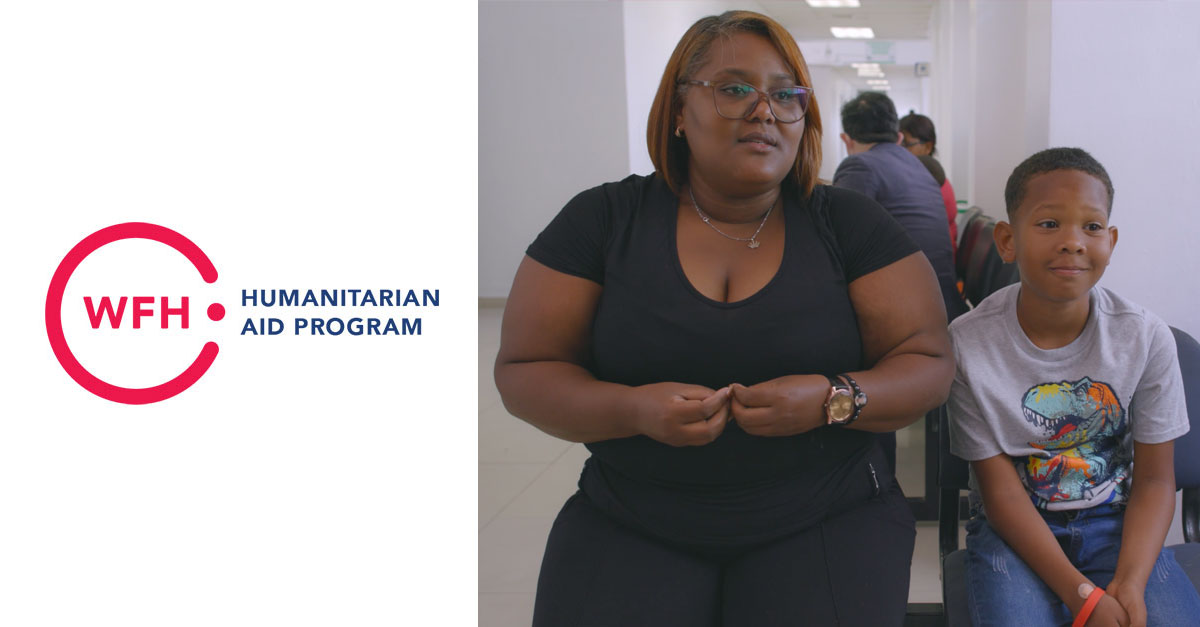
Of course, the parents of children with a bleeding disorder are also benefitting from the better level of care in the country. Pascuala Sandoval Padilla recalls having to get up early on a regular basis and travel a long distance to get treatment for her son, Yuniel Rondón, when he had a bleed. The frequent trips were both time consuming and expensive. Now that Yuniel is on prophylaxis, those trips are no longer necessary. Instead, he goes in for checkups which can be conveniently planned in advance. Padilla says that she is low less stressed and can work more regularly to support her family.
“The level of treatment of hemophilia in the Dominican Republic, before and after the founding of the Fundación Apoyo Al Hemofilico and the support of the WFH Humanitarian Aid Program… could not be more different,” says Coste. “[Now I feel like] I have found my home; I have arrived at a place where I’m going to be understood… they understand my condition, how I suffer, and they’re going to help me.”
Since 2015, over 18 million IUs of factor have been donated to the Dominican Republic. Just about 2.5 million IUs of factor were donated in 2022 alone. To find out more about the WFH Humanitarian Aid Program, please click here.
About the WFH Humanitarian Aid Program
The WFH Humanitarian Aid Program improves the lack of access to care and treatment by providing much-needed support for people with inherited bleeding disorders in developing countries. By providing patients with a more predictable and sustainable flow of humanitarian aid donations, the WFH Humanitarian Aid Program makes it possible for patients to receive consistent and reliable access to treatment and care. None of this would be possible without the generous support of Sanofi and Sobi, our Founding Visionary Contributors; Bayer, CSL Behring and Roche, our Visionary Contributors; Grifols, our Leadership Contributor; and Takeda and Japan Blood Products Organization, our Contributors. To learn more about the WFH Humanitarian Aid Program, visit www.treatmentforall.org.