In January 2023, the WFH Humanitarian Aid Program went to visit the Dominican Republic to evaluate the progress that has been made in the country over the last several years. What the team members saw there both impressed and inspired them. “On this visit, I saw a tremendous difference between what I saw… [in 2017], and what I saw [in 2023],” explains Assad E. Haffar, MD, WFH Medical & Humanitarian Aid Director. “First of all, in terms of the cooperation between the medical community and the lay community, I see that they work hand in hand; they are just like one body working towards one goal which is Treatment for All for every patient with hemophilia in the Dominican Republic.” Haffar goes on to say that WFH Humanitarian Aid Program donations and support have enabled doctors to introduce more treatment for people with bleeding disorders (PWBDs), put more people on prophylaxis, and perform more surgeries—all of which have dramatically improved their quality of life.
Without the WFH Humanitarian Aid Program, we would not have been able to save as many lives as we have. It has given a new chance at life for [people with bleeding disorders]. Without the help of the WFH, we would not have been able to do a third of what we have done.
—Rosa María Nieves Paulino, MD, retired hematologist
Care has improved in the Dominican Republic in a sustainable way over a period of many years, clearly proving that the work done by the Program has been sustainable. For example, the country went from not having a way to manage patients, to having a national registration program that has gone from 40 children with hemophilia to more than 450 people in just a few years. Hospitalizations and emergency visits have been reduced by 90% since 2015. Tertiary prophylaxis has been started for children who already had joint damage, but did not have arthropathy, leading to an extraordinary decrease in patients with this type of bleeding.
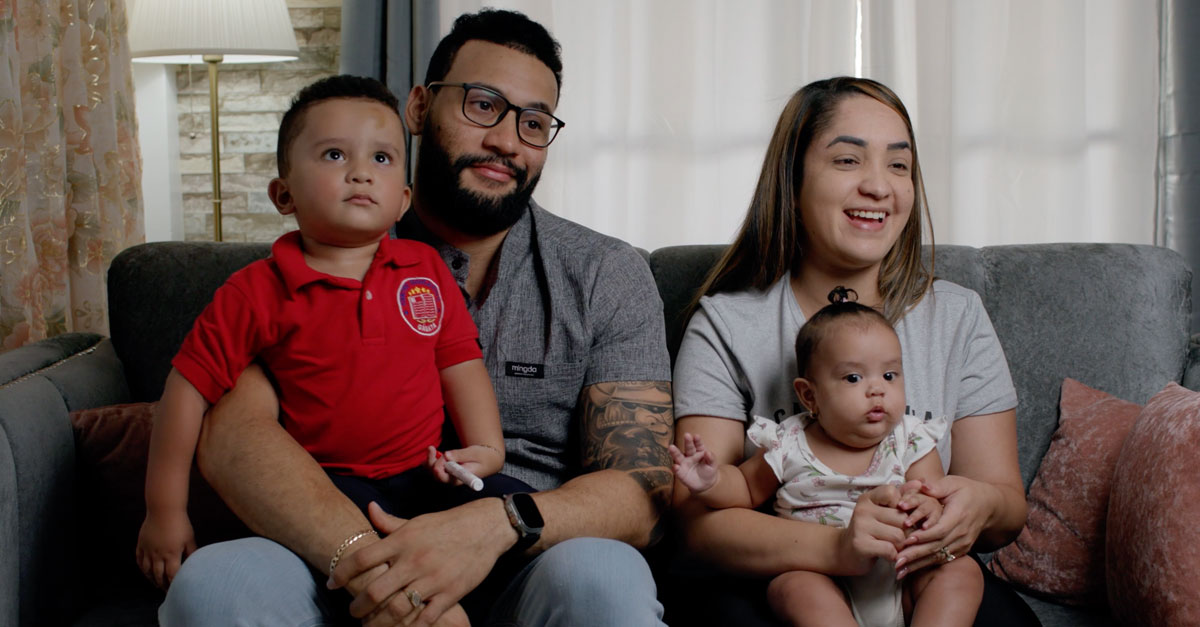
These changes have allowed children growing up in the country to enjoy a quality of life that their parents would not have thought possible. Take, for example, Luis Angni Arias. He’s a young boy with hemophilia who can go to school and play with his friends like other boys his age thanks to regular access to treatment products. This simply wasn’t the case with his uncle. “My mom is a carrier,” explains his mother, Orquídea Martínez. “When my brother would get hurt it would be an immediate crisis. But that’s not the case for our child. He is on prophylaxis… If he is injured, he recovers faster. We no longer have that fear that our son will hurt himself and that he will suffer if we can’t get any factor.”
Haydée Benoit, founder of the Fundación Apoyo al Hemofílico (FAHEM), the Dominican NMO, has lived a similar experience. In her words, she says, “I see my son and I see my grandson, and I see such a big difference between the two of them. …My grandson is growing up without arthropathies, with a different way of thinking.” This kind of improvement, where a PWBD’s entire life outlook can be different because of better access to medical treatment—is what sustainable care is all about.
Since 2015, over 18 million IUs of factor have been donated to the Dominican Republic. Just about 2.5 million IUs of factor were donated in 2022 alone. To find out more about the WFH Humanitarian Aid Program, please click here.
About the WFH Humanitarian Aid Program
The WFH Humanitarian Aid Program improves the lack of access to care and treatment by providing much-needed support for people with inherited bleeding disorders in developing countries. By providing patients with a more predictable and sustainable flow of humanitarian aid donations, the WFH Humanitarian Aid Program makes it possible for patients to receive consistent and reliable access to treatment and care. None of this would be possible without the generous support of Sanofi and Sobi, our Founding Visionary Contributors; Bayer, CSL Behring and Roche, our Visionary Contributors; Grifols, our Leadership Contributor; and Takeda and Japan Blood Products Organization, our Contributors. To learn more about the WFH Humanitarian Aid Program, visit www.treatmentforall.org.