WFH work in India has been delivered through several programs, including the WFH Humanitarian Aid Program, the WFH Path to Access to Care and Treatment (PACT) Program, the WFH Twinning Program, and the WFH International External Quality Assessment Scheme (IEQAS). Stakeholders in India have collaborated with the WFH through these efforts to help improve the level of care offered in the country.
A major development for the bleeding disorders community in Pune, India, was the founding of Sahyadri Hospital in 2002. From its inception, the hospital aimed to provide holistic care for PWBDs. Sashi Apte, MD—one of the establishment’s founders—firmly believes that administering factor alone isn’t sufficient for treating a bleeding disorder. This belief led to an approach at the institution emphasizing collaboration, initially with physiotherapists, later expanding to include surgeons. Care has advanced at the hospital over the last eight years, particularly due to the support from the WFH Humanitarian Aid Program, which has provided training and donated treatment products.
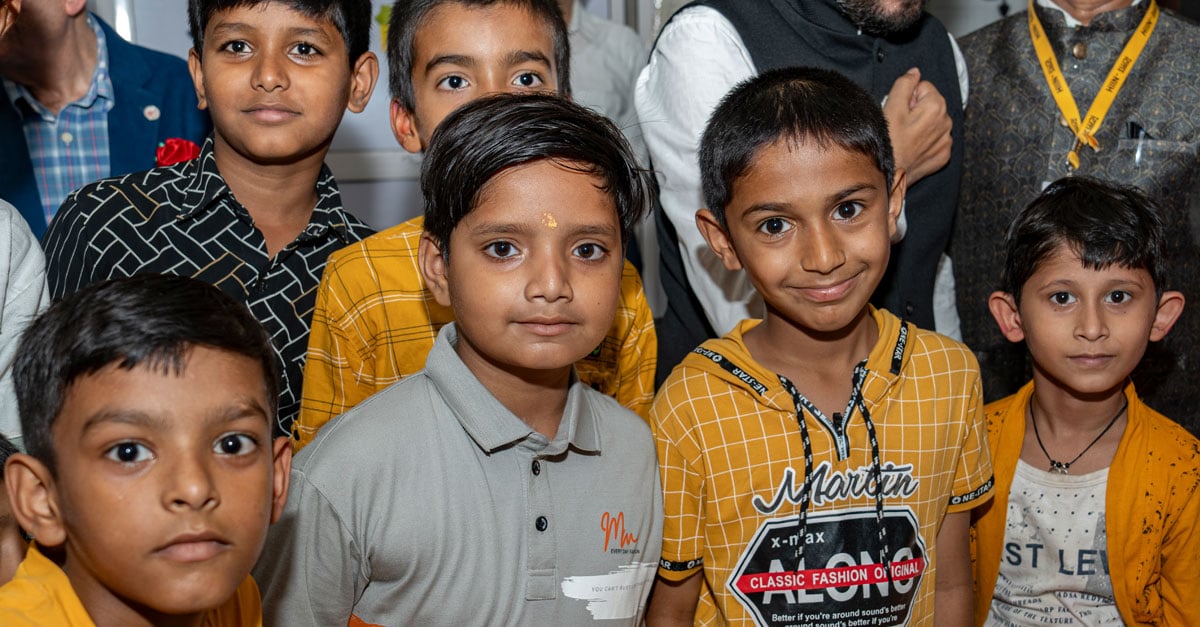
A notable success story from the hospital is that of Mohnish Patil, a 12-year-old hemophilia patient who has experienced a dramatic improvement in his quality of life since he began receiving care from Sahyadri Hospital. He has gone from constant pain and mobility issues to aspiring to be an aeronautical engineer. The care he has received—especially through donated treatment products—has allowed him to walk, write, and study without the threat of acute bleeds.
Another testament to the hospital’s impact is the experience of Om Jalender Shah, a 19-year-old from Talegaon. He first received treatment at 12 years old, and the change in his life can’t be understated. Thanks to prophylactic treatment and an operation facilitated by the availability of factor, he has full mobility in his joints, and leads an active life, participating in sports and other activities with his peers. This is a stark contrast to his life before the WFH Humanitarian Aid Program, when his schooling was regularly disrupted by hospital stays.
I would like to thank the WFH Humanitarian Aid Program. Because if donated treatment products weren’t available… I wouldn’t be alive today.
—Om Jalender Shah, a 19-year-old with hemophilia
The WFH has also supported the evolution of the Hemophilia Federation India (HFI), the WFH national member organization (NMO). Over the past 40 years, HFI has grown from three chapters to 99 chapters, and now works closely with 120 hemophilia treatment centres (HTCs) throughout the country.
Today, care continues to improve for PWBDs in India. The stories of Mohnish and Om are powerful reminders of the life-changing impact of collaboration between the WFH—and specifically the WFH Humanitarian Aid Program—and dedicated stakeholders in the country.
To watch the first video in this series, please click here.
Almost 42 million IUs of factor were donated to India through the WFH Humanitarian Aid Program in 2023. Since 2015, over 370 million IUs of factor have been donated to India. To find out more about the WFH Humanitarian Program, please click here.
About the WFH Humanitarian Aid Program
The WFH Humanitarian Aid Program improves the lack of access to care and treatment by providing much-needed support for people with inherited bleeding disorders in developing countries. By providing patients with a more predictable and sustainable flow of humanitarian aid donations, the WFH Humanitarian Aid Program makes it possible for patients to receive consistent and reliable access to treatment and care. None of this would be possible without the generous support of Sanofi and Sobi, our Founding Visionary Contributors; Bayer, CSL Behring and Roche, our Visionary Contributors; Grifols, our Leadership Contributor; and Takeda and Japan Blood Products Organization, our Contributors. To learn more about the WFH Humanitarian Aid Program, visit www.treatmentforall.org.