In 2025, we highlighted the stories of two young men from Sri Lanka, illustrating how donated treatment products and sustained support led to meaningful, life-changing outcomes. The following are summaries of those inspirational articles.
Story from a remote village
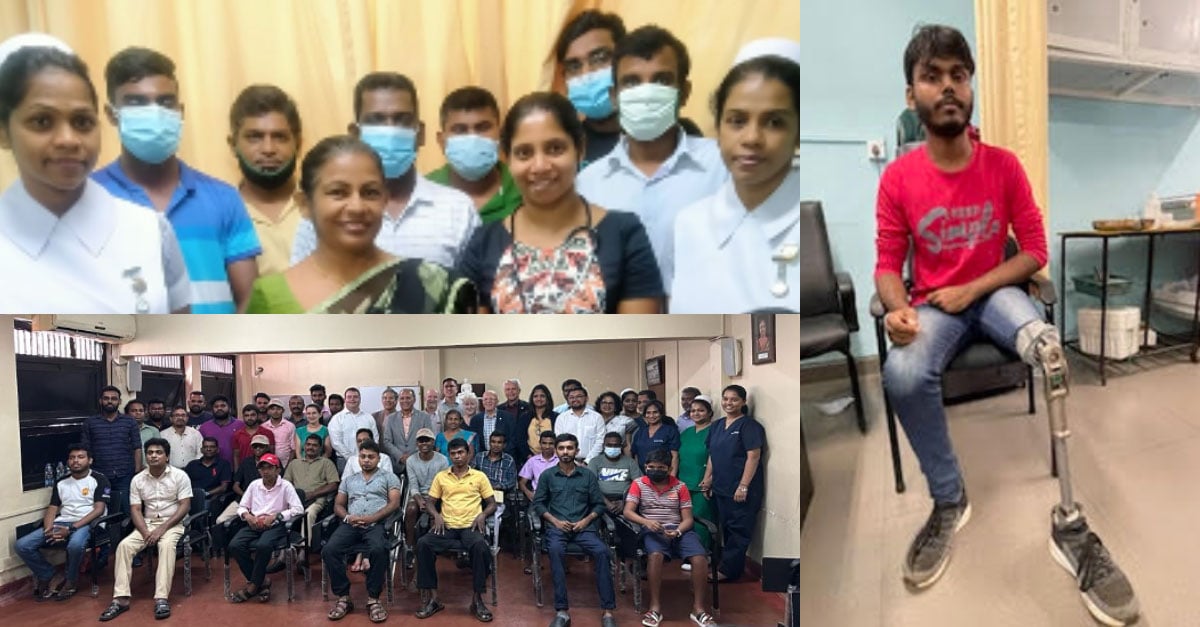
A 20-year-old man from a remote village in Sri Lanka is rebuilding his life after years of regular bleeds, thanks to donated treatment provided by the WFH Humanitarian Aid Program. Diagnosed with hemophilia A and inhibitors after suffering frequent knee bleeds for more than five years, his condition progressed into a severe pseudotumor that left him unable to walk. With access to donated factor and non-factor replacement therapy, provided by the federation, he safely underwent an above-knee amputation in 2022. Ongoing prophylaxis, physiotherapy, and a prosthetic leg have since restored his mobility, allowing him to resume his studies.
To read, the full article, “WFH support allows young Sri Lankan to walk again”, please click here.
Story from Anuradhapura
A young man from Anuradhapura, Sri Lanka, is enjoying a dramatically improved quality of life thanks to sustained support from the WFH. Diagnosed with severe hemophilia A, his condition worsened in 2016 when he developed inhibitors, leading to frequent, debilitating joint bleeds. After limited success with bypassing agents and immune tolerance therapy, his care took a turning point in 2020 when he began receiving non-factor replacement therapy donated through the WFH Humanitarian Aid Program. Since then, he has been bleed-free and he has been able to live independently.
To read the full article, “Non-factor replacement therapy transforms life of a PWBD in Sri Lanka”, please click here.
The WFH in Sri Lanka
The WFH Humanitarian Aid Program has donated nearly 80 million IUs of factor and nearly 877,000 mg of non-factor replacement therapy to Sri Lanka since 2015. Almost 9.8 million IUs of factor, and nearly 50,000 mg of non-factor replacement therapy were donated in 2025 alone. To find out more about the Program, please click here.
About the WFH Humanitarian Aid Program
The WFH Humanitarian Aid Program improves the lack of access to care and treatment by providing much-needed support for people with inherited bleeding disorders in developing countries. By providing patients with a more predictable and sustainable flow of humanitarian aid donations, the WFH Humanitarian Aid Program makes it possible for patients to receive consistent and reliable access to treatment and care. None of this would be possible without the generous support of Sanofi and Sobi, our Founding Visionary Contributors; Bayer, CSL Behring and Roche, our Visionary Contributors; Grifols, our Leadership Contributor; and Takeda, our Contributor. To learn more about the WFH Humanitarian Aid Program, visit www.treatmentforall.org.