Because the WFH Humanitarian Aid Program is active in so many countries, people with bleeding disorders who are refugees can often find care through NMOs and HCPs in their host countries. These organizations are often ready and able to help—despite their own continuing struggles. This inspiring way of thinking is one of the things that makes the work of the WFH Humanitarian Aid Program so special. This year, a young refugee from the Democratic Republic of Congo (DRC) benefitted from this very kind of assistance. Here is his story.
Dear WFH Humanitarian Aid Program team,
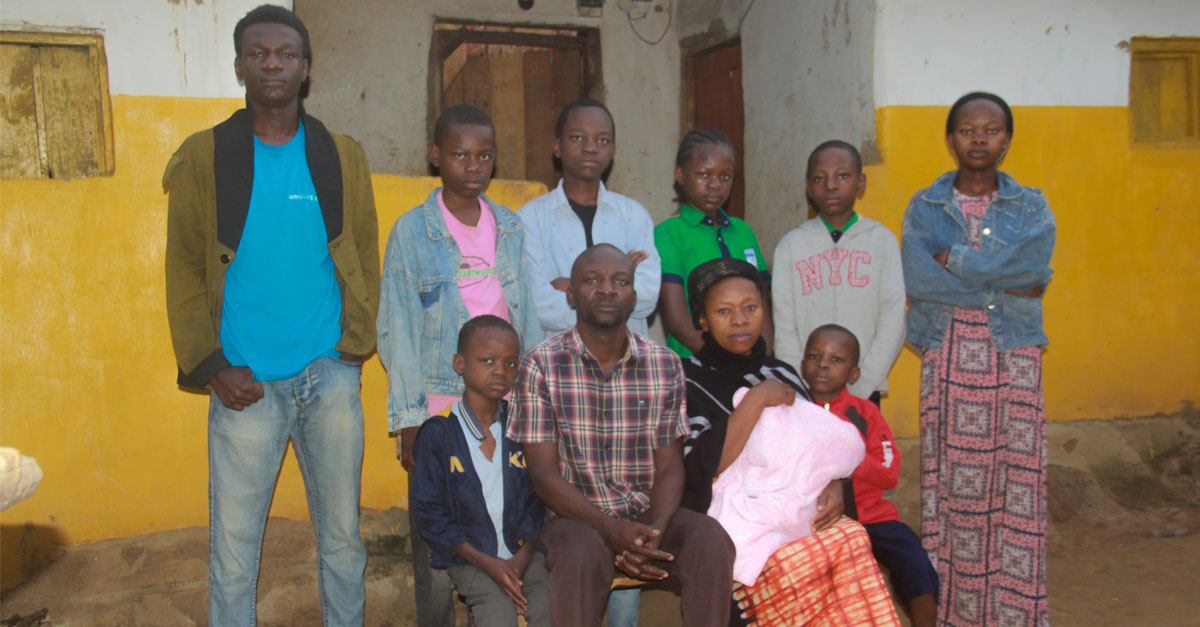
My name is Christian Bahane, and I’m a 21-year-old man from the Democratic Republic of Congo (DRC). Right now, I’m a refugee residing in the Nakivale refugee settlement in Uganda. I am the first born in a family of six boys and three girls.
My brothers and I started suffering from recurrent bleeds and joint pain and swelling at the age of one year old. Our parents took us to many hospitals and clinics back in DRC, but no one was able to diagnose us. It wasn’t until 2016 when we came to Uganda that we were referred to the Mulago National Specialised Hospital [Editor’s note: the WFH Humanitarian Aid Program has worked with the facility for many years], and we were all diagnosed with hemophilia after undergoing several tests.
At that time, I was in school, but because of the frequent bleeds I had due to my hemophilia, I missed a lot of class and my grades progressively worsened. Unfortunately, because my parents didn’t have the financial means to take care of us, I decided to drop out of formal training and did some vocation courses in entrepreneurship and basic computer science to help me get a job. During that period, I supported my brothers with their treatment, and contributed to their schooling financially using the little money I make from my work.
Everything changed when a hemophilia treatment centre (HTC) opened in Nakivale about three years ago [Editor’s note: the centre is indirectly supported by WFH Humanitarian Aid Program donations given to Uganda]. Now, we have access to quick and easy treatment. Because of this, the quality of my life of my brothers and I has greatly improved.
I hereby wish to thank the WFH Humanitarian Aid Program team for all you have done. You have restored our happiness and hope and in a special way. The donated factor therapy we receive has given us hope…hope that we can have a good life and that we can contribute to our communities. Your support is what gives meaning to our life and is the reason why some of us are still alive.
Thank you again and we look forward to your continued support.
Yours faithfully,
Christian Bahane
The WFH Humanitarian Aid Program has been active in Uganda for many years. The Program has donated over 13.3 million IUs of donated factor and nearly 108,000 mg of non-factor replacement therapy to the country since 2015. Nearly 2 million IUs of factor, and over 24,000 mg of non-factor replacement therapy were donated in 2022 alone. To find out more about the Program, please click here.
About the WFH Humanitarian Aid Program
The WFH Humanitarian Aid Program improves the lack of access to care and treatment by providing much-needed support for people with inherited bleeding disorders in developing countries. By providing patients with a more predictable and sustainable flow of humanitarian aid donations, the WFH Humanitarian Aid Program makes it possible for patients to receive consistent and reliable access to treatment and care. None of this would be possible without the generous support of Sanofi and Sobi, our Founding Visionary Contributors; Bayer, CSL Behring and Roche, our Visionary Contributors; Grifols, our Leadership Contributor; and Takeda and Japan Blood Products Organization, our Contributors. To learn more about the WFH Humanitarian Aid Program, visit www.treatmentforall.org.