The Susan Skinner Memorial Fund (SSMF) scholarship provides recipients with a unique opportunity to develop leadership skills, build meaningful connections, and advocate for the improved care of women with bleeding disorders in their communities and worldwide. The mission of the SSMF scholarship program is to foster leadership and encourage the active participation of women of all ages in the global bleeding disorders community through education, training, and networking at major international WFH events. Next year will mark the 20th anniversary of the fund, and two decades of impact—and counting.
The following is Yujie (Ruby) Zuo’s article, edited for brevity.
A mother’s love: how Susan Skinner built a world for her sons and others
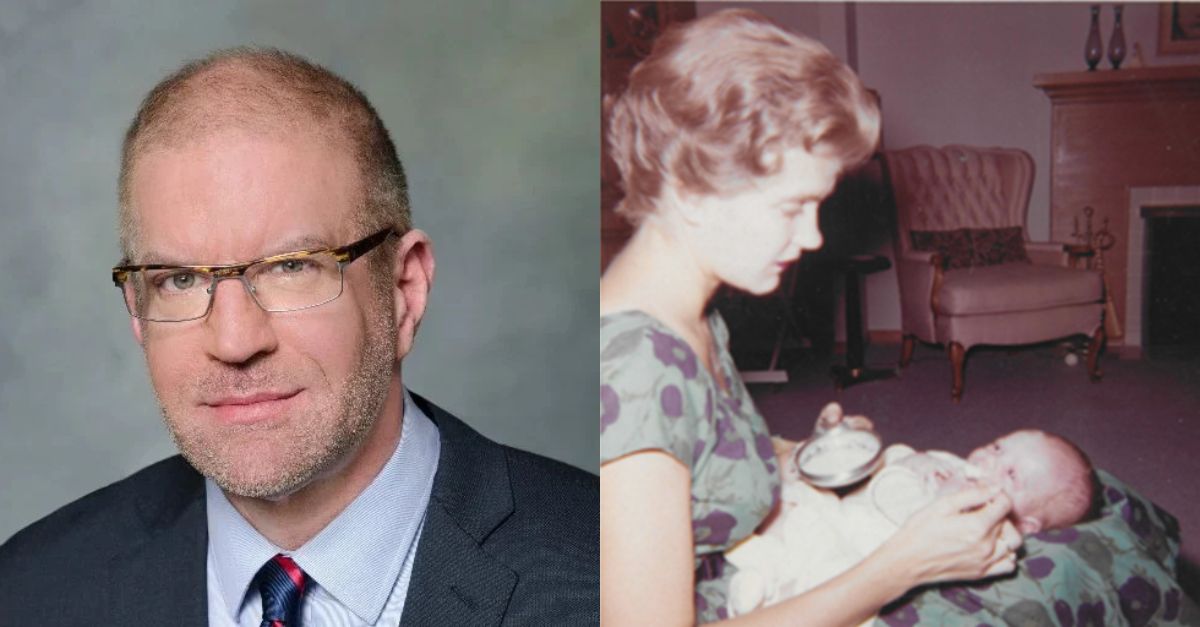
Born with severe hemophilia A, Mark Skinner’s joints bled repeatedly before modern treatments existed. He spent long stretches in bed, in pain, missing pieces of a childhood that other kids in his small Kansas, U.S.A town took for granted. In the early years of her sons’ diagnoses, Susan Skinner went to the local library and searched for anything she could find on hemophilia. One day, she came across an article and noticed a mention of a recently formed organization: the National Hemophilia Foundation (NHF).
That discovery changed the course of their family’s life. It connected Susan to other parents across the country, whom she would exchange letters with, share stories, and find solidarity in a time before support groups existed.

The woman behind the determined facade
Susan never complained. At least, not in front of her boys.
“I don’t have memories of her complaining,” Mark says. “I think parents do a pretty good job of hiding their pain. I learned later how heavy the burden was. I know there were tears, but the tears were in private, when they would see us in a lot of pain.” What Mark did not fully understand until years later was that Susan herself had likely been living with a bleeding disorder her entire life.
Susan bruised easily and had sore joints which she chalked up to sports and accidents; she bled heavily during surgeries; and she had back problems from an early age. It wasn’t until Mark joined the NHF board in the late 1980s, when the field was just beginning to understand that hemophilia carriers could themselves have significant symptoms, that he got his mother connected to a comprehensive care clinic for the first time.
The fund
After Susan died, Mark sat with his father, Thomas, and they talked about how to honour her. The answer, for a family shaped by bleeding disorders and the power of community, was clear: they would invest in women.
The Susan Skinner Memorial Fund (SSMF)—established in 2007 under the World Federation of Hemophilia (WFH)—awards scholarships to women with bleeding disorders (or a symptomatic or asymptomatic carrier) who are active advocates in their communities. Recipients are sponsored to attend a WFH World Congress, gaining access to global networks, education, and recognition that empowers them to go home and lead.
The reasoning for the fund was personal and political at once. For decades, hemophilia was widely perceived as a disease affecting only men. Patient organizations had largely been built by, and for, men. Women were present as mothers and caregivers but rarely seen as patients in their own right—and they were rarely at the table as leaders.
“We wanted women to be involved not just because they are parents and caregivers,” Mark explains, “but because they also live with the disease.”
The fund started with a $15,000 endowment. Today the fund exceeds $1,000,000. It has sent women from around the world to stand on an international stage and be recognized—not as someone’s mother, but as a person.
What he still carries
“The inspiration of talking about her is when my emotions often overtake me,” he says. “All that subtle guiding she helped channel me to have things that I could do that use the mind versus the body.”
What would Susan think, seeing her name on a scholarship fund that has now spanned for nearly two decades?
“She was a very modest woman,” Mark says. “She’d probably be a little embarrassed. But I think she’d be very proud that her legacy, the small part of history that she has in a centuries-old disease, is making a difference.”
For someone who never met her
Near the end of our conversation, I asked Mark what he most wanted people who had never heard her name before today to know about his mother.
“That life is a journey. But you’re not alone. And that as a community, we can do this.”
As we wrapped up, I told him that I had come into this interview hoping to learn about Susan Skinner, and that I was leaving feeling like I had met her.
He smiled. “Mothers are very special,” he said. “They inspire all of us. They allow us to grow up and thrive.”
Written by Yujie (Ruby) Zuo, SSMF scholarship recipient.
To find out more about the Susan Skinner Memorial Fund (SSMF) scholarship, please click here.
