Senegal-header

WBDR improves data collection Senegal

Data collection is essential to improve the knowledge and management of hemophilia so that physicians can provide better care—and patients can enjoy a better quality of life. In Senegal, data on bleeds and treatments was collected during treatment, but data were inconsistent and of a low volume.

Also available in: Français Español

Data collection is essential to improve the knowledge and management of hemophilia so that physicians can provide better care—and patients can enjoy a better quality of life. In Senegal, data on bleeds and treatments was collected during treatment, but data were inconsistent and of a low volume, making it hard for physicians to get a good grasp of the situation in the country’s bleeding disorder community. A hemophilia treatment centre (HTC) in Senegal—the Centre National de Transfusion Sanguine, in Dakar—sought to change this situation through the Research Support Program (RSP) of the World Federation of Hemophilia (WFH) World Bleeding Disorders Registry (WBDR). Thanks to funding provided by the RSP, the HTC was able to implement the WBDR’s reliable data collection system, significantly improving the accuracy and ease-of-entry of bleeding disorders data in Senegal.

The WBDR project in Senegal was a two-year endeavour, implemented in February 2019 and completed in August 2020. The implementation process was built around three main projects. The first was the distribution of approximately 200 notebooks to record data on bleeds and treatments. In these notebooks, patients were asked to record their bleeding events, emergency procedures, and any infusions of factor. At each visit to the HTC, clinicians would collect the notebooks and enter the data into the WBDR.

The second project was setting up a dedicated cellphone for the HTC. The cellphone was used as a 24/7 emergency hotline that patients used to contact the HTC. On average, the HTC received two calls a day. The phone was also used to contact patients, make regular check-up calls, book follow-up visits, and collect data on bleeding episodes and treatment. This simple tool made it possible for clinicians to more easily get in touch with patients, and also allowed them to increase the number of individuals enrolled in the WBDR.

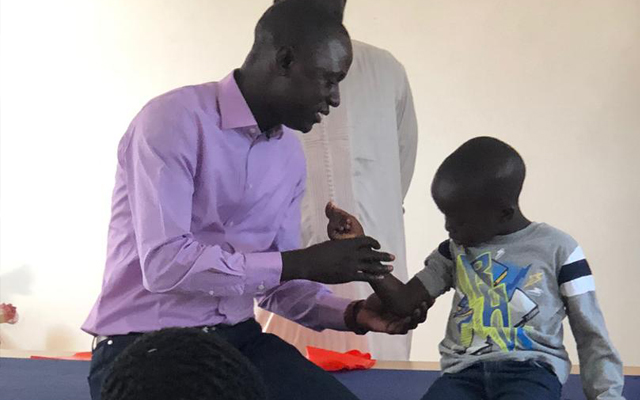
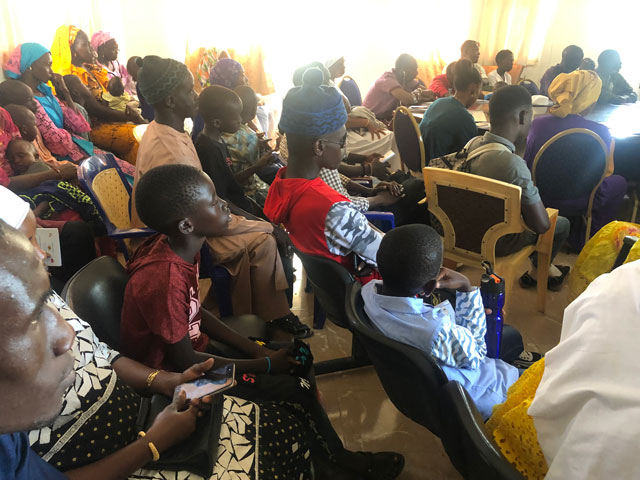
The third project was organizing therapeutic education sessions for patients. The first such session focused on hemophilia treatment and the launch of the notebooks. Almost 90 people attended, of whom 63 were patients. The session was led by WFH medical Board of Directors member Saliou Diop, MD, who educated the patients and family on how to recognize bleeding events and how to use the notebooks. The second session focused on passive physiotherapy at home. Physiotherapists demonstrated movements and practical exercises that patients could use to strengthen joints and muscles.

Through these efforts, the Research Support Program (RSP) of the WFH World Bleeding Disorders Registry (WBDR) was able to have a very real impact in Senegal: data collection was improved, and patient care was enhanced. In 2019, the number of patients participating in the WBDR was only 6. By June 2020, the number had increased to nearly 200.

To find out more about the WFH WBDR Research Support Program, please click here.
We’ve accomplished a lot this year, we need your help to continue strong.

Would you like to read more about similar articles?

Disclaimer

The information on the WFH website is provided for general information purposes only. The WFH does not engage in the practice of medicine and under no circumstances recommends particular treatment for specific individuals. For diagnosis or consultation on a specific medical problem, the WFH recommends that you contact your physician or local treatment centre. Before administering any products, the WFH urges patients to check dosages with a physician or hemophilia centre staff, and to consult the pharmaceutical company’s printed instructions.

While every effort has been made to ensure the accuracy of the information on this site, the WFH does not guarantee the information is accurate, and is not responsible in any way whatsoever for damages arising out of the use of this website or any of the information contained herein.

Messages posted to WFH discussion forums, Facebook, Twitter, and other social media platforms do not represent the opinions of the World Federation of Hemophilia, its staff, or Board of Directors. The author of a message is solely responsibility for its content. Information posted on WFH social networks and platforms should never be a substitute for individualized professional medical advice, even when the author has medical qualifications or is considered an authority. Information posted to a discussion group should not be used to diagnose or treat a specific health problem without consulting a qualified healthcare professional. The WFH recommends that you contact your physician or local treatment centre if you have any individual questions or concerns.

References and links to other websites or references to other organizations, products, services, or publications do not constitute endorsement or approval by the WFH. The WFH is not responsible and assumes no liability for the content of any linked websites.

Fraud Alert

Unauthorized solicitations – Warning

The WFH has been made aware of various correspondences—circulated via e-mail and telephone—coming from individuals impersonating WFH staff or falsely stating that they are associated with the WFH. These correspondences, which may seek to obtain money using the name of someone affiliated with the WFH, are fraudulent and come from outside of our organization.

If you receive a suspicious solicitation, exercise extreme caution. In the case of an email, look at the email address to see if it looks suspicious (for example, all WFH emails come from @wfh.org).

We are asking you to remain vigilant, and if you have any doubts about the correspondence, please forward the email to the WFH at [email protected] or call +1 514-875-7944.