First hemophilia-related hip replacement in Nepal made possible by WFH

First hemophilia-related hip replacement in Nepal made possible by WFH

A recent surgery has marked a medical milestone in Nepal: the country’s first total hip replacement (THR) for a person with hemophilia. The procedure was made possible through critical support from the World Federation of Hemophilia (WFH) Humanitarian Aid Program.

Also available in: Français Español

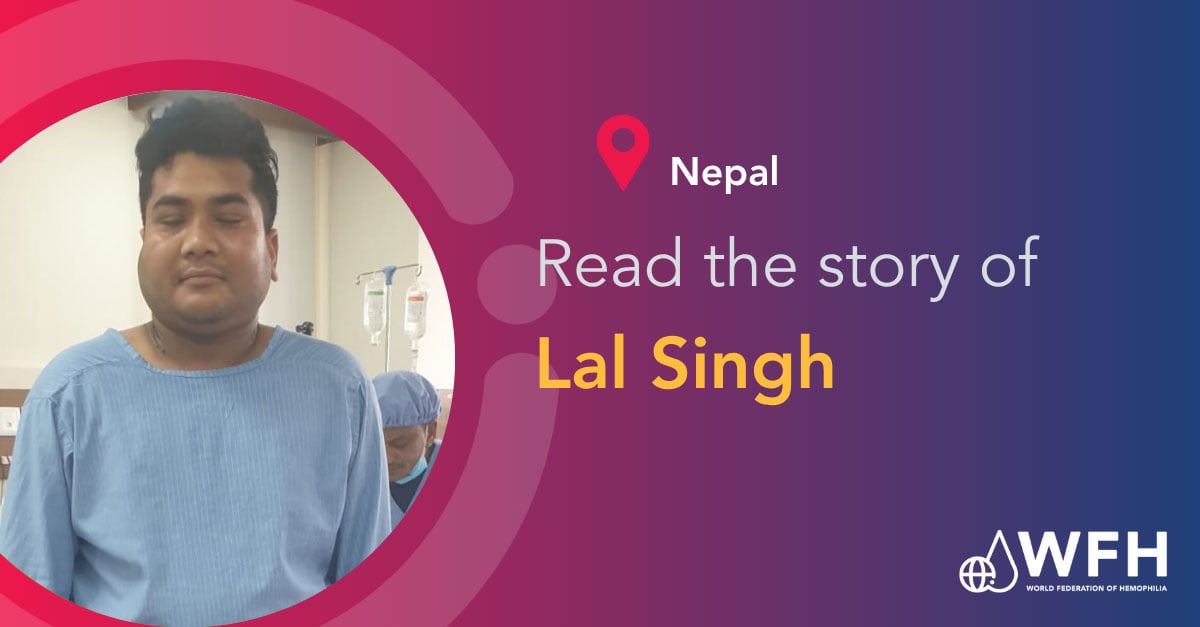
Lal Singh, a 28-year-old male patient with hemophilia A had lived with severe pain in his right hip joint for many years. His condition had gradually worsened, causing a noticeable limp, limb shortening, chronic pain, and significant mobility issues that were affecting his daily life.

Earlier this year, Singh underwent the successful total hip replacement using a press-fit, metal-on-poly implant at AàRūs Lifestyle Hospital in Kathmandu, Nepal. Thanks to factor VIII donated by the WFH Humanitarian Aid Program, the surgical team was able to safely manage bleeding risks during and after the operation. Now recovering well, Singh is walking comfortably has a much brighter future ahead of him.

Bhaskar Raj Pant, MD, Chief Consultant Orthopedic Joint Replacement Surgeon at the hospital, thanked the WFH for providing the hospital with a separate batch of factor for the procedure, significantly increasing its chances of success.

Several WFH programs are making a difference in Nepal—such as the WFH Path to Access to Care and Treatment (PACT) Program, the WFH Development Grant Program (DGP), and the WFH Humanitarian Aid Program. To find out more about these efforts that are changing lives, read “WFH Humanitarian Aid Program supports Nepalese NMO advocacy” by clicking here.

Almost 5 million IUs of factor were donated to Nepal through the WFH Humanitarian Aid Program in 2024, along with 430 thousand mgs of non-factor replacement therapy. Since 2015, over 39 million IUs of factor, and over 1 million mgs of non-factor replacement therapy have been donated. To find out more about the WFH Humanitarian Program, please click here.

About the WFH Humanitarian Aid Program

The WFH Humanitarian Aid Program improves the lack of access to care and treatment by providing much-needed support for people with inherited bleeding disorders in developing countries. By providing patients with a more predictable and sustainable flow of humanitarian aid donations, the WFH Humanitarian Aid Program makes it possible for patients to receive consistent and reliable access to treatment and care. None of this would be possible without the generous support of Sanofi and Sobi, our Founding Visionary Contributors; Bayer, CSL Behring and Roche, our Visionary Contributors; Grifols, our Leadership Contributor; and Takeda, our Contributor. To learn more about the WFH Humanitarian Aid Program, visit www.treatmentforall.org.
We’ve accomplished a lot this year, we need your help to continue strong.

Would you like to read more about similar articles?

Disclaimer

The information on the WFH website is provided for general information purposes only. The WFH does not engage in the practice of medicine and under no circumstances recommends particular treatment for specific individuals. For diagnosis or consultation on a specific medical problem, the WFH recommends that you contact your physician or local treatment centre. Before administering any products, the WFH urges patients to check dosages with a physician or hemophilia centre staff, and to consult the pharmaceutical company’s printed instructions.

While every effort has been made to ensure the accuracy of the information on this site, the WFH does not guarantee the information is accurate, and is not responsible in any way whatsoever for damages arising out of the use of this website or any of the information contained herein.

Messages posted to WFH discussion forums, Facebook, Twitter, and other social media platforms do not represent the opinions of the World Federation of Hemophilia, its staff, or Board of Directors. The author of a message is solely responsibility for its content. Information posted on WFH social networks and platforms should never be a substitute for individualized professional medical advice, even when the author has medical qualifications or is considered an authority. Information posted to a discussion group should not be used to diagnose or treat a specific health problem without consulting a qualified healthcare professional. The WFH recommends that you contact your physician or local treatment centre if you have any individual questions or concerns.

References and links to other websites or references to other organizations, products, services, or publications do not constitute endorsement or approval by the WFH. The WFH is not responsible and assumes no liability for the content of any linked websites.

Fraud Alert

Unauthorized solicitations – Warning

The WFH has been made aware of various correspondences—circulated via e-mail and telephone—coming from individuals impersonating WFH staff or falsely stating that they are associated with the WFH. These correspondences, which may seek to obtain money using the name of someone affiliated with the WFH, are fraudulent and come from outside of our organization.

If you receive a suspicious solicitation, exercise extreme caution. In the case of an email, look at the email address to see if it looks suspicious (for example, all WFH emails come from @wfh.org).

We are asking you to remain vigilant, and if you have any doubts about the correspondence, please forward the email to the WFH at [email protected] or call +1 514-875-7944.