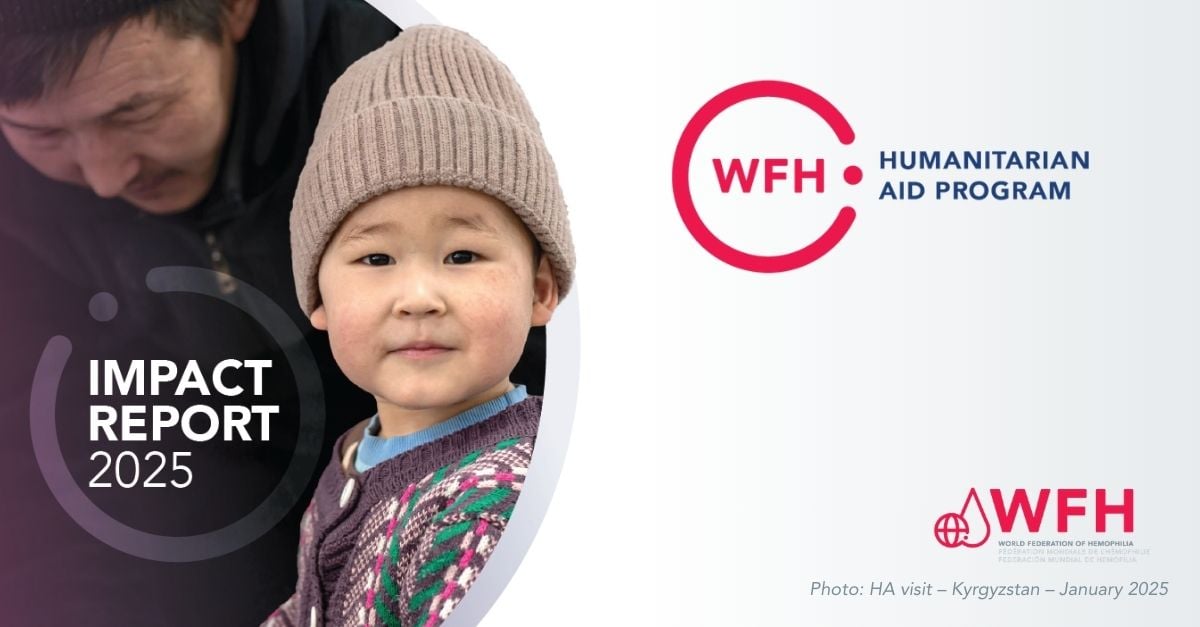
Through a combination of donated treatment products, education, training, and advocacy support, the WFH Humanitarian Aid Program helped thousands access life-changing care while supporting countries on their journey toward sustainability.
- 3,819 patients on prophylactic treatment
- 298 million IUs of factor distributed
- 2.3 million mg of non-factor replacement therapy distributed
- 18,387 people with inherited bleeding disorders (PWBDs) treated
- 43,951 acute bleeding episodes managed
- 2,700 surgeries performed
A major objective of the Program is helping countries become self-sustainable so they can offer their bleeding disorders communities consistent and equitable access to care. While donations remain critical for short-term access, Program activities are designed to move countries along the path to sustainable care. The WFH Humanitarian Aid Program Impact Report 2025 offers readers several case studies that show that the Program is doing just that—helping to bring our community a few more steps closer to our shared vision of Treatment for All.
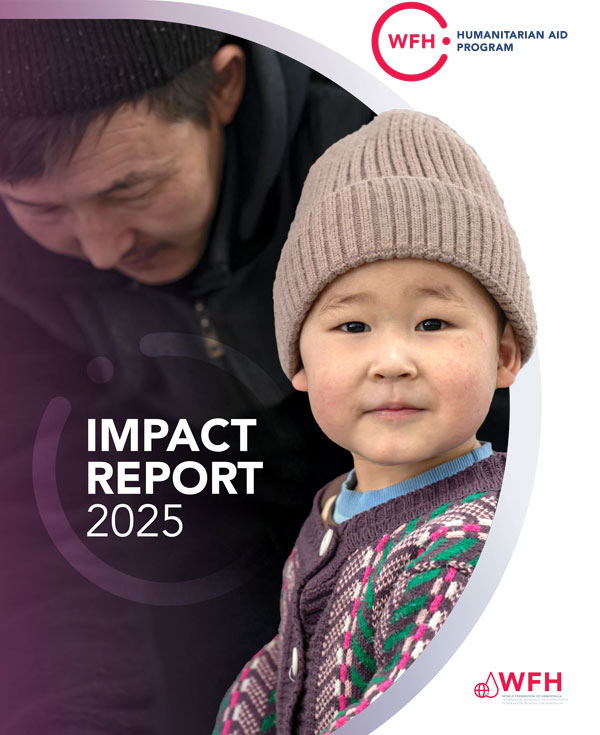
Progress has been made possible through continued collaboration. In 2025, partners including Sanofi, Sobi, and Takeda extended their commitments. At the same time, volunteers, staff, national member organizations (NMOs), hemophilia treatment centres, healthcare professionals, governments, members of the WFH and WFH USA boards, and donors worldwide worked together to maximize impact—demonstrating the power of shared commitment to improving lives.
To read the WFH Humanitarian Aid Program Impact Report 2025, click here. To find out more about the WFH Humanitarian Aid Program, click here.
About the WFH Humanitarian Aid Program
The WFH Humanitarian Aid Program improves the lack of access to care and treatment by providing much-needed support for people with inherited bleeding disorders in developing countries. By providing patients with a more predictable and sustainable flow of humanitarian aid donations, the WFH Humanitarian Aid Program makes it possible for patients to receive consistent and reliable access to treatment and care. None of this would be possible without the generous support of Sanofi and Sobi, our Founding Visionary Contributors; Bayer, CSL Behring and Roche, our Visionary Contributors; Grifols, our Leadership Contributor; and Takeda, our Contributor. To learn more about the WFH Humanitarian Aid Program, visit www.treatmentforall.org.