news-autonomy-in-malawi-Mar2020

Autonomy in Malawi: meet Comfort

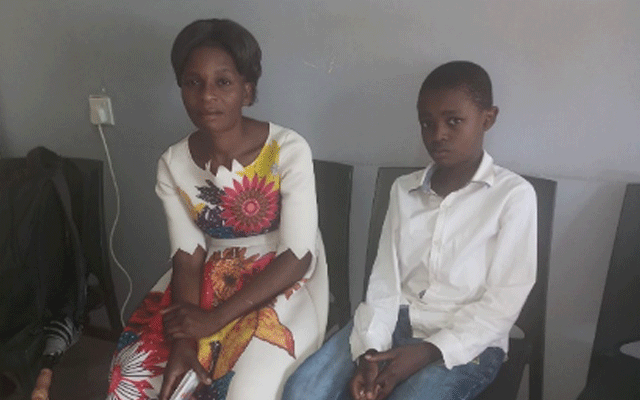
Comfort Chiarambo and his mother, Eneless Faith Piass, live in Namitete, Malawi in East Africa. Eneless suspected that her son had hemophilia at four months old, but it would be seven long years before he would be correctly diagnosed. A patient without a diagnosis is a patient without treatment, so Comfort—and his family—suffered for years.

Also available in: Français Español

Malawi is amongst the world’s least developed countries, and the government struggles to meet the basic needs of its population. Limited resources are focused on improving power, water and communications infrastructure—meaning there is little left for patient care, and even less for those with a rare disease. As a result, many in the Malawian bleeding disorders community live without access to treatment. A sobering reality is that half the patients in the developing world die before they turn 10.

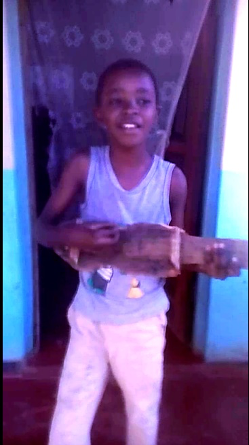
The Society of Haemophilia and Allied Disorders in Malawi joined the WFH as an associate National Member Organization in 2016. That’s when the WFH Humanitarian Aid Program began bringing much-needed medication to patients like Comfort. The effect on both his physical and emotional health was immediate, his mother notes, and, with his life no longer at risk he began to yearn for autonomy. He recently took his first tentative steps towards this goal by learning how to self-infuse, receiving instruction during a WFH training session for nurses given by healthcare professionals from South Africa. While he is proficient at mixing his medication, he is still a little apprehensive when it comes to accessing a vein with a needle. Eneless knows this stage will be short-lived and is proud that her son is taking his first steps towards independence. Now eleven years old, he enjoys going to school, watching cartoons, spending time with his friends and playing a guitar he built himself.

We went through a lot of hard times, sleepless nights, and the struggle of dealing with the fact that he was being given wrong medication that made his condition even worse. Without the WFH it would have been unbearable.

— Eneless, Comfort’s mother

In 2018, the Society of Haemophilia and Allied Disorders in Malawi was enrolled in the Cornerstone Initiative, a WFH development program that focuses on providing support and training to countries who are interested in laying the foundation for basic bleeding disorders care. Chimwemwe Chande, secretary of the organization, notes that there has been a general upswing in awareness about bleeding disorders in Malawi, and, most encouragingly, among healthcare professionals, including the 17 treaters, 40 nurses and 14 lab personnel who received training by the WFH in 2018 and 2019. This enhancement of treatment capacity and infrastructure, coupled with the medication provided through the WFH Humanitarian Aid Program, has been key to establishing sustainable care for patients with bleeding disorders in Malawi. Physicians in the country are now also submitting patient data to the World Bleeding Disorders Registry, which will not only improve with the clinical management of patients but will also aid government advocacy  to secure better care. Today, Eneless sees a bright future for her son. “When he grows up,” she says, “he’ll be a doctor so he can help others.”

These investments—and the continued work of volunteers on the ground—will transform care for patients in Malawi and many other developing countries. Since its launch in 2013, the Cornerstone Initiative has been supported by WFH National Member Organizations from developed countries wishing to assist those living with little or no access to care. As of 2019, twelve countries are enrolled in the program. We are grateful to the National Hemophilia Foundation (U.S.A), the U.K. Haemophilia Society and the Canadian Hemophilia Society for their support in 2019.

If you believe that where you live should not determine your level of care, support the work of the WFH today at https://give.wfh.org/.

We’ve accomplished a lot this year, we need your help to continue strong.

Would you like to read more about similar articles?

Disclaimer

The information on the WFH website is provided for general information purposes only. The WFH does not engage in the practice of medicine and under no circumstances recommends particular treatment for specific individuals. For diagnosis or consultation on a specific medical problem, the WFH recommends that you contact your physician or local treatment centre. Before administering any products, the WFH urges patients to check dosages with a physician or hemophilia centre staff, and to consult the pharmaceutical company’s printed instructions.

While every effort has been made to ensure the accuracy of the information on this site, the WFH does not guarantee the information is accurate, and is not responsible in any way whatsoever for damages arising out of the use of this website or any of the information contained herein.

Messages posted to WFH discussion forums, Facebook, Twitter, and other social media platforms do not represent the opinions of the World Federation of Hemophilia, its staff, or Board of Directors. The author of a message is solely responsibility for its content. Information posted on WFH social networks and platforms should never be a substitute for individualized professional medical advice, even when the author has medical qualifications or is considered an authority. Information posted to a discussion group should not be used to diagnose or treat a specific health problem without consulting a qualified healthcare professional. The WFH recommends that you contact your physician or local treatment centre if you have any individual questions or concerns.

References and links to other websites or references to other organizations, products, services, or publications do not constitute endorsement or approval by the WFH. The WFH is not responsible and assumes no liability for the content of any linked websites.

Fraud Alert

Unauthorized solicitations – Warning

The WFH has been made aware of various correspondences—circulated via e-mail and telephone—coming from individuals impersonating WFH staff or falsely stating that they are associated with the WFH. These correspondences, which may seek to obtain money using the name of someone affiliated with the WFH, are fraudulent and come from outside of our organization.

If you receive a suspicious solicitation, exercise extreme caution. In the case of an email, look at the email address to see if it looks suspicious (for example, all WFH emails come from @wfh.org).

We are asking you to remain vigilant, and if you have any doubts about the correspondence, please forward the email to the WFH at [email protected] or call +1 514-875-7944.