Vietnam article

WFH Humanitarian Aid Program improves quality of life in Vietnam

In 2020, the World Federation of Hemophilia (WFH) Humanitarian Aid Program provided over 1.1 million IUs of donated factor, and over 132,000 mg of non-factor replacement therapy to hemophilia treatment centres (HTCs) in Vietnam.

Also available in: Français Español

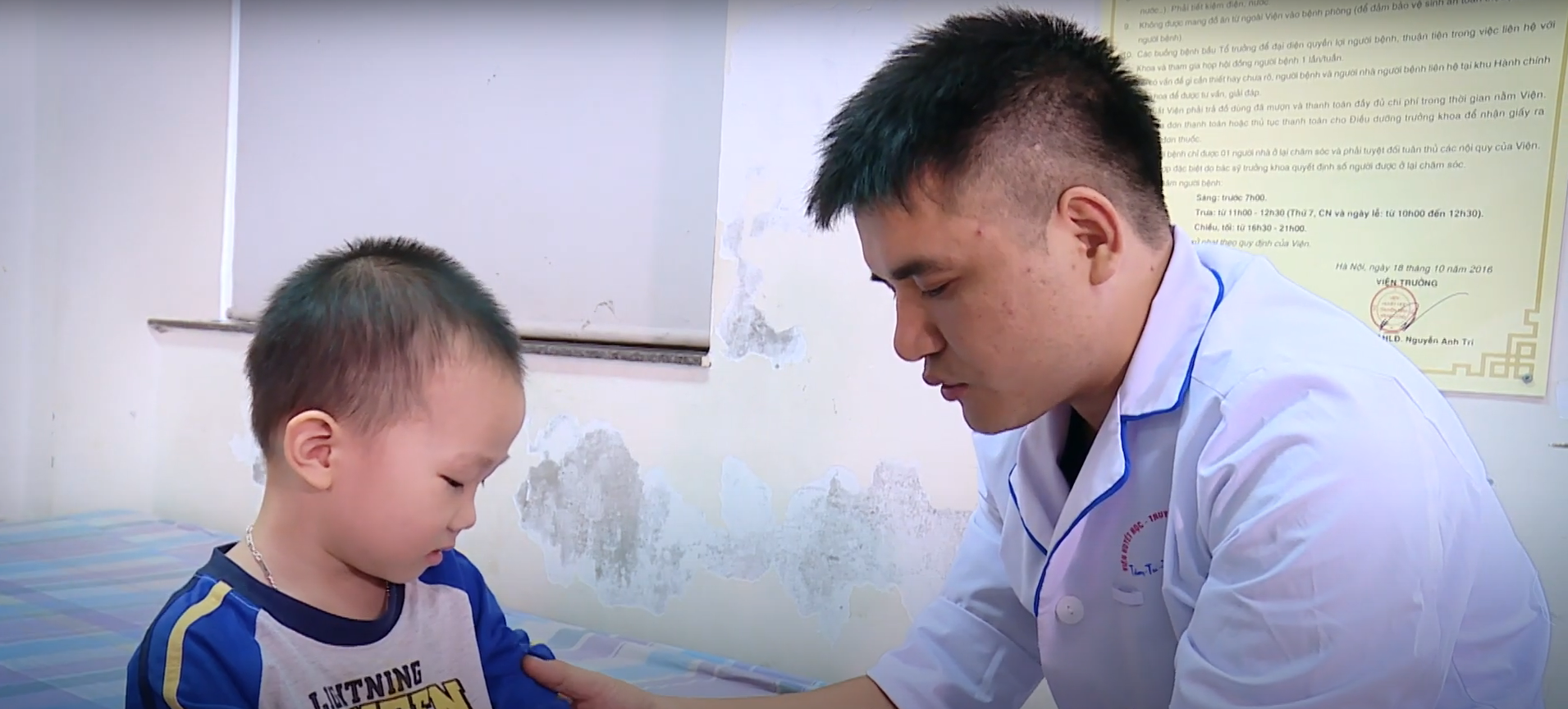
In 2020, the World Federation of Hemophilia (WFH) Humanitarian Aid Program provided over 1.1 million IUs of donated factor, and over 132,000 mg of non-factor replacement therapy to hemophilia treatment centres (HTCs) in Vietnam. This factor was used for acute bleeds, and also for prophylactic treatment. The result of these efforts is that children and adults in the country now enjoy a better quality of life. Kids are going back to school, and adults—and the parents of children with a bleedings disorder—are going back to work to help support their families.

“A simple thank you would not be enough to express all our gratitude for the support of the WFH and the WFH Humanitarian Aid Program,” says Bach Quoc Khanh, MD, PhD, Director of the National Institute of Hematology and Blood Transfusion in Hanoi. “On behalf of hemophilia patients and all the medical staff working in hemophilia care, we would like to send out our warmest heartfelt thanks for the support of the WFH.”

The video at the top of this page tells the story of several people with bleeding disorders (PWBDs) whose lives were changed for the better thanks to the Program. You’ll hear the story of Bao, who had so many bleeds that his grandmother feared that he would eventually have to use crutches or even a wheelchair to move around. Instead, he received knee-replacement surgery and can walk on his own. You’ll also hear the story of Duy Anh Nguyen, who would miss school because of bleeds and was afraid of playing for fear that he might hurt himself. In his case, prophylaxis has literally transformed his life. To watch the video, click on the player above, or watch it on YouTube.

To find out more about the WFH Humanitarian Aid Program, click here.

About the WFH Humanitarian Aid Program
The WFH Humanitarian Aid Program improves the lack of access to care and treatment by providing much-needed support for people with inherited bleeding disorders in developing countries. By providing patients with a more predictable and sustainable flow of humanitarian aid donations, the WFH Humanitarian Aid Program makes it possible for patients to receive consistent and reliable access to treatment and care. None of this would be possible without the generous support of Sanofi Genzyme and Sobi, our Founding Visionary Contributors; Bayer and Roche, our Visionary Contributors; Grifols, our Leadership Contributor; and our Contributors, CSL Behring and Takeda.  To learn more about the WFH Humanitarian Aid Program, visit www.treatmentforall.org.

We’ve accomplished a lot this year, we need your help to continue strong.

Would you like to read more about similar articles?

Disclaimer

The information on the WFH website is provided for general information purposes only. The WFH does not engage in the practice of medicine and under no circumstances recommends particular treatment for specific individuals. For diagnosis or consultation on a specific medical problem, the WFH recommends that you contact your physician or local treatment centre. Before administering any products, the WFH urges patients to check dosages with a physician or hemophilia centre staff, and to consult the pharmaceutical company’s printed instructions.

While every effort has been made to ensure the accuracy of the information on this site, the WFH does not guarantee the information is accurate, and is not responsible in any way whatsoever for damages arising out of the use of this website or any of the information contained herein.

Messages posted to WFH discussion forums, Facebook, Twitter, and other social media platforms do not represent the opinions of the World Federation of Hemophilia, its staff, or Board of Directors. The author of a message is solely responsibility for its content. Information posted on WFH social networks and platforms should never be a substitute for individualized professional medical advice, even when the author has medical qualifications or is considered an authority. Information posted to a discussion group should not be used to diagnose or treat a specific health problem without consulting a qualified healthcare professional. The WFH recommends that you contact your physician or local treatment centre if you have any individual questions or concerns.

References and links to other websites or references to other organizations, products, services, or publications do not constitute endorsement or approval by the WFH. The WFH is not responsible and assumes no liability for the content of any linked websites.

Fraud Alert

Unauthorized solicitations – Warning

The WFH has been made aware of various correspondences—circulated via e-mail and telephone—coming from individuals impersonating WFH staff or falsely stating that they are associated with the WFH. These correspondences, which may seek to obtain money using the name of someone affiliated with the WFH, are fraudulent and come from outside of our organization.

If you receive a suspicious solicitation, exercise extreme caution. In the case of an email, look at the email address to see if it looks suspicious (for example, all WFH emails come from @wfh.org).

We are asking you to remain vigilant, and if you have any doubts about the correspondence, please forward the email to the WFH at [email protected] or call +1 514-875-7944.

Website privacy policy

The WFH USA does not collect personally identifying information about you when you visit our site, unless you choose to provide such information to us. Providing such information is strictly voluntary. This policy is your guide to how we will handle information we learn about you from your visit to our website.

Use of links

Throughout our website, we provide links to other servers which may contain information of interest to our readers. We take no responsibility for, and exercise no control over, the organizations, views, or accuracy of the information contained on other servers. When linking to the WFH USA, we request that you ensure that there are no associated connections for commercial purposes. Any official use of the name WFH USA or the use of its logo needs to be approved by the WFH USA. If you have a link you’d like us to consider adding to our website, please send an email to [email protected] with the subject “Link request.”

Use of text and images

All information, photographs, graphics, and other material on this website are protected by copyright. While users of this website may use the content for personal, non-commercial use, none of the content of this website can be modified, translated, transferred or sold, copied, reproduced, published, or distributed, in whole or in part, without the prior written consent of the WFH USA. To view a copy of the WFH USA’s permissions guidelines, click here.

The WFH USA encourages the dissemination of its information and welcomes proposals on the reprinting, redistribution, and translation of its materials. If you would like to publish information that you find on our website, please send your request to [email protected].

Accessibility

If you have suggestions on how to make the site more accessible, please contact us at [email protected].

Opt-Out or Change Your Contact Information

Our website provides users the opportunity to opt-out of receiving communications from us through a special online form or via the communication they have received. You may, at all times, choose to receive which communications within the organization you can receive or none at all. You may also update your contact information previously provided to us via another online form.

Questions about our policies

If you have any questions about this privacy statement, the practices of this site, or your dealings with this website, you can contact us at [email protected].

Functional Scales

The outcomes of interest collected by the WBDR include demographic characteristics, clinical and treatment-related outcomes, burden of disease outcomes, and patient-reported outcomes.

The WBDR includes five functional scales as part of its extended data set:

WBDR hemophilia data sets

WBDR Minimal Data Set

The WBDR Minimal Data Set (MDS) is a set of data on demographics, diagnosis, symptoms and treatment which are collected on patients participating in the WBDR.

WBDR Extended Data Set

The WBDR Extended Data Set (EDS) is a larger set of data, with more details than the MDS, which includes questions on patient demographics, diagnosis, symptoms, treatment and burden of disease. The EDS can be used by hemophilia treatment centers to collect data on patients participating in the WBDR. The WBDR Extended Data Set (EDS), was added to the database in March 2019.