PACT-Palestine-header

WFH PACT Program: new MoU signed in Palestine

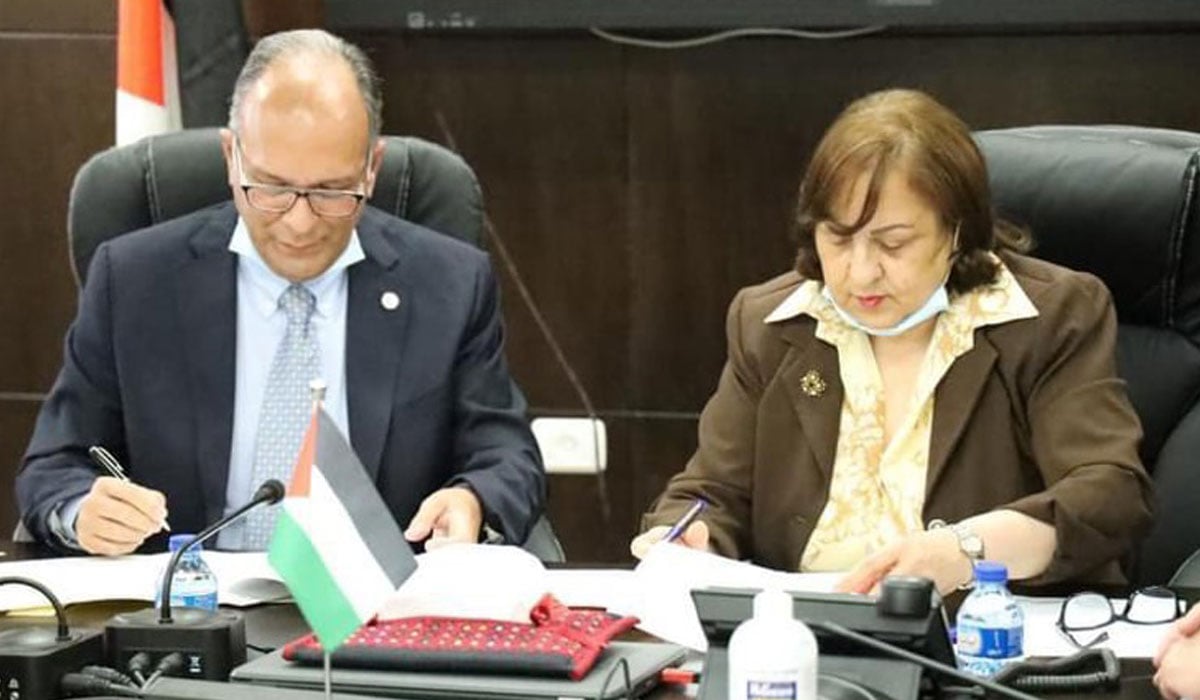
The World Federation of Hemophilia (WFH) and the Palestinian Ministry of Health (PMoH) signed a 5-year MOU on June 5, 2022, to implement the WFH Path to Access to Care and Treatment (PACT) Program. The Palestine PACT program will be jointly managed by the PMoH and The Palestine Avenir for Childhood Foundation (PACF) Hemophilia Committee with the full support of the WFH. This MoU will ensure that more people with inherited bleeding disorders in Palestine can reliably access safe treatment and care, regardless of their type of bleeding disorder, or gender.

Also available in: Français Español

“I am extremely proud of this important milestone in terms of our close collaboration with the Ministry of Health and Minister Her Excellency Mai Al-Kailiah,” said Cesar Garrido, President of the WFH. “We are all committed to improving access to care and treatment for people with bleeding disorders in Palestine. The future is full of hope.” The PACT Program is a 5-year initiative designed to improve outreach and diagnosis and increase access to sustainable care for people with inherited bleeding disorders. This will be achieved through training, education, partnerships, in-country initiatives, and evidence-based advocacy.

The MoU signed in Palestine lays the foundation for the implementation of the PACT Program over the next four years. This includes the objective of strengthening the PMoH National Hemophilia Care Program and forging a consensus around introducing standardized treatment guidelines. The efforts will lead to early and accurate diagnosis, ensure equitable access to care and treatment, and ultimately improve the quality of life for people with bleeding disorders. The program will also address the need for relevant education and support programs in both the West Bank and the Gaza Strip.
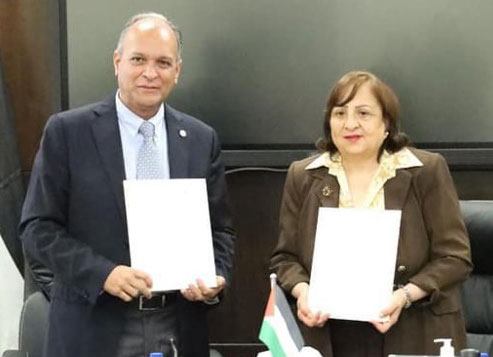
Cesar Garrido, President of the WFH, and Her Excellency Mai Al-Kailiah from the Ministry of Health

On-the-ground WFH support will focus on helping key stakeholders launch outreach campaigns, training laboratory specialists on the diagnosis of hemophilia and VWD, supporting the Palestinian National Hemophilia Committee, and providing specialized advice to healthcare practitioners (HCPs) on how to make sure that the delivery and organization of care is optimized. The WFH will also seek to mobilize volunteers to train multi-disciplinary teams in Palestinian hemophilia treatment centres (HTCs) to improve care. Support will also be provided for data collection so decisions about access to treatment are tailor-made to the realities in Palestine.

“We are very excited about the formalization of this collaboration with our Palestinian counterparts,” said Rana Saifi, WFH Regional Manager, Middle East. “The MOU signing and the 2-day training workshop that followed kickstarted a process that we know will build a sustainable program. We are very grateful to HE Minister Kailah and to the Director General of Allied Health Services, Osama Najjar, MD, for their deep commitment to improve bleeding disorders care. HCPs across Palestine are highly motivated to work jointly and adopt protocols relevant to the Palestinian context. The NMO volunteers are also very excited to play a part. We have the right elements in place for a ‘winning coalition’.” 

To find out more about the WFH Path to Access to Care and Treatment (PACT) Program, please click here.

The PACT Program is supported by funding from Roche, our visionary partner; CSL Behring, Pfizer, and Sanofi Genzyme, our leadership partners, and Biotest, Grifols, and Sobi, our collaborating partners.

We’ve accomplished a lot this year, we need your help to continue strong.

Would you like to read more about similar articles?

Disclaimer

The information on the WFH website is provided for general information purposes only. The WFH does not engage in the practice of medicine and under no circumstances recommends particular treatment for specific individuals. For diagnosis or consultation on a specific medical problem, the WFH recommends that you contact your physician or local treatment centre. Before administering any products, the WFH urges patients to check dosages with a physician or hemophilia centre staff, and to consult the pharmaceutical company’s printed instructions.

While every effort has been made to ensure the accuracy of the information on this site, the WFH does not guarantee the information is accurate, and is not responsible in any way whatsoever for damages arising out of the use of this website or any of the information contained herein.

Messages posted to WFH discussion forums, Facebook, Twitter, and other social media platforms do not represent the opinions of the World Federation of Hemophilia, its staff, or Board of Directors. The author of a message is solely responsibility for its content. Information posted on WFH social networks and platforms should never be a substitute for individualized professional medical advice, even when the author has medical qualifications or is considered an authority. Information posted to a discussion group should not be used to diagnose or treat a specific health problem without consulting a qualified healthcare professional. The WFH recommends that you contact your physician or local treatment centre if you have any individual questions or concerns.

References and links to other websites or references to other organizations, products, services, or publications do not constitute endorsement or approval by the WFH. The WFH is not responsible and assumes no liability for the content of any linked websites.

Fraud Alert

Unauthorized solicitations – Warning

The WFH has been made aware of various correspondences—circulated via e-mail and telephone—coming from individuals impersonating WFH staff or falsely stating that they are associated with the WFH. These correspondences, which may seek to obtain money using the name of someone affiliated with the WFH, are fraudulent and come from outside of our organization.

If you receive a suspicious solicitation, exercise extreme caution. In the case of an email, look at the email address to see if it looks suspicious (for example, all WFH emails come from @wfh.org).

We are asking you to remain vigilant, and if you have any doubts about the correspondence, please forward the email to the WFH at [email protected] or call +1 514-875-7944.